Experience our new Lafayette showroom — Now Open! Come Visit Us -->

13 Gallon Plastic Trash Can Buying Guide for Central Indiana


A first-time buyer in Lafayette, IN often starts with a simple problem, the kitchen trash can under the sink keeps getting in the way, the lid won't close cleanly, or the bag slips down the rim right when the week gets busiest. That's why a furniture store near Lafayette IN can be a useful stop even for a household item like a 13 gallon plastic trash can, because the same practical thinking that goes into a sectional, mattress, or custom order also applies to everyday home gear, especially when Lucas Furniture serving Lafayette offers in-home delivery and its main showroom and outlet are in nearby Kokomo.
What a 13 Gallon Plastic Trash Can Is
A 13 gallon plastic trash can is a common kitchen waste bin sized for everyday use, especially in homes where the trash lives under a counter or beside a prep area. The form became familiar as plastic liners spread through households after mid-century changes in materials and cleanup habits, with early plastic garbage bag development tied to the work of Harry Wasylyk and Larry Hansen, and later residential adoption following the history of plastic garbage bags.
Why the size became the default
The 13-gallon size fit the rhythm of a typical kitchen and the bag formats that grew around it. That match helped it become a default choice, because a bin that holds the right amount of daily waste and accepts a common liner is easier to live with than a container that always feels oversized or underfilled.
The move from metal cans to plastic also changed daily use. Plastic cans are lighter, they do not rust, and they are simpler to wipe out after spills, so many households found them easier to keep in regular rotation. In practical terms, that means the can should be easy to lift, easy to clean, and easy to line without wrestling the rim each week.
A useful way to judge it is simple, the 13-gallon can is built for kitchen convenience first, then for storage. If the bin is too bulky, it becomes awkward under a sink or near a doorway. If it is too small, the bag fills too fast and the household ends up changing liners more often than necessary.
The size also fits into the longer history of indoor waste control. English cities began formalizing garbage receptacles long before modern kitchens existed, and closed-bin rules in places like Paris show how household waste gradually shifted from loose handling to contained storage Plasticmill history of the trash can. A 13 gallon bin is the smaller, indoor version of that same idea, a container that keeps waste contained, visible, and easier to manage.
That same sizing logic shows up in other household storage choices too, including food grade bucket storage solutions, where the container works because the capacity matches how people use it day to day. The number on the label matters less than whether the object fits the space, the routine, and the cleanup you expect from it.
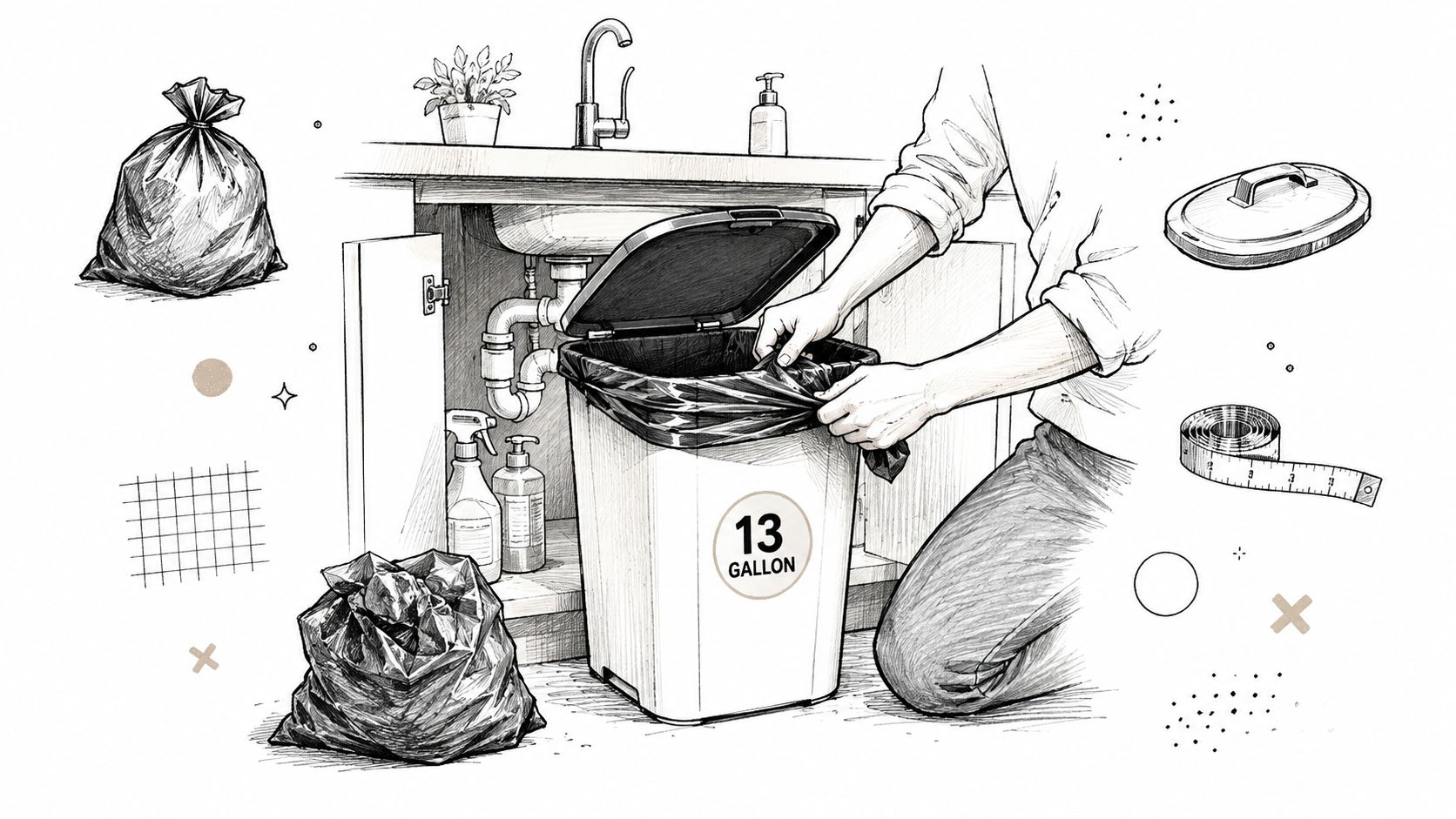
How to measure a room for furniture applies the same basic habit to a trash can, measure before you buy, because a bin that looks small in a product photo can feel crowded once it sits under a sink or beside cabinet doors.
Typical Dimensions and What They Mean for Fit
A 13-gallon trash can can sound straightforward until you try to place it in a real kitchen. One house has generous open floor space, another has a narrow cabinet run, and the same capacity can feel roomy in one spot and cramped in another.
Read the footprint before the gallon label
Common 13-gallon kitchen cans usually fall around 13 to 18 inches wide, 11.5 to 15 inches deep, and 23 to 28.5 inches tall, depending on the lid style and body shape Target product listing with model dimensions. That spread matters because the gallon number does not tell you how much floor space the bin will occupy. A taller, narrower can may save width but run into a low counter, while a shorter bin may fit under cabinetry more easily even if it takes up more side-to-side room.
A few typical examples show how much the footprint can change. One model measures 16 3/8" x 12 5/8" x 24 3/4", another measures 18" x 14.7" x 25", and a slim commercial unit measures 20 3/4" x 13 1/2" x 28 3/8" Target product listing with model dimensions. Those numbers explain why two bins with the same label can behave differently in the same room. One may tuck neatly beside a pantry door, while another may block a drawer pull or sit too close to the kick plate.
Under-counter placement is where the measurements become practical instead of abstract. A lot of kitchen cabinet openings leave about 24 to 25 inches of clearance, so a taller bin can work in open space and still feel awkward once it is pushed under tight cabinetry Target product listing with model dimensions. A shorter can is often easier to slide in and remove, even if the body is a little wider.
Same capacity, different shape, different feel
A second pair of examples makes the trade-off even clearer. One 13-gallon can is listed at 18.9 x 14 x 26.6 inches with a 50-liter capacity, while another weighs 7.28 pounds and measures 25 x 18 x 14.7 inches at the same nominal capacity Uline product detail. The capacity is the same, but the experience is not. A slim rectangular shape tends to preserve walking space and fit tighter spots, while a wider base can feel steadier and leave more room for the lid or pedal mechanism to work comfortably.
The practical lesson is simple. Capacity stays the same, geometry does not. A can that fits well in one kitchen may interfere with a drawer, cabinet swing, or trash route in another. If you are checking a spot before buying, the same habit used for room planning applies here too, and how to measure a room for furniture is a useful reminder to measure the opening first, then match the bin to the space you have.
Practical rule: if the can has to live under a counter, height usually becomes the first limit, not capacity.
Lid Styles, Retention Features, and Hygiene
A 13-gallon can feels different the first time you use it in a busy kitchen. The trash volume may be the same from one model to another, but the lid and the way the rim holds the liner decide whether the can feels tidy, quick to use, or awkward every time someone tosses something away.
Match the lid to the room
Step-on and touch-top designs suit kitchens and shared indoor spaces because they cut down on hand contact. A foot pedal keeps hands away from the lid when they are messy, while a touch-top lets you open the can quickly without lifting a cover each time Home Depot indoor can listing. Swing-lid cans are simpler and often cost less, but they usually leave a larger opening and do not hold in odors as well. Spring-top models sit in the middle, with a softer close and some odor control without the moving parts of a pedal mechanism.
The retention hardware matters just as much as the lid shape. Indoor cans may use bag retainer rings, liner locks, or air vents to keep the liner from slipping and to make bag removal less awkward. The same listing shows a secured liner system and vented design, both aimed at keeping the bag in place and reducing the tugging that happens when a full liner sticks to the sides Home Depot indoor can listing.
Cleaning and odor resistance depend on construction
A molded body is easier to wipe clean than a bin with more seams and joints. That matters in kitchens, where the can may hold wet scraps, coffee grounds, or packaging that leaks a little before it reaches the curb. Plastic and resin bodies also avoid the rust problems that older metal cans could develop over time.
A better lid does more than hide trash, it changes how often someone has to touch the can at all.
Placement changes the best choice too. A can tucked under a sink usually works better with a tighter profile and a stronger liner hold, because the space is narrow and the can gets pulled in and out more often. A freestanding bin in an open pantry can prioritize easy access and a simpler lid style. The same practical habit applies when you are trying to keep upholstered furniture cleaner in a busy home, and how to clean fabric sofa follows the same logic, easier access and easier cleanup usually save time.
Liners, Bag Fit, and the 13 Gallon Mismatch
The most common frustration with a 13 gallon plastic trash can isn't the can itself, it's the gap between the label and the liner that a household uses. A bag marked 13 gallons may fit one bin neatly and feel tight in another because the rim shape, body width, and height can vary enough to change the real-world fit.
Check the liner against the can, not just the capacity
Nominal gallon capacity doesn't tell the whole story. A wide-rimmed bin can demand more slack at the top, while a taller, slimmer can may need a bag that hangs deeper without slipping into the body. That's why liner fit should be checked by dimensions, not just by the number on the front of the box.
Look for these signs during the first few uses.
- Bag slips below the rim. That usually means the liner is too loose or the retainer system isn't catching it well.
- Lid won't close cleanly. The bag may be overfilled, or the liner may be bunching at the top.
- Edges show around the rim. That breaks the clean look and makes a touch-top or step can feel unfinished.
Retainer rings and liner locks help hide the bag edge and keep the top stable. For readers comparing storage systems around the home, the same kind of fit thinking appears in are all crib mattresses the same size, where the label alone can be misleading if the dimensions don't match the frame.
Practical rule: if a liner fits only when it's barely stretched, it's the wrong liner for everyday use.
Shoppers often solve this by choosing a slightly more generous liner or a can with better rim control. A good fit should leave the bag hidden, the lid easy to shut, and the can ready for the next load without fuss.
Is 13 Gallons the Right Size for Your Home
A 13-gallon can seems like a safe default until daily use starts putting pressure on it. Some homes fill the bin slowly and empty it on a steady schedule. Others generate more packaging, more food scraps, and more reset chores than the label suggests, so the question becomes how the household runs, not how the box is labeled.
Match the can to how the home runs
One industry guide says a 13-gallon can is a strong fit for a two-person household preparing seven or more meals weekly Wellmax hardware guide. Another notes that a family of four may need 13 to 16 gallons for weekly emptying, and may need to move up to 16 to 20 gallons if the lid will not close or the bags start to overflow. A separate shopping guide says a 13-gallon can usually handles 2 to 3 days of waste for a family of four Trash Cans Unlimited standard size guide.
That makes the sizing choice easier to judge. If the household cooks often, keeps composting to a minimum, and expects one bin to handle several days of scraps and packaging, 13 gallons can be a practical match. If the lid has to stay open, or a second bag appears in the kitchen before pickup day, the can is too small for the way the home is being used.
Watch the household signals
The can is probably undersized when trash starts collecting on the counter, odors show up before pickup day, or changing the liner becomes a daily hassle. The can is probably large enough when it closes without effort, gets emptied on schedule, and does not leave extra bags sitting around the kitchen.
Apartment dwellers, smaller homes, and couples often do well with 13 gallons because it balances capacity with ease of use. Busier families can still make it work, but only if they are comfortable with a quicker emptying rhythm. The same fit-first thinking shows up in how to maximize storage in a small bedroom, where the right choice depends on how the space is used, not just how much it can hold.
A local purchase can matter here too. In Central Indiana, delivery windows, pickup options, and the chance to compare a can in person can save a lot of guesswork, especially if the household is trying to avoid a return trip with an item that seemed right online but feels cramped in the kitchen.
Placement, Cleaning, and Odor Control in Daily Use
The best can in the wrong spot still becomes annoying. A 13-gallon bin works most smoothly when placement, cleaning, and odor control are all treated as part of the same routine instead of separate problems.
Where the can lives changes how it behaves
Under the sink is the most common spot because it hides the can and keeps it close to prep and cleanup. That setup works well until plumbing, toe-kick depth, or a small leak gets in the way. A can beside a pantry gives more room and easier access, but it also makes the lid and profile more visible. A freestanding island can is the easiest to reach, yet it often needs the best lid control because it stays in the center of activity.
A simple maintenance rhythm keeps the can from becoming the messiest object in the room. A weekly rinse clears residue, a monthly deep clean with mild disinfectant helps limit buildup, and an occasional deodorizer refresh keeps the body from hanging onto smells. Molded designs usually wipe down faster than multi-piece cans, especially after wet waste.
For households worried about damp corners, leaks, or lingering moisture, the broader discussion of causes of black mold in homes is a useful reminder that airflow and cleanup habits matter in storage areas too.
Small habits do the odor control work
- Use a liner that matches the can. A poor fit creates folds that trap residue and make removal clumsy.
- Bag wet scraps separately. That helps reduce slosh and keeps the main liner cleaner.
- Add a deodorizer if needed. A simple tray or freshener can help between pickup days.
- Empty on a schedule. A can that rarely sits full enough to smell is easier to live with.
Practical rule: odor control starts with how long waste sits, not just with how expensive the lid looks.
For stain-prone households, the same care used in how to remove furniture stains applies here too, deal with messes early and cleaning becomes much easier.
Eco Considerations and Buying Locally in Central Indiana
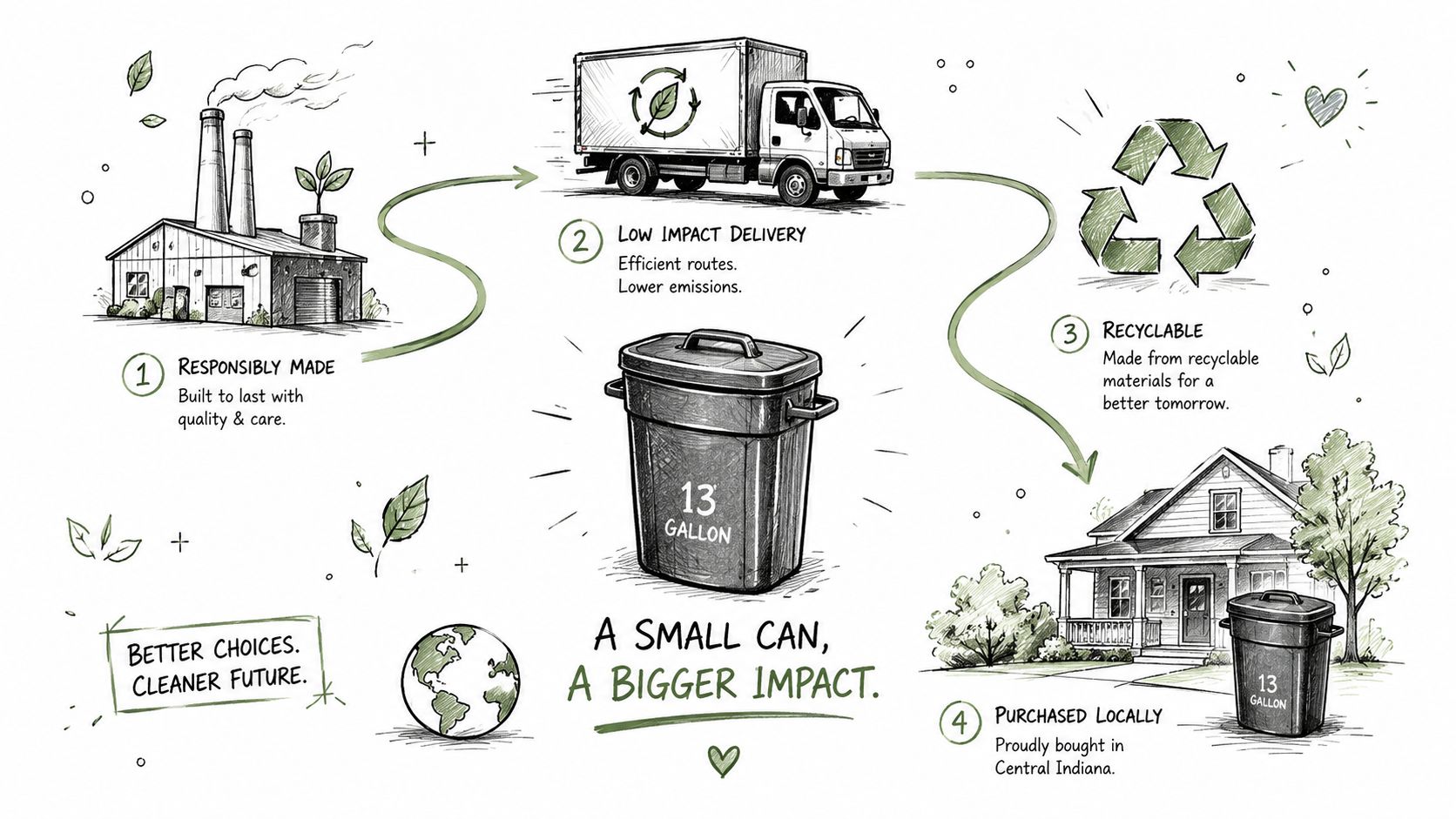
Plastic gets judged quickly, but the eco question around a 13 gallon plastic trash can is more practical than slogans suggest. The light weight helps transportation and handling, durable construction can extend service life, and replaceable parts or a well-built lid matter more than a can that looks sleek on day one. Liner choice also affects the whole waste routine, because a bag that fits well reduces wasted material from overfilling, failed closures, and double-bagging.
Buy for durability, not just for replacement speed
A can that lasts longer usually creates less hassle than one that has to be replaced because the lid breaks or the body cracks. That's especially true in kitchens where the can gets moved, washed, and opened dozens of times. Better engineering around the lid, rim, and body can make a plain-looking bin the smarter long-term choice.
For readers who want a broader look at lower-impact household decisions, environmentally kind solutions offers a related perspective on making practical purchases with less waste in mind. The useful takeaway here is that sustainability often comes down to fit, durability, and routine, not just the material name.
Shop locally with the same care used for bigger home purchases
In Lafayette and across Central Indiana, a 13-gallon can is easy to find through local stores, national chains, and online ordering with delivery. The buying process is similar to shopping for larger items, browse the footprint, compare lid styles, check liner fit, then arrange delivery or pickup in the way that best matches the household schedule. That matters because a kitchen can is a small item with a surprisingly specific fit requirement, especially when it has to work under a sink, beside a cabinet, or in a narrow pantry.
This is also where local service matters. Lafayette shoppers who already value dependable delivery for furniture, mattresses, or sectional purchases usually want the same reliability on smaller household items, because the convenience standard doesn't change just because the box is smaller. A well-chosen can should suit the room, the waste volume, and the weekly rhythm without forcing extra errands.
Visit Lucas Furniture & Mattress near Lafayette to shop thoughtfully for comfort and value across the home, from mattresses and sectionals to clearance finds, custom orders, and simple financing. Their Kokomo showroom serves Central Indiana with in-home delivery to Lafayette, so it's easy to pair practical home shopping with the right fit for your space and routine.