Experience our new Lafayette showroom — Now Open! Come Visit Us -->

Your Guide to Leather Care from Lucas Furniture & Mattress: A Lafayette Furniture Store

A beautiful leather sofa is a serious investment, and we know you want to keep it looking its best. The good news is, learning how to clean leather upholstery isn't nearly as intimidating as it sounds. The real secret is using the right approach: a gentle, pH-neutral cleaner, a soft microfiber cloth, and a quality conditioner to finish the job and restore that essential moisture. Here at Lucas Furniture & Mattress, your trusted furniture store near Lafayette IN, we are proud to provide reliable in-home delivery directly to Lafayette from our Kokomo showroom, and we're committed to helping you protect your purchase.
Why Choose Lucas Furniture? A Trusted Guide to Leather Care from a Top Lafayette Furniture Store
Here at Lucas Furniture & Mattress, we get a lot of questions from our customers in Lafayette about protecting their new furniture. We totally get it. A stunning leather sectional or sofa isn't just a place to sit; it’s the centerpiece of your living room, where family memories are made. As a locally owned business with strong customer reviews, we've built our reputation on trust and value.
That’s exactly why we wanted to share some of our professional insights. We want to give you the confidence to care for your leather pieces so they stay beautiful for years to come.
While our main showroom and clearance outlet are in Kokomo, we're proud to serve the entire Central Indiana region. That includes running reliable in-home delivery right to your door in Lafayette. But our commitment doesn't stop at the sale. We believe in giving you the knowledge you need to get the most out of your purchase.
This guide is built on our team’s years of hands-on experience with every kind of leather furniture imaginable. We’ll walk you through everything, from figuring out your leather type to tackling those common, heart-stopping stains. Proper care isn't just about cleaning—it's about protecting the investment you made and reinforcing the trust you placed in a local expert like Lucas Furniture.
Why This Guide Is for You
Whether you just brought home a brand-new custom order piece or you're looking to bring an old family favorite back to life, this is the guide for you.
We’ll help you:
- Finally understand the different types of leather and what they need.
- Put together a simple, no-fuss leather care toolkit.
- Master the same techniques we use for cleaning and conditioning.
- Tackle spills and stains without panicking.
The goal isn't just cleanliness; it's longevity. By following these steps, you ensure your leather furniture from Lucas Furniture serving Lafayette ages gracefully, developing a rich patina that tells a story of comfort and care. With our straightforward advice, maintaining your furniture becomes a simple part of your routine.
Furnish Every Room & Save Big: Identifying Your Leather Type
Before you even think about grabbing a cloth and cleaner, stop. The single most important thing you can do for your leather furniture is to figure out exactly what kind of leather you have. Using the wrong product can lead to discoloration, stiffness, or worse—permanent damage. It can turn a simple cleaning day into a very expensive mistake.
Most of the leather furniture out there, whether it's a durable family sectional or a high-end custom order armchair from our Living Room, Dining Room, Bedroom, or Home Office collections, falls into one of three categories. Each one has a different finish, which dictates its durability and how you should care for it. Our Low Price Promise and clearance savings of up to 70% off mean you can furnish every room with quality pieces worth protecting.
Understanding the Three Main Leather Types
The biggest difference between leather types comes down to the protective topcoat—or the lack of one. This finish is what makes some leather pieces practically bulletproof against spills, while others need a more delicate touch.
- Protected (or Pigmented) Leather: This is the workhorse of the leather world and the most common type you'll find on furniture. It’s finished with a polymer coating that contains pigments, making it incredibly resistant to stains, scuffs, and fading. It’s a fantastic choice for homes with kids, pets, and lots of activity.
- Semi-Aniline Leather: Think of this as the best of both worlds. It has a very thin protective coating, so it has some defense against spills and wear, but it’s light enough that you can still see and feel the leather's natural grain. It balances durability with that classic leather look.
- Aniline Leather: This is leather in its most natural state. It’s prized for its incredibly soft, buttery feel and has no protective topcoat at all, only dye. This makes it extremely porous and very easy to stain. While it requires the most gentle care, it develops a beautiful, rich patina over time that is truly one-of-a-kind.
This flowchart can help you visualize the decision-making process, which always starts with identifying your material.
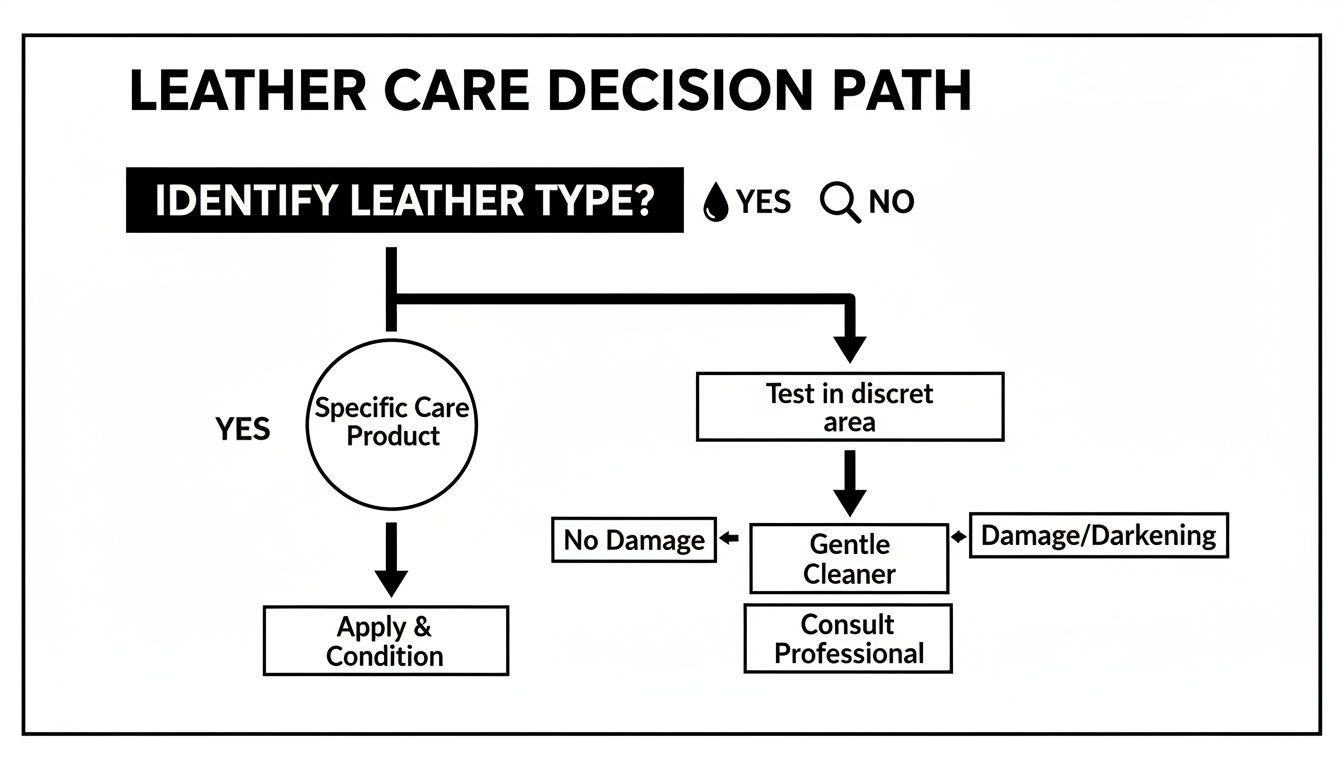
As you can see, every successful cleaning job starts with knowing your material. From there, you can choose the right products and techniques to get the job done safely.
The Simple Water Drop Test
Don't worry, you don't need to be a leather expert to figure this out. All it takes is a single drop of water and a hidden spot on your furniture. Look for a place that's out of sight, like under a cushion or on the back of the frame near the floor.
Simply place one drop of room-temperature water on the leather and watch what it does.
Pro Tip: We tell our customers this all the time—always test any new cleaner or method on a hidden spot first. This five-second test is your best insurance against a cleaning disaster, as what works for one leather type can easily ruin another.
The result tells you everything you need to know about your leather's finish. It's a quick check we recommend for any piece, whether it's from our clearance outlet or a top-of-the-line sofa.
Leather Type Identification Guide
Use this quick guide to determine your leather type and understand its basic care requirements before you begin cleaning.
| Leather Type | Key Characteristics | Water Drop Test Result | Recommended Care Level |
|---|---|---|---|
| Protected | Uniform color, stain-resistant surface, may feel slightly less soft. | The water bead sits on the surface and does not soak in. | Low Maintenance |
| Semi-Aniline | Natural grain is visible, soft feel, some color variation. | The water sits for a few moments before slowly soaking in. | Moderate Maintenance |
| Aniline | Very soft, shows all natural markings, feels luxurious. | The water soaks in and darkens the spot almost immediately. | High Maintenance |
Once you’ve identified your leather, you can move forward with confidence. Knowing your material is the absolute foundation of effective care, a topic we touch on more broadly in our guide to everything you need to know about upholstery materials.
Now that you know what you're working with, you’re ready to gather the right tools for the job.
Gathering Your Essential Leather Cleaning Toolkit
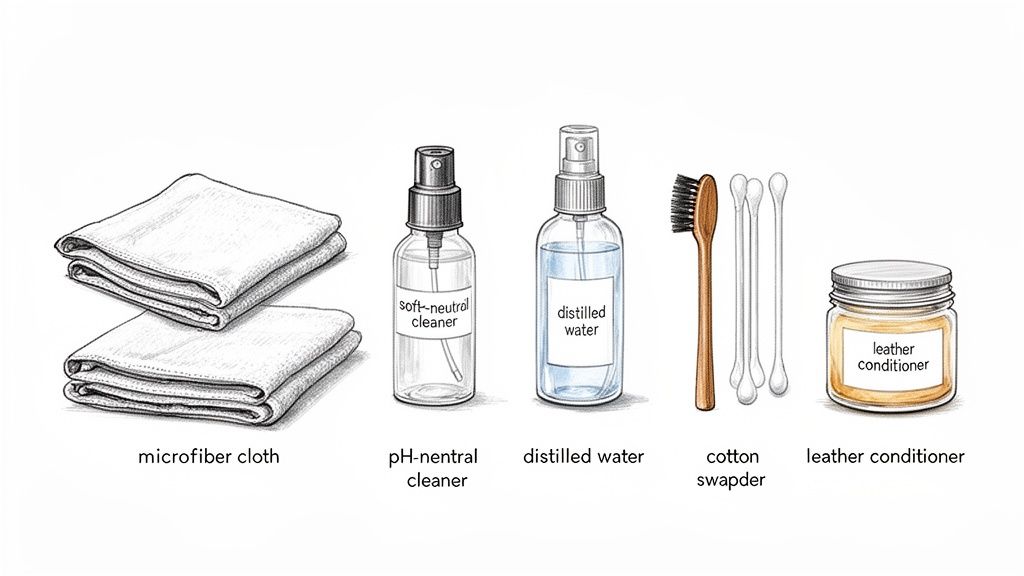
As your local Lafayette furniture store, we’ve seen it all when it comes to leather care. The secret to a professional-looking clean isn't some expensive, hard-to-find product. It’s all about having a few key supplies ready to go.
Think of this as your go-to leather care kit. Getting everything together before you start is a pro tip—it stops you from scrambling for a cloth mid-spill and prevents costly mistakes. With the right tools on hand, you can handle routine upkeep and unexpected messes with confidence.
Core Cleaning and Drying Supplies
The foundation of any good leather cleaning job rests on a few simple, but very specific, items. The quality of your tools directly affects your results, so it pays to get these details right.
- Microfiber Cloths: You’ll want at least two of these—soft, clean, and ready for action. Use one for cleaning and the other for drying and buffing. Their tiny fibers are fantastic at grabbing dirt without scratching the leather's delicate surface.
- Distilled Water: This is a small detail that makes a huge difference. Regular tap water contains minerals that can leave behind ugly white spots as they dry. Using distilled water ensures a clean, spot-free finish every time.
- A Vacuum with a Soft Brush Attachment: Before you even think about getting the leather wet, you have to get rid of all the loose dust and crumbs. A soft brush attachment is a must-have for gently vacuuming the surface and seams without leaving any scratches.
For homes with four-legged friends, keeping pet hair under control is the first step. To effectively clean your leather upholstery, your toolkit should also include the best pet hair removal tools for homes with furry companions.
The Right Cleaners and Conditioners
This is the part where you absolutely can't cut corners. Using the wrong chemical is the quickest way to permanently damage your furniture. Steer clear of harsh household cleaners, vinegar, and all-purpose wipes, as they will strip the leather’s natural oils and ruin its protective finish.
A pH-neutral, water-based leather cleaner is the only way to go. Always look for a product specifically made for upholstery. These cleaners are formulated to be tough on dirt but gentle on your leather, lifting away grime without causing it to dry out.
A high-quality leather conditioner is your finishing move, and it's not optional. Cleaning, even when done correctly, removes some of the leather's moisture. A good conditioner puts those essential oils back, keeping the material supple, preventing cracks, and restoring that soft, luxurious feel. Make it a habit to condition after every cleaning session.
For a deeper clean, especially on leather with a bit of texture, you might want to add these to your kit:
- Soft-Bristle Brush: A brush with very soft, natural bristles can help you gently work the cleaner into the leather’s grain to lift out stubborn, embedded dirt.
- Cotton Swabs: These are your secret weapon for getting into tight spots. Use them for cleaning seams, button tufts, and around decorative stitching where dirt loves to collect.
The Professional Method for Cleaning Leather Furniture
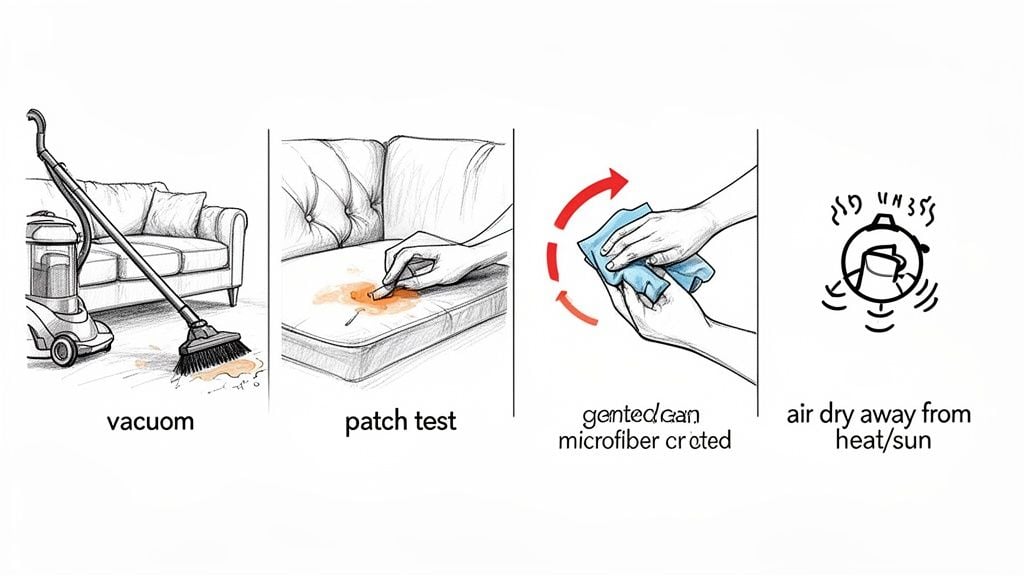
Alright, you've got your supplies and you know what kind of leather you're working with. Now comes the part where technique really matters. So many people think cleaning leather means scrubbing hard, but it's the exact opposite. You have to work smart, respecting the material to lift away grime without stripping its natural oils.
This is the professional approach we trust. It’s a safe, methodical way to get fantastic results every time, ensuring your leather sofa or sectional stays healthy and supple for the long haul.
Initial Prep: The All-Important Vacuum
Before a single drop of cleaner touches your furniture, you have to get rid of all the loose dust and crumbs. It’s a step people often rush, but if you don't, you're essentially grinding tiny, abrasive particles into the leather as you clean. This is what causes those little scratches and premature wear.
Grab your vacuum and pop on the soft brush attachment. That soft brush is key—it gently lifts debris without scratching the finish. Go over the entire piece, including the back, sides, and arms.
Make sure to get into the seams and crevices where dirt loves to collect. The crevice tool is your friend here, but move slowly and deliberately to avoid scuffing the leather. A thorough vacuum job is the foundation for a safe and effective cleaning.
The Patch Test: Your Non-Negotiable Safety Net
I can't say this enough: always perform a patch test before going all-in with a new cleaner. This simple two-minute check is your best defense against discoloration or any other unwanted surprises.
Find a small, out-of-sight spot to do your test. The underside of a cushion, the back of the frame near the floor, or under the furniture’s skirt are all great choices.
Put a little bit of your leather cleaner on a microfiber cloth and gently dab it onto your test spot. Let it sit for a moment, wipe it away with a different damp cloth, and then let the area air-dry completely. Once it's dry, look at it in good light. If you see no color change or weird texture, you're clear to proceed.
This simple precaution is what separates a successful DIY cleaning from a potential disaster. It gives you complete peace of mind, especially when working on a cherished piece of furniture from Lucas Furniture.
Gentle Cleaning in Sections
Now for the main event. When cleaning leather, control is everything. The biggest mistake you can make is oversaturating the material, as too much moisture can cause it to warp or feel stiff once it dries.
Apply Cleaner to the Cloth: Never spray cleaner directly onto the leather. Instead, lightly dampen a clean microfiber cloth with your pH-neutral cleaner. This puts you in total control.
Work in Small, Manageable Sections: Break the job up into logical parts—one cushion, one armrest at a time. This keeps the cleaner from drying before you can properly wipe it away and guarantees a more even finish.
Use Gentle, Circular Motions: Wipe the surface using light pressure and overlapping circles. This motion is perfect for lifting dirt out of the grain without being harsh. Let the cleaner do the heavy lifting.
Wipe Away Residue: With a second cloth lightly dampened with plain distilled water, wipe the section you just cleaned. This removes any leftover cleaner, preventing a sticky or dull film from forming.
This methodical approach isn't just for sofas and chairs. While our focus is furniture, the core principles apply broadly. For a deeper dive into maintaining upholstery in other demanding environments, you can find some great parallel insights in this guide on how to clean boat upholstery.
The Crucial Drying and Buffing Phase
How you dry your leather is just as important as how you clean it. Get this part wrong, and you could be left with water spots or brittle, stiff leather.
First, take a completely dry microfiber cloth and blot the surface to soak up any extra moisture. Just press gently—don't rub.
Next, and this is the most important part, let it air-dry completely. Move the furniture away from direct sunlight, heat vents, or fireplaces. It's tempting to use a hairdryer to speed things up, but that's a terrible idea. Heat pulls moisture from the leather too fast, leading to stiffness and cracking. Patience is your best tool here; drying can take anywhere from an hour to a few hours.
Once the leather is totally dry to the touch, you can take one last dry, soft cloth and give the whole piece a light buff. This little bit of effort restores its beautiful, natural sheen and leaves it feeling smooth. If you uncovered some tougher spots during your cleaning, you might want to check out our dedicated post on how to remove furniture stains.
Taking care of leather properly is a growing priority for homeowners. The global market for leather care products was valued at around USD 3.8 billion in 2025 and is expected to climb to USD 5.2 billion by 2031. This just shows that more people are investing in quality leather and want to protect it. The furniture industry is a huge part of this trend, as leather remains a top choice for its classic look and durability. This data highlights just how vital these cleaning steps are for protecting your investment.
How to Handle Common Spills and Stains
It’s the moment every owner of a beautiful leather sectional or sofa dreads—the tipped-over glass or the dropped slice of pizza. We see it all the time. But the great thing about leather is that most of these little accidents don’t have to become permanent stains. The absolute most important thing is to act fast and, even more critically, use the right technique for your leather type.
A quick response is your best defense, as it stops a spill from soaking deep into the leather's pores. Panicking and grabbing the first all-purpose cleaner you see can cause way more damage than the spill itself. If you stay calm and follow the right steps, you can handle these mishaps like a pro.
Tackling Grease and Oil Stains
Grease is a tricky one, and the right approach depends entirely on the kind of leather you have. Is it a drop of salad dressing on porous aniline leather, or a greasy fingerprint on a protected sofa? The game plan is completely different.
- For Aniline or Semi-Aniline Leather (Porous): Whatever you do, don't reach for a liquid cleaner. Your first move is to blot any excess oil with a clean, dry cloth. Immediately after, you'll want to cover the stain generously with cornstarch or talcum powder. Let it sit for a few hours (or even overnight is better) so it can pull the oil out. Then, just use a soft brush or a vacuum attachment to gently get rid of the powder.
- For Protected/Pigmented Leather (Non-Porous): Here, you have a bit more flexibility. After blotting up the excess grease, you can use a specialized leather degreaser. Put a little on a microfiber cloth and work gently on the spot from the outside in, which helps keep the stain from getting bigger. Wipe it clean with a damp cloth afterward.
Responding to Liquid Spills and Ink Marks
For spills like coffee or wine, your first instinct should be to blot. Grab a dry microfiber cloth and dab at the spot to soak up as much liquid as possible. Don't rub! Rubbing will only force the stain deeper into the grain. On protected leather, you can usually follow up with a cloth that's slightly damp with distilled water and a tiny bit of pH-neutral leather cleaner.
Ink is one of the toughest stains to tackle. On protected leather, you can sometimes lift a fresh ballpoint pen mark with a cotton swab dipped in isopropyl alcohol, but you must test it on a hidden spot first. For aniline leather, an ink stain is almost always a job for a professional. Trying to remove it yourself will likely take the leather’s dye right off along with the ink.
Important Takeaway: The moment a spill happens, your first instinct should always be to blot, not rub. This single action is the most critical step in stain prevention and can save you from a much bigger cleaning headache later on.
Achieve Better Sleep: Your Mattress Options and the Vital Role of Conditioning
After you've successfully dealt with a stain—or after any routine cleaning—the next step is one you can't afford to skip: conditioning. Any cleaning process, no matter how gentle, will strip some of the natural oils from the leather. Conditioning is how you put that essential moisture back. Just as finding the perfect mattress is key to a good night's sleep, conditioning is key to your furniture's long life.
Think of it like applying lotion after washing your hands. It replenishes the leather, keeping it soft, flexible, and preventing the small cracks and brittleness that can pop up over time. This is especially crucial for well-loved pieces, whether it’s a sofa from our clearance outlet or a brand new custom order.
It’s great to see that homeowners are catching on. We've noticed that consumer awareness around proper leather care is way up, with 68% of leather product owners now actively looking for professional-grade cleaners and conditioners. The same eco-friendly and water-based formulas that have been perfected for high-end cars are now becoming the standard for home furniture, so you can care for your sofa with top-tier products.
How to Properly Condition Your Leather
Applying conditioner correctly is just as important as choosing the right one. The key is that a little bit goes a very long way.
Start by putting a small, coin-sized amount of a quality leather conditioner onto a clean microfiber cloth. Work it into the leather using small, circular motions to apply a thin, even coat. You're aiming to moisturize, not saturate the leather.
Now, give it time to soak in. This can take anywhere from 30 minutes to several hours. Once it feels like the conditioner has been fully absorbed, take another clean, dry cloth and gently buff the entire surface. This gets rid of any extra product and brings back a beautiful, subtle sheen. For regular upkeep, we recommend conditioning your leather furniture every 6 to 12 months to keep it looking and feeling fantastic.
Customize Your Comfort: Simple Financing & Custom Orders
Taking good care of your furniture is the best way to make sure the pieces you love last for years to come. At Lucas Furniture & Mattress, we see ourselves as more than just a furniture store near Lafayette, IN. We're your partners in building a home you'll love living in, and that partnership includes offering flexibility through our simple financing options and custom order capabilities.
We believe everyone deserves a beautiful home, and our commitment to value makes that possible. We back every purchase with our Low Price Promise and offer fantastic finds for up to 70% off in our Kokomo showroom’s clearance outlet, which is just a quick drive from Lafayette. With our flexible financing options, you can bring home the furniture you want, when you want it.
Your Local Furniture Experts
As a locally owned business, serving the Lafayette community is at the heart of everything we do. You’ll see that commitment in our reliable in-home delivery service that brings your new furniture right to you, and in the creative freedom you get with our custom order furniture options.
Whether you’re on the hunt for the perfect mattress, a durable new sectional for family movie nights, or a stylish outdoor furniture set to finally complete your patio, our team is here to offer real, practical guidance.
At Lucas Furniture, we don’t just sell furniture—we build relationships. Our goal is to be the trusted choice for families across Central Indiana by delivering unmatched value and service, from our showroom floor to your living room.
From picking out the right piece to helping you understand its long-term care, we’re here for you. For more advice on finding the perfect centerpiece for your living space, you can read our guide on how to choose a sofa. We invite you to visit our Kokomo showroom or browse our entire collection online to see why so many of your neighbors in Lafayette trust us for all their home furnishing needs.
Shop Your Way: Online, In-Store, and Delivered to Lafayette
Working with customers every day in our Kokomo showroom, just a quick trip from Lafayette, IN, we get a lot of fantastic questions about keeping leather looking its best. It's one of those things that seems complicated, but with a little know-how, it's actually quite simple. Whether you prefer to shop in-store or browse online, Lucas Furniture makes it easy.
Let's tackle some of the most common questions we hear.
How Often Should I Clean and Condition My Leather?
Think of leather care like any other routine. A quick dusting or a pass with your vacuum's soft brush attachment once a week will keep surface dust from settling in. Easy enough.
For a deeper clean, you'll want to use a proper, pH-neutral leather cleaner every 3-6 months. This timing really depends on how much life your furniture sees—a busy family room sectional will need more attention than a rarely used accent chair.
Conditioning is what keeps the leather soft and prevents it from drying out. Plan to condition right after each cleaning, or at the very least, every 6-12 months. If your home is on the drier side or your furniture gets a lot of direct sunlight, you might find yourself needing to condition a bit more often.
The most important thing is consistency. Regular, gentle care is far better for your leather's health than infrequent, aggressive cleaning sessions. It preserves everything from a clearance sectional to a new custom order piece.
What Household Products Should I Avoid?
This is a big one, and getting it wrong can cause some serious heartbreak. Please, never use these common household products on your leather furniture:
- Vinegar and Water: It might seem like a natural solution, but the acid in vinegar is bad news for leather. It will strip the protective finish and natural oils, leaving it dry, brittle, and prone to discoloration.
- Bleach or Ammonia-Based Cleaners: These are far too harsh. Cleaners like Windex or other surface sprays will cause severe, and often permanent, damage to the color and texture of your leather.
- All-Purpose Wipes: We know they're convenient, but most contain alcohol or other solvents that are simply too aggressive. They will dry out your upholstery over time, leading to cracking. Always stick with products formulated specifically for leather.
When Should I Call a Professional?
Knowing your limits is key to protecting your investment. While DIY cleaning is perfect for routine upkeep and handling minor spills right away, some situations are definitely best left to the experts.
Here’s when you should pick up the phone and call a pro:
- Deep Scratches or Gouges: If a scratch is deep enough to go past the color layer, it’s not a simple cleaning job. A professional has the tools and materials to fill the scratch and perfectly match the color.
- Widespread or Set-In Stains: That ink mark from a stray pen or a large grease stain that you didn't catch right away can be tricky. If your initial blotting and gentle cleaning haven't worked, an expert can often remove it without making it worse.
- Damage to Aniline Leather: Aniline is beautiful because it’s so natural, but that also makes it incredibly porous. Stains soak in deep and fast, and trying to remove them yourself can easily lead to a bigger, more obvious spot. Professionals have specific techniques for these delicate leathers.
Visit our showroom near Lafayette today, or browse our full inventory online with guaranteed in-home delivery to the Lafayette area