Experience our new Lafayette showroom — Now Open! Come Visit Us -->

Latex Mattress Pros and Cons: A 2026 Buyer’s Guide


Shopping for mattresses can get confusing fast. You walk into a furniture store near Lafayette IN or start browsing online, and suddenly every bed claims to be cooling, supportive, pressure-relieving, and built to last. Then you see one more term mixed in with memory foam and hybrid options: latex.
For many families, latex is the mattress type they’ve heard about but haven’t fully understood. It usually costs more upfront, it feels different than memory foam, and it raises practical questions. Is it too firm? Is it worth the money? Will it sleep cool enough for Central Indiana summers? If you’re comparing options at a Lafayette furniture store, those are the right questions to ask.
The good news is that latex isn’t complicated once you break it down into real-world trade-offs. If you’re shopping from Lafayette, with the main showroom in Kokomo and in-home delivery available to your home, you can take a practical approach: learn the feel, compare the long-term value, and match the mattress to your frame, room, and budget. A helpful starting point is how to find the best mattress for your sleep style.
Shopping for a New Mattress in Lafayette? Let's Unpack Your Options
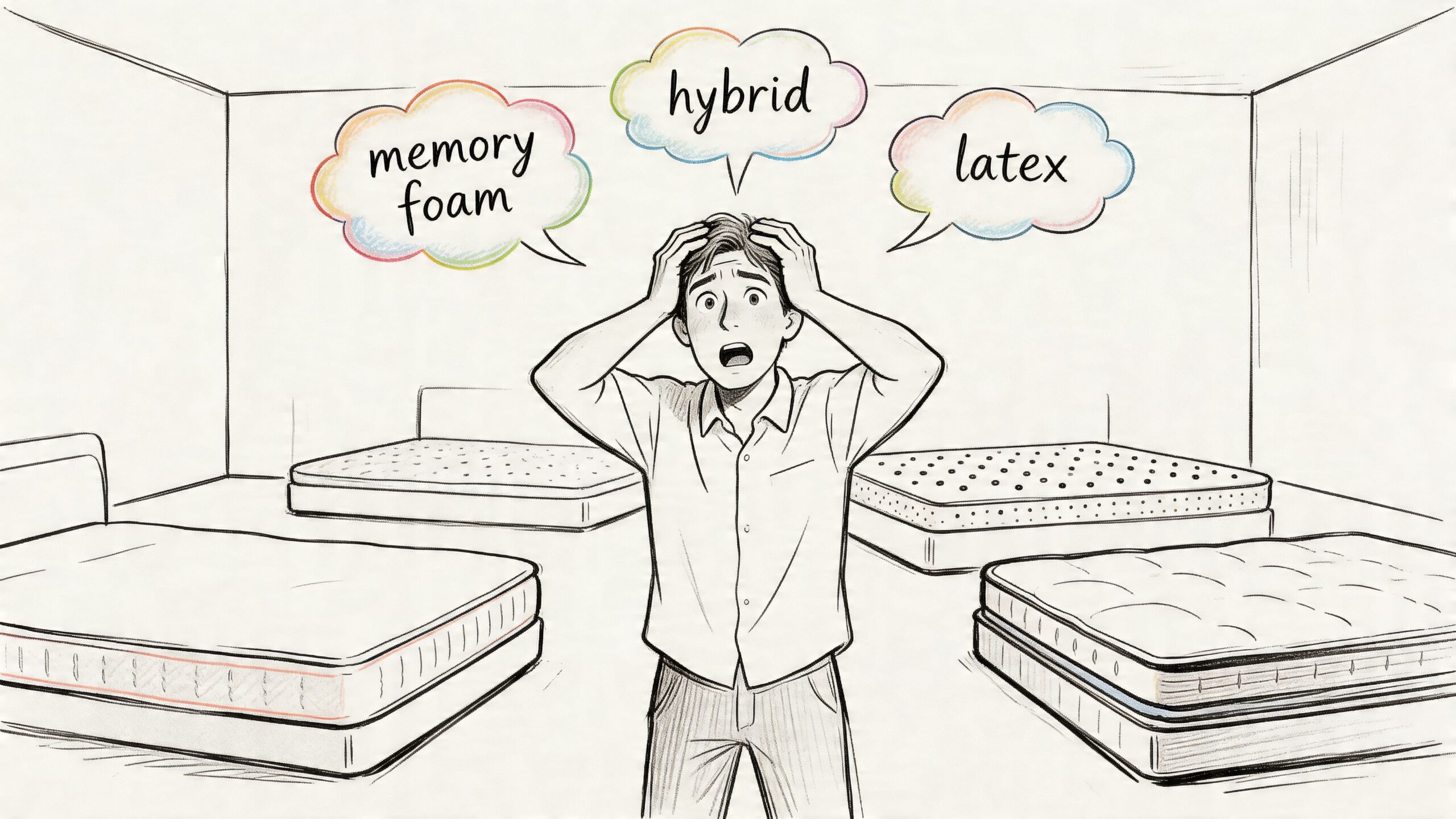
A lot of shoppers start in the same place. Their current mattress sags, sleeps hot, or leaves them sore in the morning. They search for a Lafayette furniture store, visit a furniture store near Lafayette IN, and quickly find themselves sorting through materials instead of making a clear decision.
Latex stands out because it solves a different problem than many people expect. It isn’t about that deep, slow sink you get from memory foam. It’s about support that has some give, comfort that doesn’t feel mushy, and durability that matters if you want to buy one mattress and keep it for a long time.
That matters for families in Lafayette and across Central Indiana. Many people want a mattress that works for everyday life, not just a showroom test. They want something that fits a budget, handles warm nights, and still feels good years down the road.
A mattress isn’t just a comfort purchase. It’s a home investment, the same way a quality sectional, dining set, or home office piece is.
Shoppers also don’t all come in with the same priorities. Some want lower upfront cost. Some want healthier materials. Some just want a bed that’s easy to move on and doesn’t trap heat. Latex can be a strong fit, but it isn’t automatically the right answer for everyone.
What Exactly Is a Latex Mattress and What Are the Different Types

A latex mattress uses foam made from rubber. In natural latex, that material begins as sap from rubber trees and is processed into a resilient foam layer. The result feels springy, supportive, and more buoyant than memory foam.
That “buoyant” part is where shoppers often get confused. Latex still cushions your body, but it doesn’t swallow you. If you’ve ever laid on a mattress and felt like you had to climb out of it when changing positions, latex usually feels very different from that.
Dunlop and Talalay feel different
The two names you’ll hear most often are Dunlop and Talalay. The easiest way to think about them is texture.
- Dunlop feels denser and more grounded. Like pound cake, it’s heavier, a bit more solid, and often chosen by people who like a sturdier feel.
- Talalay feels lighter and airier. Like angel food cake, it usually has a more lifted, cushioned surface feel.
Neither one is universally “better.” It comes down to what your body likes. A back sleeper may prefer a more stable feel. A combo sleeper might like something that’s easier to move across.
If you want a broader overview of how these materials fit into the mattress market, this mattress types guide is useful.
Why latex costs more
Many people see the price first and stop there. The material itself helps explain why natural latex sits in a premium category.
According to LeafScore’s latex mattress guide, a single Queen-size all-latex mattress requires the daily output of about 2,500 rubber trees across a 10-acre plantation, and the manufacturing process is time-intensive. The same source notes that a King-size latex mattress can weigh 180 to 200 pounds, which shows how dense and substantial the finished product is.
That doesn’t automatically mean every shopper needs all-natural latex. It does explain why it costs more than lab-made polyfoam.
Natural latex, blended latex, and practical value
The buying decision often involves practical considerations for families. Some shoppers want the most natural option available. Others want most of the benefits without the highest price tag.
Blended latex mattresses exist for that reason. They can give you much of the feel and resilience people want from latex while lowering the upfront cost. In plain terms, they often land in the middle ground between premium and practical.
Buying rule: Don’t shop latex by label alone. Shop by feel, construction, and whether the long-term value matches your budget.
That approach matters if you’re furnishing more than one room at once. A household may be balancing a mattress purchase with a new bedroom set, a sectional, or even outdoor furniture. In those cases, understanding the material helps you decide where you want to spend more and where you want flexibility.
The Pros The Lasting Benefits of Sleeping on Latex
The strongest argument for latex is that it performs well in ways people notice every day. It feels responsive when you move. It supports without that “stuck” sensation. And for many buyers, it holds up long enough to make the initial price easier to justify.
It’s supportive without feeling dead
Latex has a lively feel. When you roll from your back to your side, it responds quickly. That makes it appealing for combination sleepers and anyone who doesn’t like the delayed recovery feel of memory foam.
This also changes how pressure relief feels. Memory foam tends to cradle closely. Latex tends to cushion while still keeping you more “on” the mattress than “in” it. For a lot of adults, especially those who reposition often, that’s a more practical kind of comfort.
Durability is the biggest advantage
The most important latex benefit for a value-minded buyer is lifespan. According to Sleeping Organic’s breakdown of latex mattress pros and cons, a 100% natural latex mattress can last 15 to 25 years, while memory foam typically lasts 7 to 10 years.
That same source gives a simple comparison that’s useful when shoppers focus only on sticker price. A $1,500 latex mattress lasting 20 years works out to about $75 per year, while a $900 memory foam mattress lasting 8 years works out to about $112 per year. Over the same time span, the memory foam buyer ends up replacing the mattress twice.
Here’s that side by side:
| Mattress example | Approximate lifespan | Approximate cost per year |
|---|---|---|
| Latex mattress at $1,500 | 20 years | $75 |
| Memory foam mattress at $900 | 8 years | $112 |
For a homeowner, that changes the conversation. A higher upfront cost can still be the lower long-term cost.
It usually sleeps cooler and feels easier to move on
Heat is one of the most common mattress complaints. Latex is often chosen by sleepers who want a surface that feels less heat-trapping and less restrictive. If you’ve ever woken up warm and then struggled to change positions, latex often addresses both issues at once.
That doesn’t mean every latex mattress feels identical. Cover material, room temperature, base, and overall construction still matter. But in general, people who dislike that dense memory foam hug often prefer latex’s more open, buoyant feel.
If your biggest complaint is “I feel trapped and hot,” latex is one of the first categories worth trying in person.
It fits long-term households well
Latex often makes the most sense for buyers who think in years, not seasons. That includes:
- Homeowners planning to stay put: They’re more likely to value lifespan over the lowest ticket price.
- Growing families: A mattress that holds its shape longer can be easier to justify when the rest of the home also needs furnishing.
- Shoppers who dislike frequent replacement cycles: They’d rather make one stronger purchase than repeat a cheaper one.
This same long-view mindset often applies to other home purchases too. People shopping for bedroom furniture, a dining room set, or a custom order sectional usually understand that durability changes the actual value equation.
The Cons Potential Downsides to Consider Before You Buy
Latex has real strengths, but it also has trade-offs that can frustrate the wrong buyer. Ignoring those doesn’t help anyone.
The upfront price is higher
For most shoppers, the first downside is cost. Latex usually asks for a bigger payment at the start than memory foam or many innerspring models.
That can still work if you spread the purchase out sensibly or shop value-focused inventory. Simple financing can make a better mattress more manageable, and a clearance or outlet floor can be worth checking if you’re trying to keep the monthly budget in line with the rest of a room makeover.
It’s heavy, and that matters during setup
Latex is dense. That density is part of why it feels substantial, but it also makes moving one harder. If you’re the kind of shopper who rearranges bedrooms often or lives in a tight upstairs apartment, weight is a practical issue to think through.
This is one reason frame choice and delivery planning matter. Once the mattress is in place, the weight usually becomes less important. During setup, it matters a lot.
The feel isn’t for everyone
Some sleepers try latex and immediately like the springier response. Others lie down and think, “This feels firmer than I expected.”
That reaction is common when someone is coming from plush memory foam. Latex doesn’t usually give that slow-melting sensation. If that deep body-hug feel is your favorite part of mattress shopping, latex may not satisfy you the same way.
Motion transfer can be a concern for some couples
Latex often isolates motion reasonably well, but it typically won’t mute movement the same way memory foam does. If one partner is an extremely light sleeper and the other changes positions often, this becomes part of the choice.
A practical way to consider this is:
- Choose latex if you value ease of movement, bounce, and a more lifted feel.
- Choose cautiously if your top priority is absorbing as much partner movement as possible.
- Skip it if you already know you only sleep well on slow-responding, deep-contouring foam.
There’s also the issue of latex allergy. For most mattress shoppers, this isn’t the deciding factor, but anyone with a diagnosed latex allergy should discuss it carefully before choosing a latex bed.
Latex vs Other Mattresses A Head to Head Comparison

A lot of Lafayette-area shoppers walk into the buying process with one simple question: “What feels different enough to justify the price?” That is the right question. Comparing latex side by side with memory foam and innerspring usually makes the decision much clearer.
Latex sits in an interesting middle ground. It has more cushion and pressure relief than many traditional innerspring beds, but it feels more responsive and easier to move on than memory foam. For many Central Indiana families, that balance is what makes latex worth a closer look.
Mattress Type Comparison
| Feature | Latex | Memory Foam | Innerspring |
|---|---|---|---|
| Feel | Responsive and buoyant | Slow-moving and contouring | More traditional and springy |
| Ease of movement | High | Lower | High |
| Pressure relief | Strong | Strong | More variable |
| Heat management | Often better for hot sleepers | Can feel warmer | Usually more open and airy |
| Motion isolation | Good | Usually strongest | Often weaker |
| Long-term shape retention | Strong | More likely to show impressions sooner | Can sag or wear unevenly |
| Typical shopper appeal | Long-term value and support | Deep body contouring | Familiar feel and lower entry price |
Latex versus memory foam
This comparison usually comes down to how the bed responds when your body changes position.
Memory foam absorbs movement and lets you sink in more significantly. Some sleepers love that hugged feeling, especially side sleepers who want more contouring around the shoulders and hips. Other shoppers try it and feel stuck, especially if they roll from side to back during the night.
Latex has a quicker, springier response. It compresses under pressure, then rebounds faster, more like supportive suspension than slow-melting foam. If you sleep warm, move often, or do not want to fight your mattress every time you turn over, latex often feels easier to live with over the long run.
Latex versus innerspring
Innerspring mattresses still make sense for plenty of homes in Lafayette. They often have a lower starting price, they feel familiar, and they can be a practical fit for guest rooms, kids’ rooms, or tighter budgets.
Latex usually gives a more even mix of comfort and durability. Instead of feeling pressure mainly where coils push back, the surface tends to distribute weight more smoothly. Families shopping for a primary bedroom mattress often notice this difference within a few minutes in the showroom.
That does not mean innerspring is the wrong pick. It means the better choice depends on what you value most: lower upfront cost, or a material that often holds its comfort longer.
The best mattress comparison is not about which type sounds more advanced. It is about which one fits your sleep style, budget, and timeline for replacing it.
Where hybrids fit in
A hybrid combines two systems. Usually that means coils underneath and a comfort layer on top, such as latex or memory foam. For many shoppers, that creates a middle option that feels more stable than an all-foam bed but more cushioned than a basic innerspring.
If you are comparing coil-and-foam builds, this guide to hybrid mattress pros and cons can help you sort out the differences.
For Central Indiana homes, the practical questions matter just as much as the materials. A mattress that sleeps comfortably in July humidity, fits the bedroom setup, and works with your budget is usually the smarter buy. That is one reason many Lafayette shoppers make the drive to the Kokomo showroom. Lying on latex, memory foam, and hybrid models in person is much more helpful than guessing from product descriptions.
One more practical point. Mattress longevity depends partly on upkeep, no matter which material you choose. If you are comparing long-term value across mattress types, it helps to understand how often to clean your mattress and box spring, because basic maintenance affects comfort, freshness, and how well the bed holds up over time.
How to Care for Your Latex Mattress in Central Indiana

A Lafayette family can buy a durable latex mattress, set it on the wrong base, and shave years off its comfort without realizing it. That usually happens under the bed, not on top of it.
Start with support and airflow
Latex is heavy, flexible, and resilient. It works a bit like a high-quality rubber sole. It springs back well, but it still needs even support underneath. If the foundation has wide gaps, weak slats, or poor ventilation, the mattress can settle unevenly and hold more moisture than you want.
That matters in Central Indiana, where muggy stretches are part of the year. You do not need to obsess over humidity levels. You do want a setup that lets air move under the mattress instead of trapping warmth and dampness against the bottom cover.
A slatted foundation is often the safer choice for latex than an older box spring. The goal is simple. Strong support, good airflow, and no sagging in the middle.
The care routine that helps most
Latex does not require a complicated checklist. It rewards steady, basic upkeep.
- Use a breathable mattress protector. This helps with sweat, spills, and daily buildup without creating that plastic-covered feel.
- Rotate it on schedule. Head-to-foot rotation helps the mattress wear more evenly, especially for couples who sleep in the same spots every night.
- Let the bed breathe. If storage under the bed blocks airflow completely, moisture can linger longer than it should.
- Clean spots gently. Use a small amount of mild cleaner and avoid soaking the foam.
For a practical home-care reference, this guide on how often to clean your mattress and box spring pairs well with regular bedroom cleaning.
Why local setup matters
In a dry climate, a bad foundation might take longer to show problems. In Indiana, summer humidity can expose those mistakes faster. A mattress may still feel comfortable on the surface while the underside gets less airflow than it needs.
That is why I tell shoppers to treat the foundation as part of the mattress purchase, not an accessory. If you are making the drive to the Kokomo showroom from Lafayette, it is worth asking about the base, frame, and protector at the same time you test the mattress itself. Lucas Furniture & Mattress carries mattress foundations and related sleep products, and these mattress maintenance and cleaning tips to extend its lifespan can help you plan for the long haul.
Practical rule: Before your latex mattress arrives, make sure your frame supports airflow and even support across the full surface.
Is a Latex Mattress the Right Choice for Your Home
The right mattress choice usually becomes clear when you stop asking, “Which one is best?” and start asking, “Which one fits how we live?”
A latex mattress is a great fit if
Latex tends to make sense for a shopper who values durability, easy movement, and a more responsive sleep surface. It’s also appealing for people who dislike waking up hot or feeling pinned into the bed.
It can be especially practical for homeowners and families taking the long view. If you’d rather buy a mattress that can stay comfortable for many years instead of planning on another replacement sooner, latex belongs on your short list.
For budget-minded buyers, blended latex can be a useful middle option. According to Sweet Zzz’s analysis of natural and blended latex, pure Talalay queen mattresses run about $2,000 to $4,000 and can last 20 years, while 50/50 blended latex models run about $1,200 to $2,000 and retain 85% of that durability, lasting about 15 years.
You might prefer another type if
Some shoppers should be cautious. If your budget only works with the lowest upfront price and you don’t want to use financing, an innerspring or simpler foam model may be easier to manage.
You may also prefer another type if you love that deep, slow memory foam cradle and don’t want a springier response. Couples who are extremely sensitive to each other’s movement sometimes still prefer memory foam for its more muted feel. And if you have a diagnosed latex allergy, that’s a separate consideration that should stay front and center.
The simplest test
Try to answer these questions:
- Do you want bounce or sink?
- Are you buying for today’s budget only, or for years of use?
- Do you sleep warm?
- Will your current frame support a latex mattress correctly?
Those answers usually point you in the right direction faster than marketing language does.
Find Your Perfect Mattress at Your Furniture Store Near Lafayette IN
Online research helps, but mattresses are still one of the hardest home purchases to judge from a screen. Latex is a perfect example. Reading about “responsive support” isn’t the same as lying on it and noticing whether your shoulders, hips, and lower back feel comfortable.
That’s why an in-person stop matters for many Lafayette shoppers. Testing a latex bed beside memory foam and hybrid models helps you feel the differences immediately. You’ll notice whether you like the buoyancy, whether the firmness feels supportive or too pushy, and whether a hybrid design gives you the balance you want.
A mattress purchase also doesn’t happen in isolation. Families often shop for a full room setup at the same time. They may need a bed, dresser, nightstands, and maybe a sectional for the living room too. Others are replacing a guest room mattress while also looking through clearance inventory, asking about a custom order, or using simple financing so they can furnish more of the home at once.
That broader shopping context matters. A store serving Lafayette should make it easier to compare mattresses, financing choices, and delivery logistics in one trip. It also helps when the same place can handle more than sleep products, whether that means a recliner, dining furniture, home office pieces, or seasonal outdoor furniture.
If you’re narrowing choices before heading out, this Lafayette mattress store page is a practical next stop. It can help you plan what to test and what questions to ask once you’re in the showroom.
For shoppers in Lafayette, the Kokomo showroom is close enough to make try-before-you-buy realistic, and in-home delivery removes the stress of getting a heavy mattress home and set up properly. That’s especially helpful with denser builds like latex, where setup and foundation compatibility matter as much as the comfort test.
A good mattress should fit your body, your home, and your budget. When those three line up, you sleep better and shop with fewer regrets.
Visit Lucas Furniture & Mattress to compare mattresses in person, browse clearance and outlet savings, ask about simple financing, and arrange in-home delivery to the Lafayette area. Stop by the showroom near Lafayette today, or browse the full inventory online with guaranteed in-home delivery to the Lafayette area.