Experience our new Lafayette showroom — Now Open! Come Visit Us -->

Chaise Lounge for Bedroom: A 2026 Buyer’s Guide


A chaise lounge for bedroom use solves a very specific problem: a room that needs one more comfortable spot without turning into a crowded lounge. For shoppers in Lafayette, IN, that usually means a piece that works with the bed, respects the dresser and closet, and still feels polished enough to live in the room every day. At Lucas Furniture serving Lafayette, with the main showroom in nearby Kokomo, the practical question is less about decoration and more about fit, movement, and comfort, plus in-home delivery to the Lafayette area so the chaise gets into the room without added hassle.
A bedroom often has one awkward corner, one window wall, or one empty stretch at the foot of the bed that never quite earns its keep. A chaise can turn that dead space into a reading seat, dressing perch, or quiet place to rest, but only if the proportions work and the layout stays open. The best first-time buyers think like room planners first, style shoppers second.
Why a Bedroom Needs a Chaise in the First Place
A bedroom usually needs a chaise when one area keeps failing to serve a purpose. Maybe there's a chair that blocks the dresser drawer. Maybe a bench at the end of the bed looks fine but never gets used. Maybe the corner near the window feels bare, yet adding a full chair would make the room tighter instead of better.
A chaise earns its place when it solves that gap with one piece of furniture. Unlike a standard chair, it gives the body a place to stretch out. Unlike a bench, it invites longer sitting and more relaxed posture. That makes it useful for reading, putting on shoes, folding clothes, or having a quiet place to sit before the day starts.
Practical rule: if the room already feels full, the chaise has to replace a problem, not just fill an empty spot.
The easiest test is simple. If the bedroom needs a seating spot that supports legs, works for solo use, and does not interfere with the bed path or storage access, a chaise is a strong candidate. If the space only needs a quick landing spot for a bag or blanket, a bench or ottoman may do the job better. The difference matters because a chaise should improve the room's flow, not compete with it.
For Lafayette homes, that layout-first thinking is especially useful in bedrooms that do double duty, such as a dressing room, nursery, or work corner. The chaise should feel like it belongs to the room's routine. If it cannot do that, it is probably the wrong purchase.
Chaise Lounge vs Chair vs Bench vs Sectional Piece
A true chaise lounge is a hybrid of a chair and a daybed, built for one person to recline with the legs extended. That's the key distinction shoppers often miss. A sectional chaise, by contrast, is part of a larger sofa configuration, not a standalone bedroom seat. The difference matters when someone is measuring a bedroom and trying to decide what kind of seating makes sense.
For a standalone bedroom piece, the chaise has a job that a chair cannot fully do. A chair supports upright sitting. A chaise supports longer lounging. A bench supports brief use, but it doesn't give the body the same stretched-out comfort or the visual presence that makes a corner feel intentional. A sectional piece, meanwhile, belongs to a living room layout, so it follows a different set of rules about pairing and placement. The definition of the category is laid out clearly in this chaise sectional guide.
That matters because many first-time buyers shop by appearance and only later realize the piece they liked was meant to attach to a sofa. In a bedroom, that can create problems with size, access, and flexibility. A standalone chaise is easier to position near a window or at the foot of the bed, while a sectional chaise can feel out of place if it is being treated like an accent chair.
A bedroom chaise should behave like dedicated seating, not like a leftover sofa segment.
The cleanest way to think about it is this. If the goal is lounging in one specific spot, the chaise belongs in the conversation. If the goal is only extra seating, a chair or bench may be enough. If the room needs a softer, more restful shape without a full sofa footprint, the chaise usually wins that comparison.
The Four Bedroom Chaise Styles Worth Considering
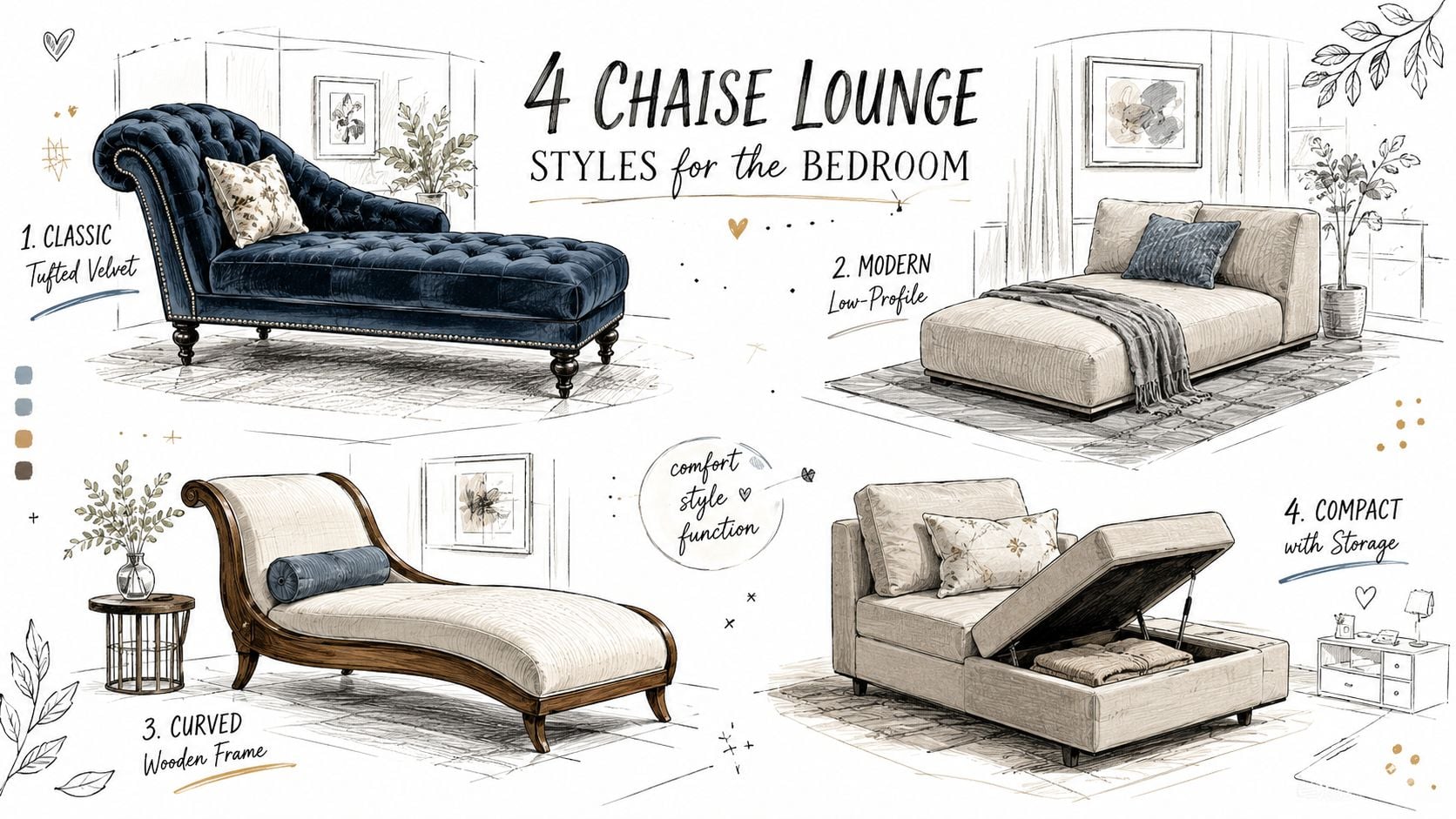
Classic upholstered chaise
This is the version most buyers picture first. It has a padded seat, a soft back, and a familiar lounge shape that works well in traditional and transitional bedrooms. It is the safest choice for buyers who want the piece to feel elegant without looking overly styled.
Its strength is comfort with a broad range of décor. Its drawback is that it can feel visually heavy in a smaller room if the upholstery is dark or the frame is bulky. That makes scale and fabric especially important.
Modern low-profile lounge
A low-profile chaise works best in rooms that already lean clean, minimal, or contemporary. The lower visual height helps the room stay open, especially when the bed, dresser, and window trim already create a lot of strong lines. It can also make a compact bedroom feel less crowded.
The trade-off is that the lower seat may not suit every body type equally well. Shoppers should test how easily they get in and out of it, especially if the piece will be used daily for reading or dressing.
Storage chaise
A storage chaise sounds ideal in a bedroom because it adds a hidden place for blankets or extra pillows. In a smaller room, that sounds efficient for a reason. It can reduce clutter without adding a separate chest.
The compromise is usually in the seat itself. The lift-up design and storage cavity can reduce seat depth or change how supportive the cushion feels. That makes it a smart choice for people who need hidden storage, not just a decorative accent.
Convertible sleeper chaise
This style makes sense in guest-friendly spaces or multipurpose bedrooms. It offers the most flexibility when a room sometimes needs to function like a sitting area and sometimes like an overnight space. It is the most utility-driven version of the category.
The drawback is mechanical complexity. Moving parts, pull-out sections, or folding elements can add weight and make the piece harder to position. For a bedroom that only needs a graceful lounging spot, the extra mechanism may be more than necessary.
The safest shortlist is usually one style for comfort and one style for utility. That keeps the search focused on what the room needs, not just what looks attractive in a catalog.
Measuring Your Bedroom Before You Measure the Chaise
A bedroom chaise should fit the room's daily movement first, then the visual arrangement. Before you compare fabrics or silhouettes, map the bed, dresser, closet door, and the route from the entry to the far side of the room. Then mark the chaise shape on the floor with tape so you can see how much space it would occupy. A practical buying guide notes that many chaise lounges are about 73 to 80 inches long, 25 to 30 inches wide, and 35 to 40 inches high, while another guide notes that compact options under 65 inches long and about 28 inches wide are often recommended in smaller bedrooms, especially when the room is under 120 square feet (room-planning guidance).
That first sketch helps because clearance usually decides whether the chaise feels useful or awkward. If the piece blocks the closet or forces you to sidestep it every morning, the size is too ambitious for the room. Independent buying guidance recommends at least 18 inches of walkway clearance on all accessible sides, while bedroom-specific guidance recommends about 3 feet of access space so circulation stays comfortable. For a chaise placed at the foot of the bed, a practical guide also recommends leaving at least 60 cm of walking clearance around the bed and nearby walls, and Lucas Furniture's room-measuring guide is a useful reference for checking those paths before you buy (bedroom chaise sizing guide).
A simple order makes the decision easier:
- Walkway first. Confirm the closet door and dresser drawers still open fully.
- Bed relationship second. Check that the chaise does not crowd the foot of the bed or squeeze the side clearance.
- Visual balance third. Make sure it does not sit so close to a wall or window that it looks forced into place.
That sequence prevents the most common mistake, choosing a chaise by length alone. The room decides whether the piece feels calm and intentional, or tight and in the way.
Frame, Springs, and Foam: What Affects Comfort
A bedroom chaise can look soft and inviting while hiding weak construction underneath. Frame quality is the first thing to check because it shapes how the piece holds up in daily use. Buying guidance points to kiln-dried hardwood such as maple, oak, or ash because it resists warping and holds fasteners better than particleboard or MDF. Joint construction matters too, and double-doweled or mortise-and-tenon joints are stronger choices than staples or glue-only assembly. See the frame and support guide for a closer look at those construction basics.
The support system under the cushion changes how the chaise feels after repeated use. A layered cushion build with high-resilience polyurethane foam in the 2.5 to 3.0 lb density range, plus a thin top layer of memory foam or latex, is recommended for better pressure relief and slower long-term sagging. For suspension, sinuous springs or eight-way hand-tied springs spread weight more evenly than webbing alone, so the seat feels supported instead of flattening out too quickly.
A quick in-store test helps separate real comfort from showroom polish.
Useful test: sit back and check whether the knees land around 90 to 100° while the seat depth still supports the sacrum without letting the feet dangle.
That check is simple, but it catches a lot. A chaise that feels plush for ten seconds can still be wrong if the seat is too deep, too shallow, or too soft in the middle. In a bedroom, that matters more than in a hallway or occasional guest area because the piece is likely to get regular use for reading, resting, or getting dressed.
Lucas Furniture serving Lafayette also points shoppers toward construction-focused selection in its own broader seating guidance, which is useful when evaluating any upholstered piece, including a chaise. See their seat and frame checklist for a helpful in-store mindset.
Fabric and Finish Choices for Real Bedrooms
Fabric choice changes how a chaise behaves in a bedroom long before the color does. Performance velvet usually suits households that want a softer, richer look while still needing practical wear. Woven linen reads lighter and airier, which works well in bright rooms, but it tends to look more relaxed and can show everyday texture faster. Top-grain leather gives a cleaner, more refined finish and is easier to wipe down, while boucle adds visual softness and a current, tactile feel that can make a plain room seem warmer.
The right choice depends on the room's real life, not just its style board. A sunny bedroom with direct window exposure asks more of the fabric than a shaded one. A room shared with pets needs a material that can handle claws and shedding. A buyer who dislikes frequent upkeep should avoid fabrics that demand extra attention just to keep the seat looking tidy.
The same logic applies to the legs and frame finish. Wood tones can make the chaise feel warmer and more traditional. Brushed metal pulls the look cooler and more contemporary. Painted black creates a sharper outline that can help the chaise stand out in a lighter room.
For readers who want a broader finish strategy, Quote My Wall vinyl wraps is a useful reference point for understanding how surface finishes can change the mood of furniture without changing the whole room.
A clean way to narrow the field is to eliminate anything that clashes with daily habits:
- If the room gets strong sun, favor fabrics and finishes that won't look tired quickly.
- If pets use the bedroom, choose surfaces that are easier to brush and clean.
- If allergies matter, skip fabrics that trap more lint and dust.
- If cleaning is a low priority, avoid materials that need constant upkeep to stay presentable.
For a deeper upholstery comparison, Lucas Furniture serving Lafayette also keeps a helpful guide on upholstery materials. That kind of reference makes the fabric decision easier before a shopper even reaches the showroom.
Placement and Styling That Make the Chaise Feel Built-In
Where the chaise sits changes whether it feels intentional or accidental. The most natural placement is often at the foot of the bed, where it can mirror the bed's shape and create a finished end point. That works best when the room has enough clearance to keep movement easy. Another strong option is an angled placement in an empty corner, which softens the room's geometry and turns an awkward spot into a destination.
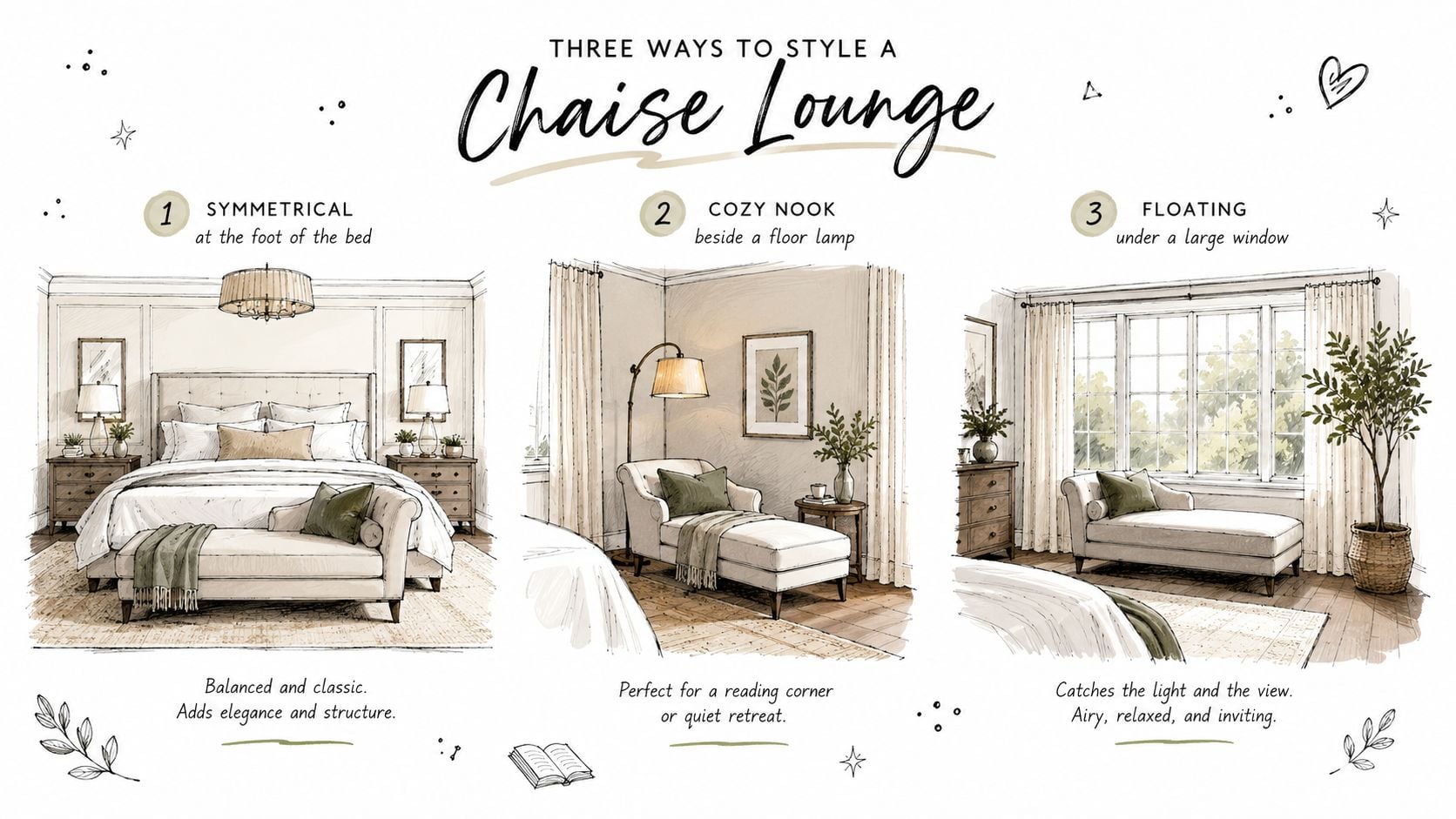
A third placement works well when the room has a window worth using. Sitting the chaise beside the window creates a reading nook, especially if a floor lamp or swing-arm sconce is nearby. A small side table gives the seat a place for a book or drink, and a low-pile rug helps the arrangement look anchored without creating a tripping point.
The mistake to avoid is pushing the chaise flat against a wall just to get it out of the way. That usually makes the room feel more cramped, not less. It also wastes the sculptural shape of the piece and can make getting in and out less comfortable.
For room flow, Lucas Furniture's bedroom furniture arrangement guide is a practical companion, especially for shoppers trying to fit a chaise into a real, lived-in floor plan.
A useful surface-care reminder also matters here. If a buyer wants to protect a chair or chaise fabric from daily wear, safe couch protection methods can help frame the conversation around maintenance and prevention, even when the piece lives in a bedroom rather than a living room.
Why Buying Your Bedroom Chaise from Lucas Furniture Makes Sense
A bedroom chaise is heavy, awkward to move, and annoying to return if the size is wrong. That makes the store choice part of the product choice. Lucas Furniture & Mattress is a locally owned retailer serving Lafayette and Central Indiana since 2002, with a 35,000-square-foot showroom and outlet in nearby Kokomo, which gives shoppers a place to compare styles, fabrics, and proportions in person. The store's Low Price Promise, outlet and clearance savings up to 70% off on qualifying items, and simple financing make it easier to bring home a better-built piece without waiting months to furnish the room.
That matters for a chaise because bedroom seating is easy to underestimate and hard to fix later. Buyers can also explore custom order options for fabrics and finishes when a standard color does not fit the room. For homes that need more than one room updated, the same retailer also carries mattresses, sectionals, outdoor furniture, dining pieces, bedroom furniture, and home office selections, so the chaise can be matched with the rest of the home instead of treated as an isolated buy.
Reliable in-home delivery to the Lafayette area is a major advantage here. For a piece this large, getting it delivered directly to the room is part of the value, not an extra convenience.
Visit Lucas Furniture & Mattress to browse bedroom seating, mattresses, clearance deals, and custom order options that fit Lafayette homes. If a chaise lounge for bedroom use is on the list, the Kokomo showroom and in-home delivery to Lafayette make it easier to choose with confidence and get the piece into the room the right way.


