Experience our new Lafayette showroom — Now Open! Come Visit Us -->

Best Memory Foam Mattress for Side Sleepers: Guide 2026

You're probably waking up on your side, rolling over, and feeling that familiar pinch in one shoulder or a dull ache at the hip. That's the moment most shoppers start hunting for the best memory foam mattress for side sleepers, and it's exactly where a Lafayette furniture store with real mattress expertise matters. Lucas Furniture & Mattress serves Lafayette, IN with in-home delivery, and its main showroom is in Kokomo, making it a practical stop for side sleepers who want to test comfort the right way instead of guessing from a screen.
| Quick Side Sleeper Guide | What to Look For |
|---|---|
| Best feel | Medium-soft to medium, about 4-6/10 firmness for most side sleepers, with lighter sleepers often preferring 3-5/10, average-weight sleepers 4-6/10, and heavier sleepers 6-7/10 to reduce excess sinkage, according to Amerisleep's firmness guide |
| Why memory foam works | It contours closely to the body, which helps ease pressure at the shoulders and hips, a point reinforced in Mattress Nerd's side sleeper guide |
| What to test | Lie on the mattress for 10 to 15 minutes and check whether the ears, shoulders, and hips line up in a relatively straight line, as advised by Wirecutter's side sleeper review |
| Quality benchmark | Memory foam at 4 pounds per cubic foot or higher, and polyfoam at 2 pounds per cubic foot or higher, per Wirecutter's foam mattress guide |
Why Side Sleepers Struggle With the Wrong Mattress
A side sleeper usually knows within a night or two when a mattress is off. The shoulder feels pinched, the arm goes numb, or the hip starts aching because the surface is not matching the body's shape.
Side sleeping puts most of the load on two pressure points, the shoulder and the hip. A mattress that is too firm hits those areas hard. A mattress that is too soft lets the hips drop too far and pulls the spine out of line. That is why experienced mattress guides keep landing in the same comfort range, medium-soft to medium, or about 4-6/10 firmness, because it balances pressure relief with support for spinal alignment, as noted in Mattress Nerd's side sleeper recommendations and AARP's mattress guide for side sleepers.
The mistake I see most often is shoppers assuming softer automatically means better. It does not. The right mattress has to compress enough to cushion the shoulder and hip, while still holding the middle of the body in place.
Practical rule: if a side sleeper wakes up sore more than once in a row, the mattress is usually failing at either pressure relief or support, sometimes both.
Body weight changes how that tradeoff feels, and foam density changes how long the bed keeps doing its job. Lighter side sleepers usually need less resistance to get pressure relief, while heavier sleepers need more support from the foam so the hips do not sink too far. That is why a mattress can feel fine for a few minutes on the showroom floor, then feel wrong after a full night.
At Lucas Furniture & Mattress, that difference shows up fast in person. In the Kokomo showroom, a side sleeper can lie down, feel where the foam gives, and check whether the lower back stays level instead of dipping. For shoppers who want a better handle on foam feel and build quality, the memory foam mattress benefits guide gives a useful starting point before trying beds in person.
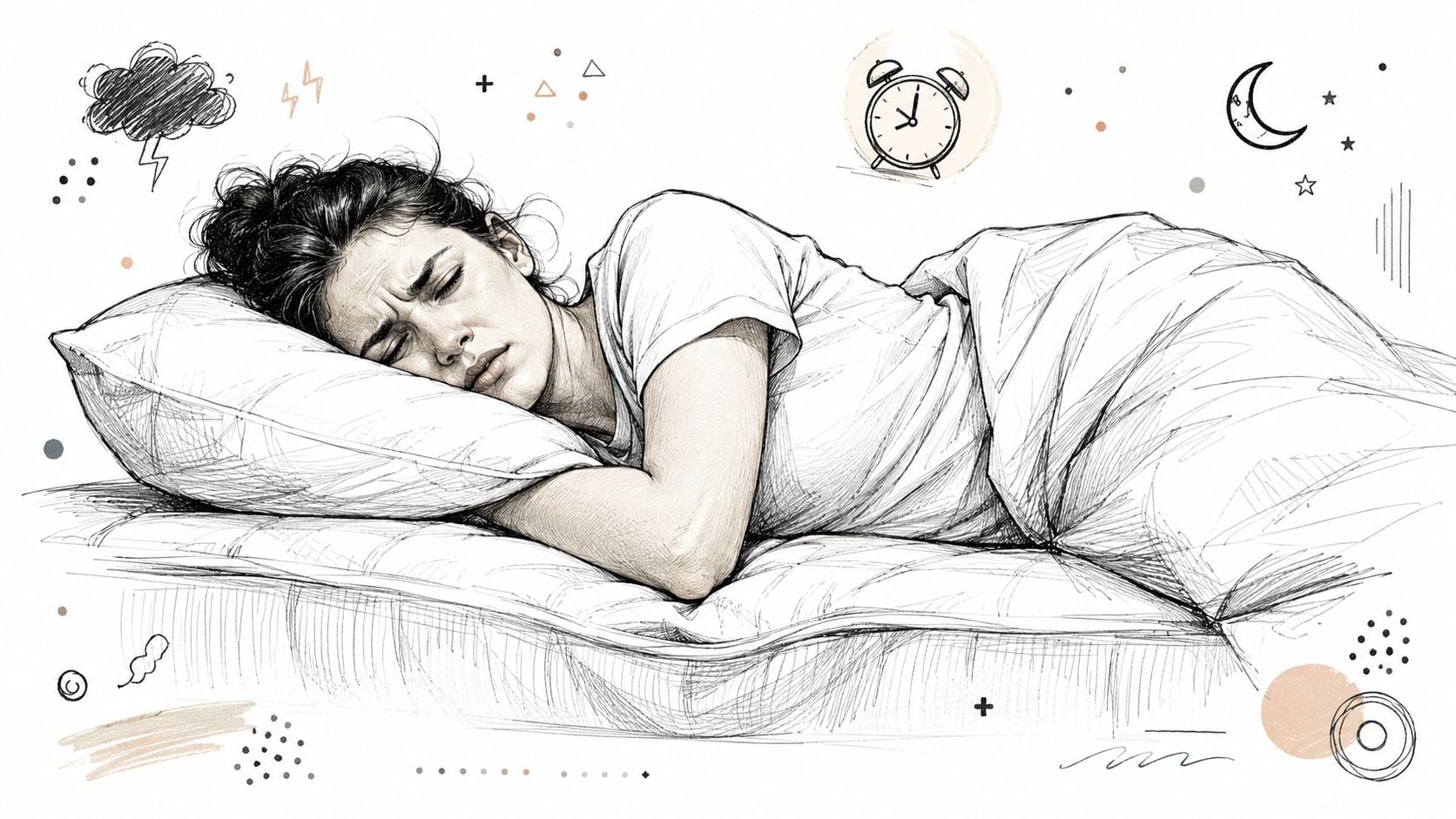
How Memory Foam Supports Side Sleeping Alignment
Memory foam earns its reputation because it responds to the body instead of pushing back evenly everywhere. For side sleepers, that matters. The shoulder and hip need deeper contouring than the waist, and a conforming foam surface can fill the gap that often appears between the mattress and the body's curves.
Pressure relief first, then support
The best side-sleeper mattress is not the softest mattress on the floor. It's the one that lets the shoulder and hip sink in enough to reduce pressure, while keeping the torso from sagging. That's why a memory foam mattress often feels “hugged” at first contact, but the key test is whether the spine still feels neutral after a few minutes on the side.
AARP's guidance on side sleepers points to memory foam, latex, and hybrid constructions as workable options when they preserve spinal alignment during side-lying, which is the part shoppers should care about most, not the material name alone. In practice, foam-heavy hybrids can be a smart compromise for people who want contouring without the deepest sink.
Side sleepers often judge a bed too quickly. A mattress can feel plush for 30 seconds and still be wrong if the hips drop too far over time.
For shoppers who want a deeper breakdown of foam feel and construction, Lucas Furniture & Mattress has a useful memory foam mattress benefits guide that helps translate mattress language into something practical before a showroom visit. That kind of preparation pays off when the goal is better sleep, not just a softer surface.
Matching Firmness to Your Body Weight and Sleep Style
Body weight changes how a mattress feels, and generic advice misses that. A side sleeper who weighs less than 130 pounds will not sink into foam the same way a heavier sleeper will, so the comfort target has to change. The wrong firmness can leave a lighter sleeper stuck on top of the bed or let a heavier sleeper sink too far into the support core.
Side Sleeper Firmness Guide by Body Weight
| Body Weight | Firmness (1-10) | Comfort Layer | Foam Density | Best Construction |
|---|---|---|---|---|
| Lighter side sleepers | 3-5/10 | Softer, more contouring top layer | Higher-quality comfort foam helps prevent quick flattening | Memory foam or a foam-heavy hybrid with a forgiving surface |
| Average-weight side sleepers | 4-6/10 | Balanced cushioning with enough pushback underneath | Look for denser support materials where possible | Memory foam or hybrid, depending on how much sink feels comfortable |
| Heavier side sleepers | 6-7/10 | Cushioned but more resilient top layer | Stronger support core matters more here | Hybrid construction that prevents excessive sinkage |
That table matches the broader guidance that most side sleepers do best on a medium-soft to medium mattress, around 4-6/10, while lighter sleepers often prefer 3-5/10 and heavier sleepers may need 6-7/10 to keep from sinking too far, as outlined in Amerisleep's firmness guide. The point is simple, firmness has to match how much of the body needs to sink before the spine loses alignment.
Why more memory foam isn't always better
Side sleepers do need a cushioned top layer, but too much soft foam can trap the hips and make turning harder during the night. Some shoppers sleep better on a hybrid with memory foam or latex on top because the responsive support underneath keeps the body from settling too much, a nuance highlighted in Ideal Home's side sleeper mattress guide.
For shoppers who want a simple starting point, Lucas Furniture's mattress firmness guide helps narrow the field before anyone lies down in the showroom. That saves time and usually leads to a better first test.
Evaluating Foam Density and Cooling Technology
Comfort labels can fool shoppers. Foam density gives you something concrete to judge, and it matters because density affects both durability and feel. Denser foams usually hold up longer and keep their support, while lighter foams tend to soften faster and lose structure sooner.
A good starting point is simple. Memory foam should ideally be at least 4 pounds per cubic foot, and polyfoam should be at least 2 pounds per cubic foot. Those numbers do not promise a perfect mattress, but they do help separate sturdier builds from vague marketing claims, as explained in Wirecutter's foam mattress guide.
For side sleepers, density matters because the shoulders and hips sink first. If the foam is too light, those pressure points can bottom out too quickly and leave the spine out of line. If the foam is dense enough, the mattress can cushion those areas without feeling mushy.
What to look for beyond the foam label
Memory foam can sleep warm, so cooling features deserve attention. Gel infusions, open-cell structures, copper infusions, and phase-change materials are all used to move heat away from the body or reduce that stuck-in-the-mattress feeling. None of them works like magic on its own, but each one can help side sleepers who heat up where the shoulders and hips press deepest.
Zoning is another smart feature. A zoned mattress uses firmer foam in the areas that need more support and softer foam where pressure builds, which helps side sleepers keep the lower back from dipping while still cushioning the upper body. That kind of build works well for shoppers who want comfort and alignment without feeling trapped in the middle of the bed.
The DME Superstore mattress selection guide is useful for shoppers who want another pressure-relief reference before they lie down in a showroom. For anyone who sleeps hot, Lucas Furniture & Mattress also keeps a cooling mattress guide for hot sleepers that fits well with hands-on testing. The smartest move is still to test the bed in person, but the right foam specs make that test much easier to read.
Why Choose Lucas Furniture for Your Mattress Purchase
The advantage of shopping with Lucas Furniture & Mattress is that the mattress decision doesn't happen in a vacuum. Shoppers get the Low Price Promise, access to simple financing, and the ability to compare comfort in a real showroom instead of guessing from photos. That combination matters for Lafayette families who want the right mattress and want it without paying more than they should.
The shopping experience is the product
The Kokomo showroom gives side sleepers a chance to compare feel, edge support, and ease of movement across multiple beds in one visit. That matters because a mattress that feels fine in a short demo may not hold up once someone lies there long enough to let the body settle. Lucas Furniture also offers in-home delivery to the Lafayette area, so the purchase doesn't end at the door, it ends with the mattress set up where it belongs.
Clearance and outlet pricing are part of the value story too, with savings that can reach up to 70% off on select items, which is a real advantage for shoppers balancing quality with budget. The store also carries sectionals, living room furniture, dining, bedroom, home office, and outdoor furniture, so bedroom shopping can turn into a full-home plan without losing sight of the mattress goal.
For readers who want more context on comfort and pressure relief before choosing, the DME Superstore mattress selection guide is a useful outside reference on mattress selection basics. Lucas Furniture's own how to improve sleep quality guide ties that thinking back to practical buying decisions.
Your Mattress Testing and Shopping Checklist
A showroom visit should start with the body, not the sales pitch. Lie down in your usual side-sleeping position, stay there for 10 to 15 minutes, and see whether the ears, shoulders, and hips form a fairly straight line. That kind of hands-on check matters more than a quick bounce test, and it lines up with the testing approach used in Wirecutter's side sleeper review.
Bring these questions to the showroom
- What is the foam density? Ask for the actual numbers, especially on mattresses that rely heavily on memory foam or polyfoam.
- How does it handle pressure at the shoulder and hip? A mattress rep should be able to explain exactly where the bed is built to give and where it stays supportive.
- What's the trial period? A 100+ night trial is ideal when available, because short test runs do not show how a mattress feels after weeks of real use, and a solid mattress shopping guide should spell that out clearly.
- What's covered under warranty and return policy? Those details matter more than the wording on the tag.
- Does the bed feel easy to reposition on? Side sleepers need cushioning, but they also need enough response to roll over without fighting the surface.
Online shoppers should use the same checklist by reading the spec sheet closely and checking verified customer feedback for pressure relief, edge feel, and temperature control. If the listing does not clearly explain density, layer construction, or trial terms, treat that as a warning sign.
Lucas Furniture's mattress shopping tips page gives shoppers a practical way to compare options before visiting Kokomo. It also helps connect the mattress choice with dressers, nightstands, and the rest of the bedroom, so the bed fits the room instead of feeling like a separate purchase.
Visit Lucas Furniture Near Lafayette Today
Side sleepers don't need another generic comfort pitch. They need a mattress that cushions the shoulder, supports the hip, and keeps the spine in line, and they need a place where they can test that fit before buying. Lucas Furniture & Mattress has served Central Indiana since 2002, and that local track record shows up in the way the store handles value, service, and delivery to Lafayette.
Visit the Kokomo showroom to compare mattresses in person, browse online any time, or check the clearance section for outlet pricing with up to 70% off on select items. Shoppers can also ask about simple financing, custom orders, and in-home delivery to Lafayette, which makes it easier to bring home the right mattress without delaying the purchase.
Lucas Furniture also carries complete bedroom pieces and outdoor furniture, so one trip can cover the sleep setup and more. For Lafayette shoppers who want a practical answer instead of marketing fluff, that's the kind of place worth visiting.
A CTA for Lucas Furniture & Mattress.