Experience our new Lafayette showroom — Now Open! Come Visit Us -->

Bench Seating Dimensions: Your Guide to Perfect Fit


If you're shopping for a bench for a dining nook, entryway, or window seat, the hardest part usually isn't style. It's getting the bench seating dimensions right so the piece feels good in daily use and fits the room without crowding it. That's where a knowledgeable Lafayette furniture store should help, not just sell you something that looks good on a showroom floor.
Lucas Furniture serves Lafayette from our Kokomo showroom and outlet, with reliable in-home delivery across Central Indiana. If you're comparing a dining bench, a storage bench, an outdoor bench, or a custom order piece, this guide will help you sort out the practical rules of thumb that matter most before you buy.
The Ultimate Bench Seating Dimensions Guide from Lucas Furniture, Your Lafayette Furniture Store
You find a bench that looks right in the photo, get it home to Lafayette, and then the problems show up fast. The seat sits too low for the dining table, too deep for comfortable posture, or too short for the number of people who need to use it.
Bench mistakes often come from choosing length first and treating height and depth as secondary. In practice, seat height, seat depth, and personal space decide whether a bench feels comfortable after ten minutes or after years of daily use.
For day-to-day planning, a dependable rule of thumb is simple: many adult benches land around 18 to 19 inches high, about 15 to 20 inches deep, and allow roughly 18 to 24 inches of width per person. Those numbers are starting points, not fixed rules. A bench with a back, a thick cushion, a storage base, or heavier table aprons can feel very different from a plain wood bench built to the same outside dimensions.
Here's the quick reference I use with customers shopping Lucas Furniture from Lafayette.
| Dimension | Practical rule of thumb | Why it matters |
|---|---|---|
| Seat height | 18 to 19 inches | Helps sitting down and standing up feel natural |
| Seat depth | 15 to 20 inches | Balances support with an upright sitting position |
| Width per person | 18 to 24 inches | Affects whether the bench feels comfortable or crowded |
| 6-foot bench capacity | About 3 to 4 adults | Depends on body size and how closely people sit |
| 8-foot bench capacity | About 4 to 5 adults | Better suited to larger dining areas or patios |
One practical rule matters more than the rest. Fit the bench to the way it will be used, then confirm it fits the room.
That is especially important in older Lafayette homes, breakfast nooks, mudrooms, and window-seat layouts where wall length is only part of the equation. Door swings, walkway clearance, and table leg placement can all change what size bench works. Before you order, use Lucas Furniture's guide to measuring furniture for your home so the bench fits the space as well as it fits the people using it.
Quick Reference Bench Dimension Chart
Different rooms call for different priorities. Dining benches need better table compatibility. Entryway benches need a smaller footprint. Window seats usually need cushion planning. Outdoor benches need enough room per person without overfilling a patio.
Use this as a quick planning chart.
| Bench Type | Seat Height | Seat Depth | Width Per Person |
|---|---|---|---|
| Dining | 18 to 19 inches | 15 to 20 inches | 18 to 24 inches |
| Entryway | 18 to 19 inches | 15 to 20 inches | 18 to 24 inches |
| Window seat or built-in | 18 to 19 inches | 15 to 20 inches | 18 to 24 inches |
| Outdoor | 17 to 19 inches | 15 to 20 inches | About 24 inches |
That chart is a starting point, not a commandment. A bench with a back, loose cushions, arms, or storage base changes how the seat feels in real life. So does the room around it. Before buying anything, measure the wall, doorway, and path of travel. Lucas has a helpful guide on how to measure furniture so you can avoid the classic problem of choosing a bench that technically fits the tape measure but not the space.
What this chart helps you decide
- Dining use: Keep posture upright and make table clearance the priority.
- Entryway use: Favor a shallower profile if traffic flow is tight.
- Built-ins: Account for cushion thickness before finalizing the wood base.
- Outdoor spaces: Think in terms of seating capacity, not just overall length.
Standard Bench Seating Dimensions Explained
A bench feels right when the proportions match the way people sit, stand, and shift around during daily use. The three measurements that do most of the work are seat height, seat depth, and the amount of width each person really gets.
Seat height and why it matters
For adult seating, the usual target is 18 to 19 inches high, and in many homes around Lafayette, 18 inches lands in the comfort sweet spot. It pairs well with average dining and entry furniture, and it gives most adults a natural foot position on the floor.
Even a small change matters here. A bench that sits too low makes people fold their knees sharply and push harder to stand up. A bench that sits too high can leave shorter users with pressure under the thighs, especially if the front edge is thick or square.
I also tell customers to measure to the finished seat, not just the wood box underneath. A thick cushion can change the effective sitting height enough to make a good-looking bench feel awkward.
Depth and width affect comfort fast
Seat depth usually falls in the 15 to 20 inch range, with 18 to 24 inches of width per person as a practical planning rule. Those numbers sound simple, but mistakes frequently happen during bench shopping.
A deeper seat is not always better. On a backless bench, extra depth can make people sit on the front few inches anyway, which wastes floor space without improving comfort. In a tight breakfast nook or entry hall, that extra depth also steals walking room.
Width per person is where real-life use shows up. Three adults on a six-foot bench can work. Four can fit if everyone is comfortable sitting close. For everyday family use, winter coats, handbags, and a little elbow room usually push the decision toward a longer bench or fewer seats.
Bench sizing problems usually come from lost usable space, not from the overall length on the tag.
Details that separate usable from uncomfortable
The shape of the seat matters almost as much as the raw dimensions. A slight seat tilt and a relaxed back angle usually feel better than a perfectly flat, upright build, especially if someone will sit there longer than a few minutes. Retail labels do not always list those angles, so this is one case where sitting on the piece matters more than reading the spec card.
Construction changes the feel too. A thick apron, wide arms, or a storage lid can cut into the sitting area more than shoppers expect. If you are comparing storage options, check the inside sitting width against the outside footprint. Some compact pieces, including a bench seat with storage, make better sense for smaller Lafayette mudrooms and entryways than a full-size dining bench.
At Lucas Furniture, this is usually the point where bench shopping gets easier. Once the height, depth, and true sitting width are dialed in, the style decision becomes much more straightforward.
Sizing Your Dining Bench for Table Compatibility
Dining benches don't live alone. They have to work with the table, the apron underneath it, and the space behind them. That's why a bench that feels fine in isolation can become irritating once it's pushed into a real dining layout.
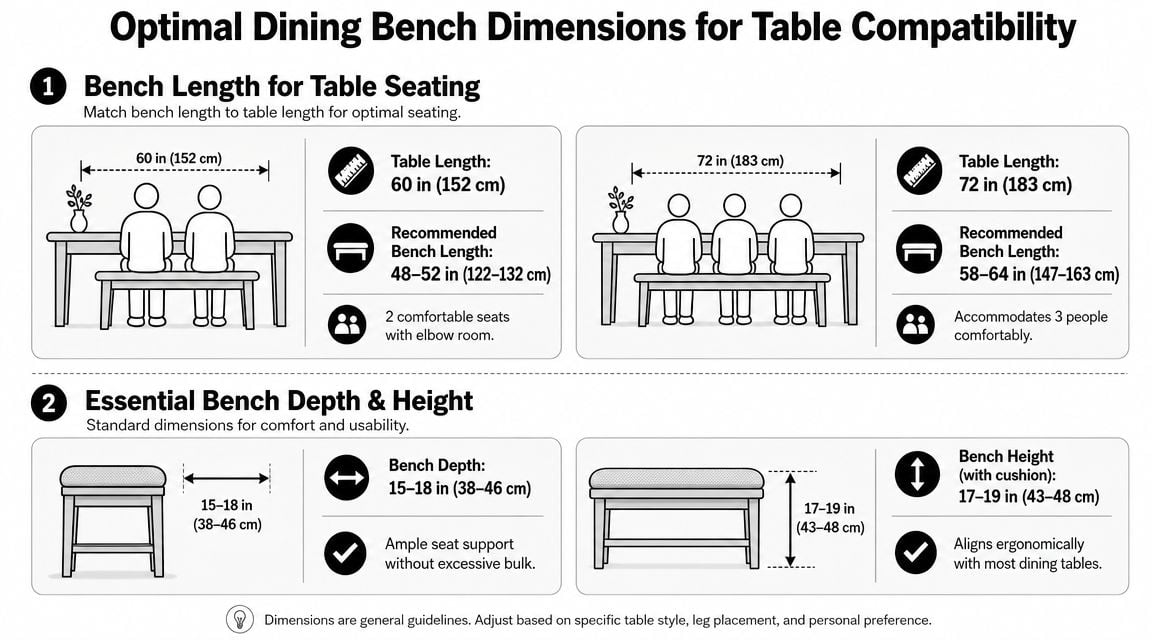
Match the bench to the table, not just the room
For most dining setups, I prefer a bench that's visually shorter than the tabletop so it tucks in cleanly and doesn't leave corners sticking out into walk paths. A bench that runs nearly the full table length can work, but only if the room is open enough and the table base doesn't interfere with knees.
Two things matter more than appearance:
- Leg clearance under the table: Check the table apron and support structure so seated people don't hit their thighs.
- Easy entry and exit: Leave enough room behind the bench so someone can slide in and out without dragging furniture around.
A dining bench should disappear under the table when it's not in use. If it can't, make sure the room can absorb the extra depth without feeling pinched.
Common fit issues I see most often
Some problems show up again and again in Lafayette homes, especially in breakfast areas and open-concept dining spaces:
- Bench too tall for the table: This forces an awkward shoulder position and makes the tabletop feel too low.
- Bench too deep: People can't sit close enough to dine comfortably.
- Bench too long: The ends collide visually with table legs or block circulation.
- Bench with a thick cushion: The final sitting height ends up higher than planned.
If you're pairing a bench with a new dining set, a table sizing guide helps avoid these conflicts before delivery. Use this dining table size guide to compare table proportions and room layout before choosing the bench.
Keep the layout functional
A bench is one of the cleanest ways to add seating in a family dining room, especially when you want a lighter look than a row of side chairs. It works best when the table base is forgiving and the bench can slide in without fighting for space.
Designing Built-In Benches and Window Seats
Built-ins are less forgiving than freestanding furniture. Once the carpenter closes the wall and the cushion is ordered, small mistakes become permanent. That makes planning more important here than in any other bench project.
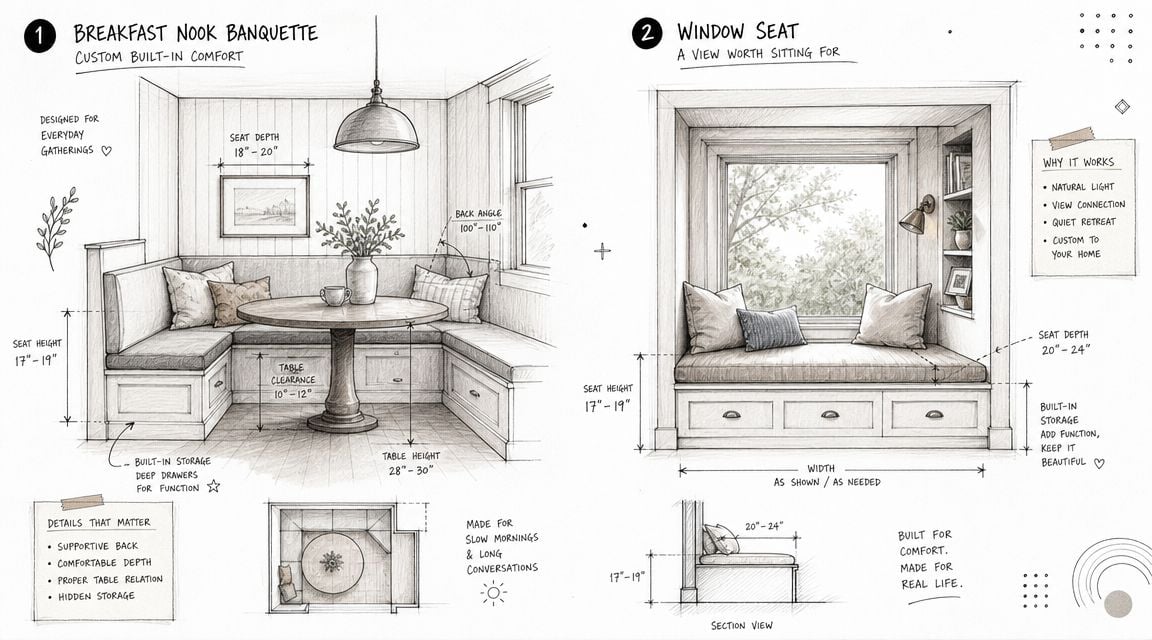
Start with the finished sitting height
For built-ins, I always think in terms of the finished seat, not the wood box. If you're adding a cushion, the structure needs to be lower than the final target so the compressed cushion lands in a comfortable range. That's one of the easiest details to miss when a homeowner gives a builder only a rough sketch.
Wall conditions matter too. Corners aren't always square, and window trim often steals more usable width than expected. Measure in multiple places, especially if the bench runs wall to wall.
Dining banquette or lounge seat
A breakfast nook bench should sit more upright than a reading seat. If the seat gets too deep without a supportive back cushion, people slump. If the back is too vertical, the bench looks neat but doesn't invite anyone to stay long.
A few practical checks help:
- For dining use: Keep the posture more upright and make table access easy.
- For window seating: Build in space for back cushions if you want a softer, more relaxed seat.
- For storage lids: Check that the lid can open without hitting trim, radiators, or the sill.
For outdoor rooms and patios, some homeowners also look at built-in seating ideas from R.E. and Sons Landscaping to compare how fixed seating changes flow, storage, and conversation areas.
Built-ins succeed when the measurements reflect how you'll actually use the seat, not just how you want it to look in a drawing.
Plan around the room's real use
If the bench sits under a window, decide whether the priority is dining, reading, or overflow seating. Those are different jobs. A family breakfast banquette should feel supportive at a table. A reading nook should invite you to settle in. If you're leaning toward the second option, this guide to the perfect reading nook is useful for thinking through comfort layers beyond the basic bench box.
Choosing the Right Entryway and Outdoor Bench
You feel bench size fast in these two spots. In an entry, a bench that sticks out too far catches knees, bags, and the door swing. Outside, a bench that looks right in a photo can feel crowded once two adults sit down with coats, drinks, or garden tools nearby.
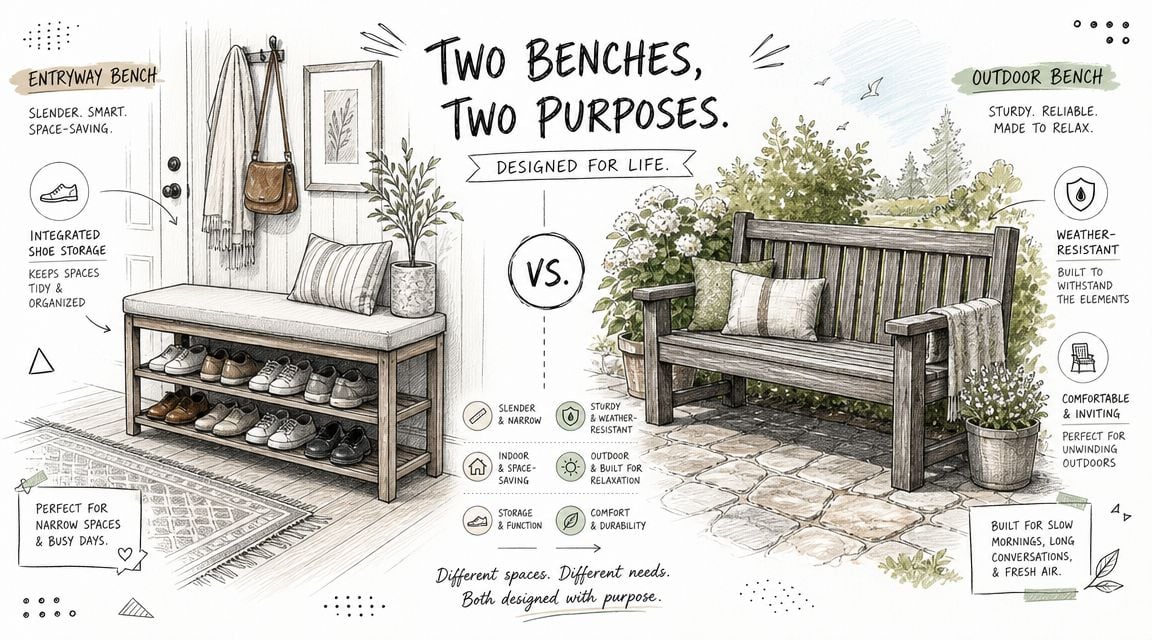
Entryway benches need clear walking space
For most Lafayette homes, the entry bench has one main job. It should give you a stable place to sit and put on shoes without crowding the path in and out of the house.
That usually means keeping the seat depth controlled and the overall profile simple. Open space underneath helps visually, but the bigger practical win is easier floor cleaning and room for shoes or baskets. A bench with arms can feel finished, though in a tight foyer those arms often waste width that could have gone to usable seating.
Storage is helpful if it stays easy to access. Lift tops need room to open. Baskets need enough clearance to slide out without scraping the wall or trim. In older Lafayette entries, where square footage is often tighter than people expect, those details matter more than decorative extras.
Outdoor benches need enough personal space and the right material
An outdoor bench gets used less formally than a dining bench. People perch on it with muddy shoes, stretch out for a minute on the porch, or pull it into a conversation area when family comes over. That flexibility makes width and material more important than small style details.
A good rule is to allow about two feet of width per adult, then check whether arms reduce the usable sitting area. If you want the bench for brief seating between gardening tasks, a firmer seat and more upright posture work well. If the bench will anchor a porch or patio sitting area, a little more room to shift positions usually feels better.
Material choice affects comfort over time. Wood has warmth and can age beautifully, but it needs upkeep. Metal can last well, though some finishes get hot in full sun. All-weather materials cut maintenance and make sense for exposed Indiana conditions. Lucas shares more planning ideas in this guide to essential outdoor furniture pieces if you're building out a full deck, porch, or backyard seating area.
Bench sizing shows up in more places than people expect
Homeowners often start thinking seriously about bench dimensions during a remodel, not during casual furniture shopping. A good example is designing showers with benches. The same basic questions apply there too. How long will someone sit, how easy is the transfer on and off the seat, and how much usable depth is left once walls and surrounding fixtures are in place?
The bench that works best is the one sized for its intended purpose. In an entry, that task is usually quick daily use. Outdoors, it is comfort, weather resistance, and enough room for the way your household gathers.
Why Choose Lucas Furniture as Your Lafayette Furniture Store
A lot of stores can show you a bench. Fewer can help you choose one that works in your home. That's the difference people usually notice when they shop with a local team that serves this area every day.
For Lafayette shoppers, Lucas Furniture is a practical choice because the business is locally owned, serves Central Indiana, and understands the kinds of homes people here are furnishing. Some customers need a compact bench for an entry. Others are matching a dining bench to an existing table, shopping clearance, replacing a worn sectional, or trying to furnish several rooms at once on a real budget.
What matters beyond the product tag
The strongest value usually comes from a combination of factors:
- Local guidance: Advice is tied to real room layouts, not generic catalog assumptions.
- Whole-home selection: You can compare dining, bedroom, living room, home office, and outdoor furniture in one trip.
- Flexible options: Many shoppers need a different finish, fabric, or layout than what's sitting on the floor.
- Reliable follow-through: Delivery into the Lafayette area matters just as much as the sale.
Strong customer reviews matter because they often reflect the parts of the experience that can't be seen online. Communication. Problem-solving. Whether the process feels straightforward.
The right furniture store near Lafayette IN doesn't just offer choice. It helps you avoid expensive sizing mistakes.
Custom Orders and In-Home Delivery for Lafayette
Bench seating dimensions often lead people to one conclusion. Standard sizes get close, but not always close enough. That's where custom order options become useful.
If your dining wall is an awkward length, your nook needs a specific finish, or your entry bench has to coordinate with existing wood tones, custom ordering gives you more control over the details that affect fit and appearance. The same idea applies if you're furnishing beyond the bench itself and need adjacent pieces to work together across a room.
When custom ordering makes sense
Custom ordering is worth considering when:
- The room has a nonstandard footprint: Alcoves, bump-outs, and narrow entries often punish one-size-fits-all furniture.
- You need material coordination: Fabric, finish, and leg style can matter as much as dimensions.
- You want the bench to work with a larger plan: Dining table, side chairs, storage, and accent pieces should feel connected.
This is also the one place where Lucas Furniture & Mattress can be useful as a practical option among local retailers because many collections allow shoppers to choose different fabrics, finishes, and configurations rather than settling for a single stocked version.
Delivery matters more than people expect
A bench can be deceptively simple to move until it has to go through a tight doorway, around a stair landing, or into a finished breakfast nook without scraping walls. Reliable in-home delivery to Lafayette removes a lot of that stress. It also helps when you're furnishing multiple rooms and want the setup handled in one coordinated visit instead of piecing everything together yourself.
Furnish Every Room with Our Clearance Savings
Most shoppers who start with a bench are really solving a larger room problem. The dining space needs seating. The entry needs function. The living room still needs a new sectional. The bedroom isn't done. Once that happens, value across the full house matters more than any single item.
Lucas Furniture makes sense for that kind of project because the selection goes beyond occasional seating. You can shop living room furniture, dining sets, bedroom pieces, home office furniture, and seasonal outdoor furniture without bouncing between stores and trying to match styles from memory.
Clearance is where many smart buys happen
For budget-conscious shoppers, the outlet and clearance side of the business is often where the conversation gets interesting. Lucas promotes up to 70% off clearance and outlet savings, which can make a big difference when you're furnishing more than one room and still trying to keep quality in the mix.
A few categories where clearance can be especially useful:
- Living room updates: Sofas, recliners, and sectionals that help anchor the space.
- Dining pieces: Benches, tables, and chairs for everyday family use.
- Bedroom furniture: Beds, dressers, and practical storage pieces.
- Home office needs: Desks and seating that make remote work more functional.
If saving money is part of your plan, it's worth taking time to explore our clearance deals before making a final decision.
Achieve Your Dream Home with Simple Financing
A lot of good furniture decisions get delayed for one reason. Timing. You may know what fits the room, what matches the style, and what would make the house more comfortable, but you don't always want to pay for an entire project all at once.
That's where simple financing can help. Instead of shrinking the plan to fit one purchase at a time, financing lets many households move forward on the pieces they need now while paying over time. For growing families, first homes, and room-by-room refreshes, that flexibility matters.
When financing is the practical move
Financing often makes the most sense in situations like these:
- You're furnishing multiple spaces at once
- You need better sleep and seating at the same time
- You'd rather buy the right piece now than replace a cheap stopgap later
There's also a psychological advantage. When the budget is structured, people tend to make better choices on dimensions, comfort, and durability instead of rushing into whatever has the smallest sticker price that day.
A good financing option doesn't change what fits your home. It changes how manageable the purchase feels.
For shoppers comparing their options, our flexible financing options make it easier to plan a room intentionally instead of settling.
Complete Your Sanctuary with the Perfect Mattress
Comfort shouldn't stop at the dining room or entryway. Once the gathering spaces are handled, the bedroom deserves the same level of attention. That's especially true if you're already replacing furniture and trying to create a home that feels finished, not just furnished.
A mattress purchase usually follows the same logic as a bench purchase. Appearance matters, but daily comfort matters more. The right support, feel, and fit can change whether a room is decorated or restorative.
What to look for in mattress shopping
A better mattress search starts with practical questions:
- Sleeping position: Side, back, and combination sleepers often prefer different feels.
- Budget range: Good options exist across multiple price points.
- Whole-room planning: If you're replacing the bed, dresser, or nightstands too, it helps to coordinate the purchase.
Lucas has a dedicated mattress center and a useful Mattress Guide for shoppers who want to compare comfort options without guessing. If you're building out a more complete bedroom setup, that kind of guidance can save time and reduce the usual trial-and-error frustration.
A complete home feels cohesive
The homes that feel best to live in usually get the basics right across every room. Seating fits. Storage works. The bedroom supports real rest. That's what turns furniture shopping from a series of unrelated purchases into a home plan that makes daily life easier.
Shop Your Way and Visit Our Kokomo Showroom Today
Some people want to browse online and compare dimensions from the couch. Others want to sit on the bench, check the finish in person, and see how a dining set or bedroom suite looks under real lighting. Both approaches are valid, and Lucas makes room for both.
If you're near Lafayette, the Kokomo showroom gives you the advantage of seeing furniture in complete room settings instead of isolated thumbnails. That helps with scale, color, texture, and comfort. It also makes it easier to compare a bench against dining chairs, sideboards, sectionals, and bedroom furniture in one trip.
Why the showroom visit helps
Shopping in person is especially useful when you're deciding between:
- A freestanding bench and a built-in-inspired look
- A compact entry piece and a storage bench
- An everyday dining bench and something more decorative
- A single-room update and a whole-home purchase
Online shopping still plays an important role. You can browse anytime, save favorites, and narrow down options before making the drive. Then, if you want help with fit, finish, financing, or delivery, the team can help you turn that research into a final decision that works for your Lafayette home.
For the best selection of furniture with expert advice and guaranteed in-home delivery to Lafayette, visit our Kokomo showroom today or browse our entire collection online. Your perfect home is waiting at Lucas Furniture.
Visit Lucas Furniture & Mattress online or stop by our showroom near Lafayette today. Browse furniture for every room, shop clearance, compare mattress options, ask about custom order choices and simple financing, and count on guaranteed in-home delivery to the Lafayette area.