Experience our new Lafayette showroom — Now Open! Come Visit Us -->

Expert Wood Furniture Cleaning Tips


A dining table can look clean at a glance and still be collecting fingerprints, dust, food residue, and moisture marks. That's often when homeowners start searching for a furniture store near Lafayette IN or a trusted Lafayette furniture store for advice, because they want their wood pieces to last, not just look good for one season.
For families across Lafayette, IN, and Central Indiana, good furniture care starts with clear habits and reliable guidance. The main showroom and outlet location serving Lafayette is in Kokomo, and customers who shop locally also have access to convenient in-home delivery to the Lafayette area. That matters because furniture ownership doesn't end at purchase. It continues with cleaning, protecting, and knowing when a treasured piece can be saved.
Table of Contents
- Caring for Your Investment An Introduction from Lucas Furniture
- The Essentials of Routine Wood Furniture Care
- How to Clean Different Wood Finishes Safely
- Removing Common Stains Odors and Minor Scratches
- Long-Term Protection and Preventative Tips
- When Your Furniture Needs More Than a Cleaning
Caring for Your Investment An Introduction from Lucas Furniture
Wood furniture usually carries more than practical value. A dining set might host holiday meals. A bedroom dresser might move from one home to the next. A coffee table beside a sectional often becomes part of daily family life. That's why wood furniture cleaning deserves a calm, careful approach instead of quick fixes.
For shoppers in Lafayette and across Central Indiana, local guidance matters. Lucas Furniture & Mattress has long served the area from its Kokomo showroom and outlet, helping families choose pieces for living rooms, dining rooms, bedrooms, home offices, and even outdoor spaces. Mattress shoppers, growing families comparing a new sectional, and homeowners placing a custom order all face the same question after delivery. How should furniture be cared for so it stays attractive for years?
Good care begins with understanding the material. Solid wood, veneer, and detailed finishes don't respond well to guesswork. A little too much water, the wrong spray, or a harsh shortcut can leave a mark that's harder to reverse than anticipated.
A helpful starting point is learning how different woods are built and why that changes maintenance. This guide on choosing the right hardwood for longevity and style gives useful context for anyone who wants their furniture care habits to match the piece they own.
Practical rule: The best cleaning routine is the one that protects the finish first and removes dirt second.
The Essentials of Routine Wood Furniture Care
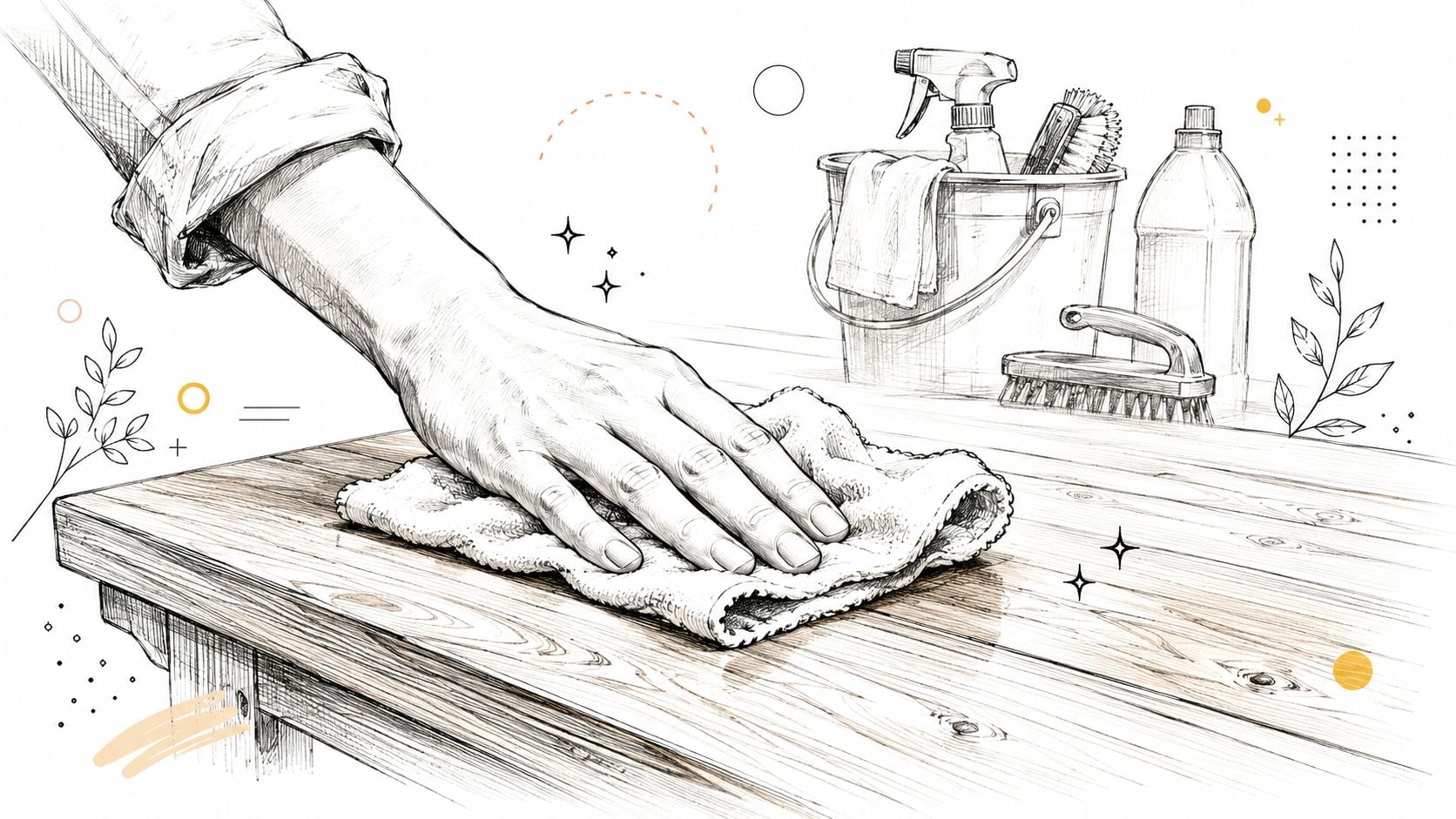
Routine care does most of the heavy lifting. Wood rarely needs aggressive treatment when dust and residue are handled before they build up. That's true for a dining table, an accent chest, or wood trim paired with upholstered furniture.
A schedule that keeps wood looking healthy
Professionals recommend dusting every few weeks, cleaning once monthly, and polishing every 3 to 6 months. For frequently touched wood, weekly wiping with a slightly damp cloth dipped in warm, soapy water (1 teaspoon mild dish soap per 2 quarts water) is advised to remove accumulated grime without over-wetting the surface, according to professional wood furniture cleaning guidance.
That schedule works because it separates light upkeep from deeper cleaning. Dusting removes loose particles before they settle into corners and carved areas. Monthly cleaning lifts body oils, food residue, and sticky buildup that a dry cloth can't handle well. Polishing belongs later and less often.
Wood usually looks dull long before it actually needs heavy treatment. In many homes, it simply needs regular dust removal and a lightly damp wipe.
A simple cleaning method that works
A safe routine doesn't need a cabinet full of products. Most households can follow a straightforward process:
- Start dry. Use a soft cloth to lift loose dust first.
- Dampen, don't soak. Dip a cloth in the mild soap mixture, then wring it out well.
- Wipe with control. Clean small sections so moisture never sits long.
- Dry right away. Follow with a clean cloth so water doesn't settle into seams.
People often get confused regarding the correct dampness for cleaning wood furniture. If a cloth feels “barely damp,” that's usually correct. Wood furniture cleaning goes wrong when surfaces are treated like kitchen counters and left wet.
A monthly habit also makes inspection easier. Homeowners can look for fading, dry patches, loose parts, or finish wear before those issues spread. Families who are already doing seasonal home refreshes often find it helpful to pair furniture care with broader upkeep, such as the ideas in this spring cleaning guide.
| Task | Best approach |
|---|---|
| Light dust | Soft, dry cloth |
| Everyday grime | Slightly damp cloth with mild soap solution |
| Heavily touched spots | Weekly wipe with the same gentle method |
| Final step | Dry the surface immediately |
How to Clean Different Wood Finishes Safely
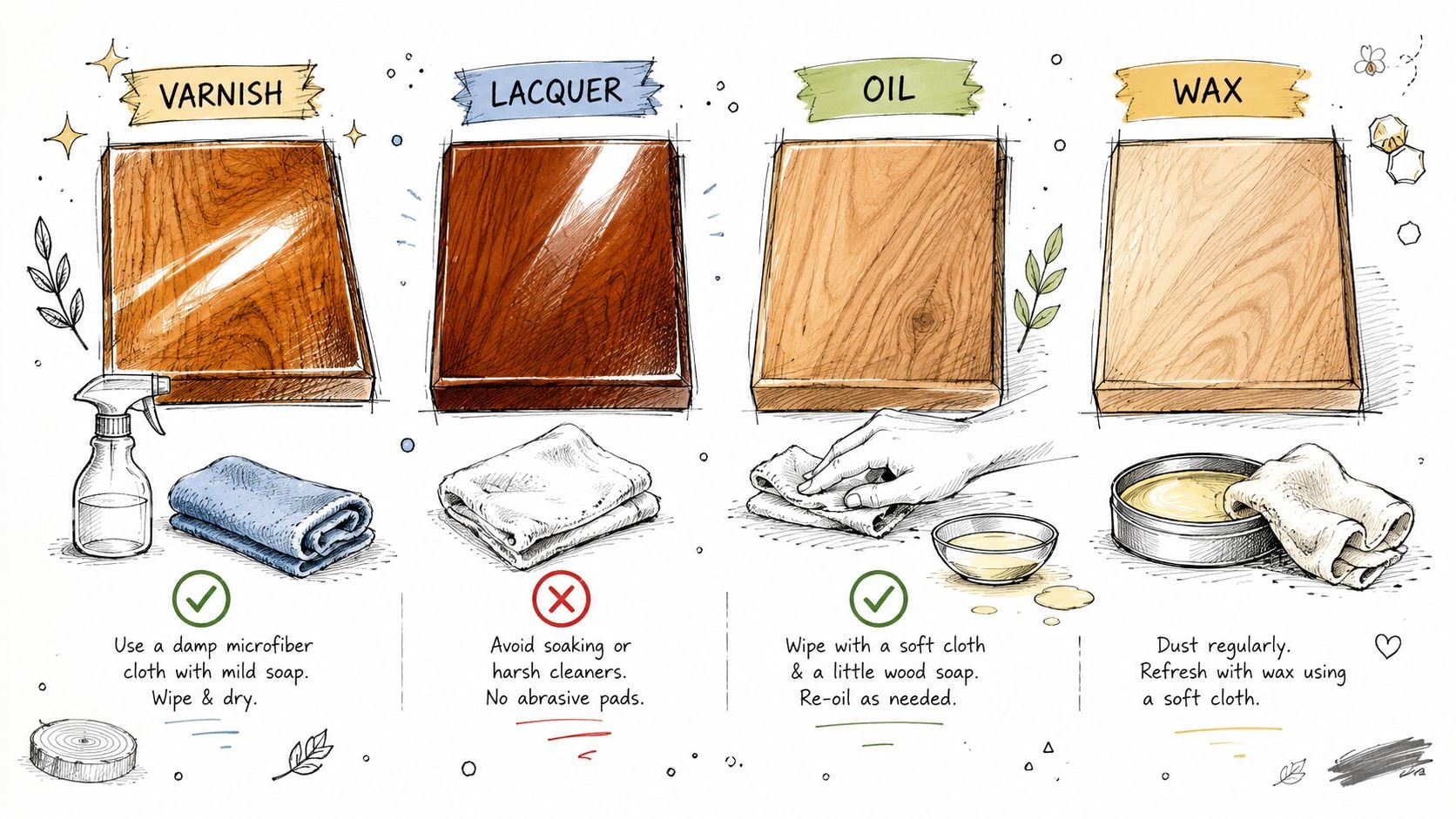
A finish changes everything. Two tables may look similar, yet one can handle a little moisture while the other shows damage almost immediately. Cleaning without knowing the finish is one of the fastest ways to create haze, streaks, or worn spots.
Why finish matters before any cleaner touches the surface
One of the most important warnings is about ingredients. Cleaners with silicone create a temporary shine but can cause irreversible damage by penetrating the wood's pores over time. Ammonia or undiluted vinegar can also strip or etch the finish, and 70% of wood furniture damage stems from improper cleaning agents, as noted in this wood finish care reference.
That explains why “looks shiny” isn't the same as “is protected.” Some products create a slick surface at first, but leave long-term problems underneath. A safer approach is to match the method to the finish, then test in a hidden spot before cleaning the whole piece.
A practical guide by finish type
Different finishes need different levels of caution.
- Varnished wood often tolerates routine dusting and light damp wiping well. The key is restraint. Clean small areas and dry promptly.
- Lacquered pieces usually benefit from the gentlest possible touch. Too much moisture or harsh ingredients can cloud the surface.
- Oil-finished wood may show dryness faster than sealed finishes. It shouldn't be saturated, but it may need occasional conditioning when the surface looks thirsty.
- Waxed furniture can develop buildup if too many products are layered over time. Light cleaning and careful buffing are usually safer than repeated product application.
A quick comparison helps:
| Finish type | Safer routine | Main risk |
|---|---|---|
| Varnish | Light damp cleaning and quick drying | Excess moisture |
| Lacquer | Minimal moisture and very gentle wiping | Clouding from harsh cleaners |
| Oil | Gentle cleaning and occasional conditioning | Dryness or uneven absorption |
| Wax | Light cleaning and controlled buffing | Product buildup |
Some pieces also combine wood species, veneers, and decorative details. That calls for even more care around edges and seams. Readers comparing material quality can get more context from this page on solid wood construction.
If the finish is uncertain, the safest move is to clean the least visible area first and watch for dulling, tackiness, or color change before continuing.
Removing Common Stains Odors and Minor Scratches
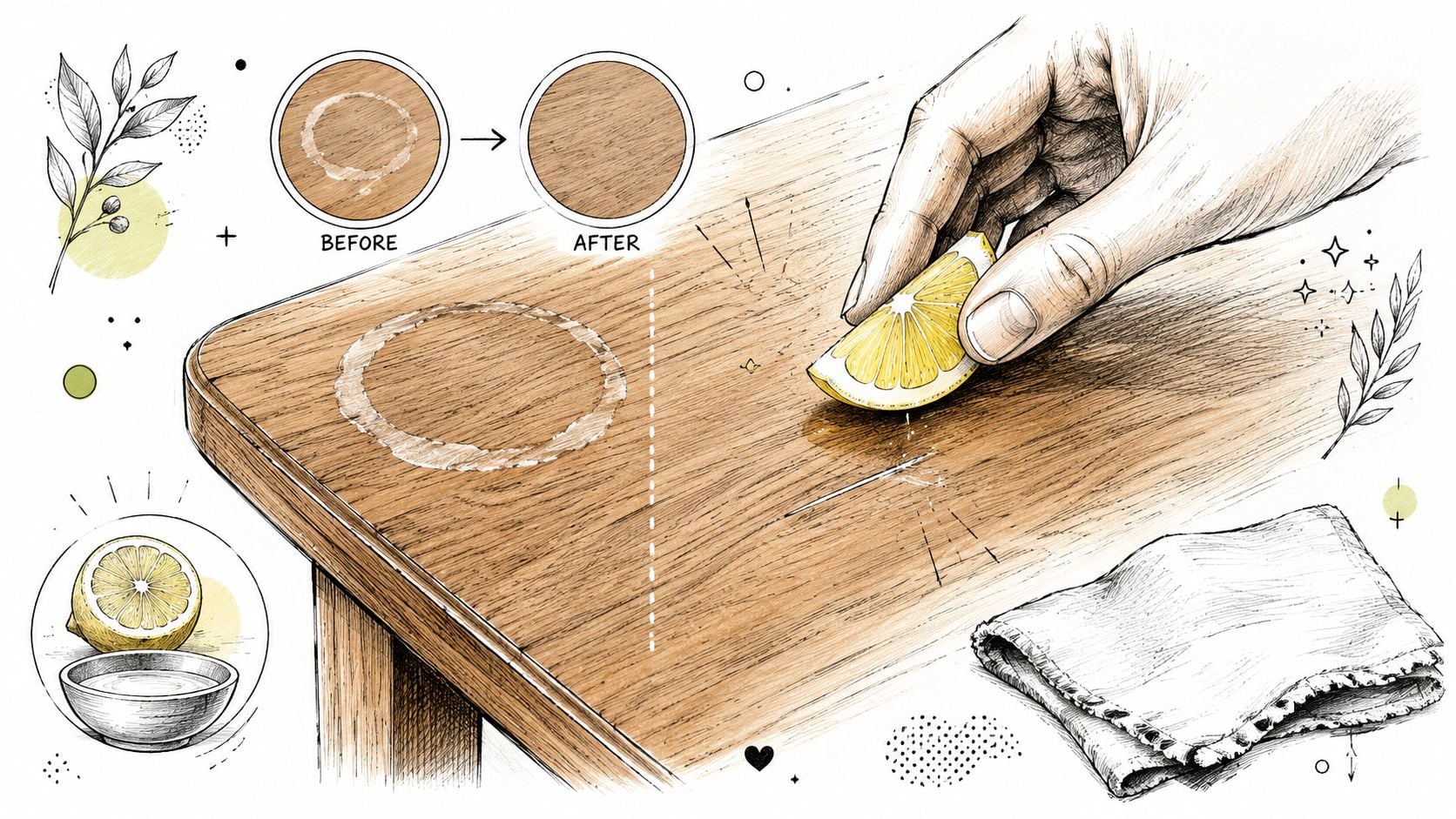
Some furniture problems aren't about overall dirt. They're about one stubborn mark that keeps drawing the eye. A pale ring from a cold glass, a lingering smoke smell inside a cabinet, or a light scratch near the table edge can make an otherwise beautiful piece feel neglected.
Water marks and heat rings
Surface marks need patience more than force. Before trying any remedy, test it in an inconspicuous spot. That step matters because even gentle methods can react differently depending on the finish.
For white water rings or heat marks, one verified option is a 1:1 paste of baking soda and non-gel toothpaste, gently rubbed along the grain, then wiped clean. The same source notes this method removes 85% of such marks when used carefully. Readers who want an additional practical walkthrough can review these Reno expert water stain solutions, which provide useful context on handling rings without aggressive scrubbing.
Minor scratches are different. They usually respond best to light cleaning, then careful evaluation. If the mark has only affected the surface, the area may improve with gentle buffing. If the color has changed or the finish is broken, more than cleaning may be needed.
Smoke and food odors trapped in wood
Odor is often overlooked in wood furniture cleaning, even though it frustrates many homeowners. A 2024 Bassett Furniture study found that lemon oil eliminates smoke odors 93% more effectively than standard cleaners because wood is porous and odors bind to lignin, which is why odor-specific treatment matters more than ordinary surface wiping, according to this odor care article from Bassett Furniture.
That finding helps explain why cabinets, hutches, and older bedroom furniture can keep smelling “off” after they've already been cleaned. The surface may be clean while the odor remains inside the wood structure.
A practical approach looks like this:
- For smoke odor. Clean first, then use an odor-focused treatment such as lemon oil on an appropriate cloth, following finish-safe testing.
- For food smell inside drawers or cabinets. Empty the piece, clean lightly, dry thoroughly, and repeat odor treatment only after checking the finish.
- For mystery odor. Address the least invasive solution first and avoid flooding interior panels with liquid.
Homeowners dealing with marks that go beyond simple wiping can also benefit from this practical page on how to remove furniture stains.
Long-Term Protection and Preventative Tips
The easiest stain to remove is the one that never forms. Protection habits don't sound exciting, but they preserve finish quality better than almost any rescue method.
Daily habits that prevent expensive damage
Wiping spills immediately, using coasters and felt pads, and avoiding placement near radiators or fireplaces can extend furniture lifespan significantly, helping wood pieces last for decades rather than needing premature replacement, according to Southern Living's wood furniture care guidance.
Those habits matter because everyday damage is usually repetitive, not dramatic. One wet glass may leave no mark. A summer of wet glasses in the same spot often will. The same goes for dining chairs dragged over flooring, lamps left in one place for years, or decorative objects pressed into the same tabletop finish.
Best habit to build: Put protection where life already happens. Coasters by the sectional, felt pads under table lamps, and placemats on a dining table are easier to use when they stay in place.
Placement matters more than many people think
Where furniture sits in the room affects how often it needs cleaning and how well it ages.
- Near heat sources. Wood can dry unevenly, which stresses the finish.
- In bright sunlight. Certain areas may fade while covered areas stay darker.
- By entry points or kitchens. Dust, oils, and airborne residue accumulate faster.
- On patios or covered decks. Outdoor furniture needs regular debris removal and protection from standing moisture.
This is one reason protective planning belongs with design planning. A bedroom set, home office desk, or outdoor dining group all benefit when traffic, light, and heat are considered early. Readers wanting more ways to reduce wear can explore this guide on protecting wood furniture from scratches and stains.
When Your Furniture Needs More Than a Cleaning

Some problems signal that cleaning has reached its limit. Deep cracks, failing joints, peeling veneer, swelling from moisture, or finish loss across large sections usually call for repair or replacement rather than another round of wiping.
Signs the problem is beyond routine care
A few warning signs deserve immediate attention:
- Persistent softness or crumbling wood can point to structural decay rather than surface dirt.
- Dark moisture damage that keeps spreading often means the problem has moved below the finish.
- Loose legs, wobbling frames, or separating seams may require a furniture repair specialist.
- Suspected rot should be evaluated carefully. For readers researching wood deterioration itself, Newline Painting's guide to timber rot offers useful background on what rot looks like and why surface treatment alone won't fix it.
At that stage, homeowners often weigh repair cost, sentimental value, and the practicality of replacement. That decision is especially common after moves, remodels, or when one damaged piece no longer fits the room's needs.
Why local shoppers still ask a Lafayette furniture store for help
A trusted furniture store near Lafayette IN often becomes part of that next step because shoppers want guidance, not just inventory. Many households replacing one damaged piece also take the opportunity to rethink the room. A new sectional can change the living room layout. A bedroom refresh may include a dresser and a mattress upgrade. A home office may need better storage. Seasonal updates may also bring outdoor furniture back into the conversation.
For shoppers who want value, flexibility matters. Lucas Furniture & Mattress offers clearance and outlet savings up to 70% off regular prices, carries furniture for living, dining, bedroom, and home office spaces, and provides simple financing options for customers who prefer to pay over time. Many collections also allow a custom order with selected fabrics, finishes, and configurations, which helps when standard pieces don't fit the room well.
Delivery also makes a difference for larger purchases. Lucas Furniture & Mattress offers in-home delivery within a 50-mile radius of its Kokomo and Lafayette locations for a fixed fee of $149, as described on its in-home delivery page. For families replacing a bulky dining set, wood bed, sectional, or mattress, that convenience removes a major obstacle.
Local ownership and strong customer reviews matter here too. People want to buy from a store that understands homes in Lafayette, Kokomo, and the rest of Central Indiana, and that can help whether the need is clearance value, a custom order, or a full-room update.
For anyone in Lafayette looking for a long-term partner in comfort and care, Lucas Furniture & Mattress offers the combination that local shoppers usually want most: a locally owned team, a Kokomo showroom and outlet serving Lafayette, mattresses and furniture for every room, outdoor furniture, custom order flexibility, simple financing, clearance savings up to 70% off, and reliable in-home delivery. Visit the showroom near Lafayette today, or browse the full inventory online with guaranteed in-home delivery to the Lafayette area.