Experience our new Lafayette showroom — Now Open! Come Visit Us -->

How to Stop Your Mattress from Sliding: A Guide from Lucas Furniture & Mattress, Your Lafayette Furniture Store

We've all been there—that annoying nightly shuffle to drag a runaway mattress back to its rightful place. It's a surprisingly common frustration that our team at Lucas Furniture & Mattress, a leading furniture store near Lafayette IN, helps solve all the time. The simple reason? A lack of friction. Your mattress and a smooth bed frame or a worn-out foundation just aren't gripping each other, causing the bed to shift with even the slightest movement. From our Kokomo showroom, we provide expert advice and reliable in-home delivery across Central Indiana, including Lafayette, ensuring you get the perfect sleep setup.
Why Choose Lucas Furniture? (Our Value Proposition)
A sliding mattress is more than just a little irritation; it’s a clear signal that something in your sleep setup isn't quite right. At Lucas Furniture & Mattress, your trusted Lafayette furniture store, we help families across Central Indiana figure out this exact problem all the time. Before you can fix it, you have to find the real reason it's happening.
The Most Common Culprits
Often, the issue comes down to a few key things that create a slippery situation. Sometimes, modern furniture design focuses more on sleek looks than on practical grip, which leads to these common scenarios:
-
Smooth Surfaces: Many contemporary bed frames, especially those made from metal or slick, laminated wood, offer almost zero friction. Pair that with the smooth fabric of a mattress cover, and there’s really nothing to hold your bed in place. It's a recipe for sliding.
-
Worn-Out Foundation: An old box spring or foundation can lose its supportive structure over the years and even develop a dip in the middle. This concave surface pretty much encourages the mattress to slide toward the center or sag, leading to constant shifting.
-
Frame and Mattress Mismatch: If your bed frame is even a little too big for your mattress, it creates a gap. That extra space is all your mattress needs to slide from side to side or corner to corner every time you toss and turn.
-
Lack of Barriers: Bed frames that don't have a headboard or footboard are missing the physical barriers that would otherwise help keep the mattress contained. This is a big issue with many of the sleek, minimalist platform beds popular today. For a deeper dive, you can explore our guide on what a platform bed is and see how its design can affect mattress stability.
The Age Factor
Finally, don't forget to consider the age of your mattress. Over time, mattresses just lose their structural integrity. The materials on the underside can get compressed and smooth out, reducing whatever natural grip they might have had when new.
If your mattress is more than 7-10 years old, it might be sliding simply because it's worn out and no longer sits flat and firm on its base. Figuring out if your problem is the frame, the foundation, or the mattress itself is the first step toward a stable, restful night’s sleep. Our team, serving Lafayette from our Kokomo showroom, is always here to help you find the perfect fix.
Furnish Every Room & Save Big
When your DIY attempts just aren't cutting it, investing in a product designed specifically to stop a sliding mattress is often the quickest, most reliable fix. At Lucas Furniture serving Lafayette, we believe in providing value without compromising quality. Whether you need a new mattress, sectional, or a full dining set, our Low Price Promise ensures you get the best deal. Our clearance and outlet items offer incredible savings up to 70% off, allowing you to furnish your entire home—living room, bedroom, home office, and even your outdoor patio—for less.
Fortunately, there are several effective and affordable options out there to fix a sliding mattress. Most are incredibly easy to install, making them a great first step before you start thinking about replacing an entire mattress or bed frame.
Choosing the Right Anti-Slip Product
The best choice really boils down to your specific bed frame and mattress. For instance, a slick metal platform bed practically begs for a solution that adds some serious texture and grip.
Here are the most common and effective fixes we see:
- Non-Slip Mattress Pads: These are thin, rubberized pads that you simply lay down between your mattress and whatever is underneath it—be it a box spring or a platform. The textured surface grabs both the mattress bottom and the foundation, instantly creating the friction needed to keep it put. You can also easily trim them to size for a perfect fit.
- Rubberized Gripper Mats: Think of the open-weave mats you put under an area rug to keep it from slipping on a hardwood floor. They work the same way here, providing excellent grip while also allowing for some airflow, which is a nice little bonus.
- Specialty Mattress Protectors: A lot of modern mattress protectors now come with an anti-slip bottom layer built right in. This is a fantastic two-for-one deal: you protect your mattress from spills and allergens, and you keep it from migrating across the bed frame every night.
If you're still trying to figure out why your mattress is sliding in the first place, this flowchart can help you pinpoint the problem and find the right path forward.
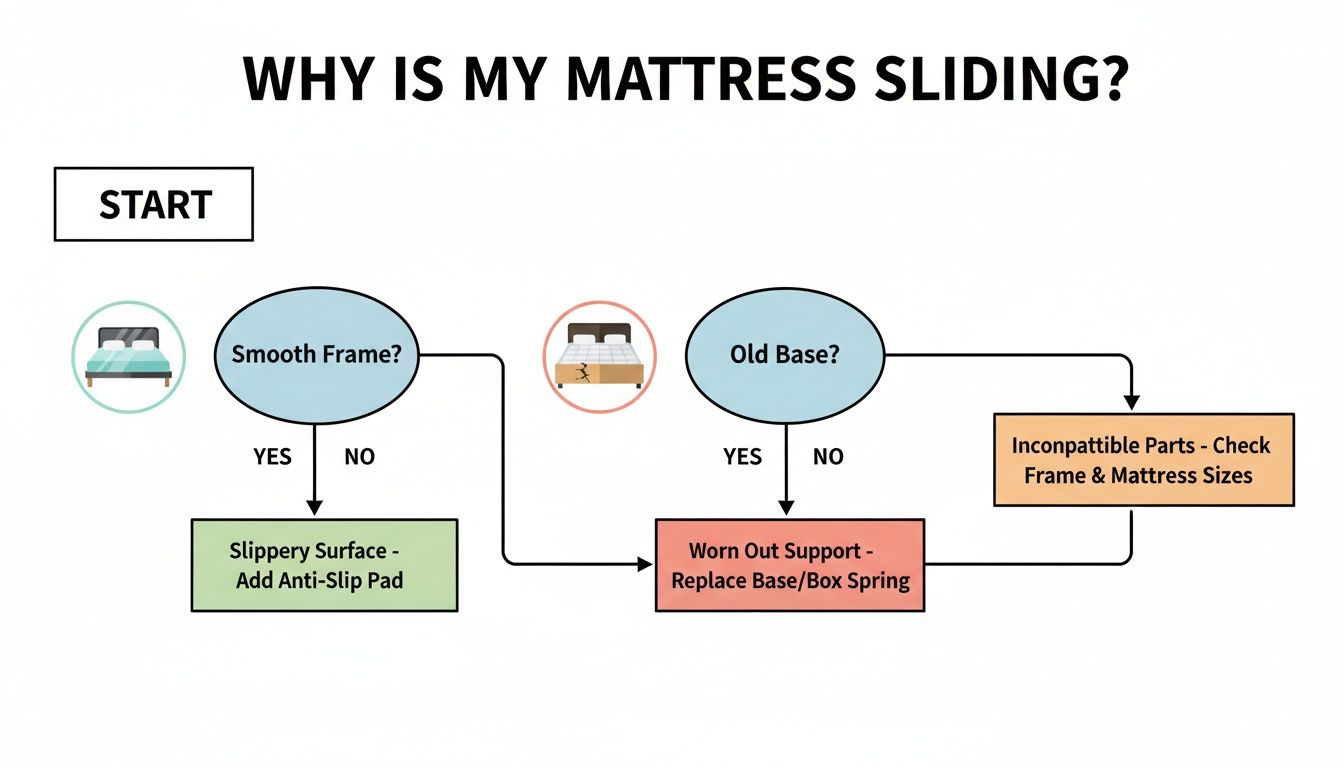
As the guide shows, whether you're dealing with a slick frame, a worn-out foundation, or just a bad match, there’s a clear solution to get your bed stable again.
The Rise of High-Tech Solutions
Anti-slip mattress protectors, in particular, have become a go-to for many people, and the market numbers back that up. The global bedding protector market is actually projected to hit USD 5.5 billion by 2035. Here in the US, which accounts for 35% of that market, a whopping 72% of buyers last year said that preventing mattress movement was a key reason for their purchase. This makes perfect sense when you consider that over 55% of households now use platform beds, which are notorious for letting mattresses slip.
Expert Tip: Before you place any gripper pad or mat, give the top of your box spring or platform a quick vacuum. Dust and debris can seriously reduce the effectiveness of any anti-slip product, so starting with a clean surface ensures you get the best possible grip from day one.
To help you decide, let's break down the most popular options.
Comparing Anti-Slip Mattress Solutions
| Solution Type | Effectiveness | Average Cost | Best For |
|---|---|---|---|
| Non-Slip Mattress Pad | High | $15 – $30 | Most bed types, especially smooth platform or metal frames. |
| Rubber Gripper Mat | High | $10 – $25 | A budget-friendly and effective option for all frame types. |
| Velcro Strips | Very High | $5 – $15 | A more permanent fix for beds that shift significantly. |
| Specialty Protector | Medium to High | $30 – $80+ | Anyone needing mattress protection and slip prevention in one product. |
Each of these commercial products offers a solid way to anchor your mattress. Your final choice will likely come down to your budget and whether you want a simple add-on or a multi-functional protector.
If you find that your foundation is just worn out and that's the real source of the problem, it might be time for an upgrade. A solid, level foundation is non-negotiable for mattress stability. If you want to dive deeper, you might find our article explaining why you really do need a box spring for your bed helpful.
Ultimately, spending a small amount on one of these commercial solutions can put an end to those nightly shoves and pushes, dramatically improving your sleep.
Achieve Better Sleep: Your Mattress Options
If your mattress has started its nightly migration across the bed frame, you don't necessarily need to run out to the store. The perfect, budget-friendly fix might already be hiding in one of your closets. A good DIY solution is perfect for anyone who needs to solve the problem right now or just enjoys a hands-on approach.
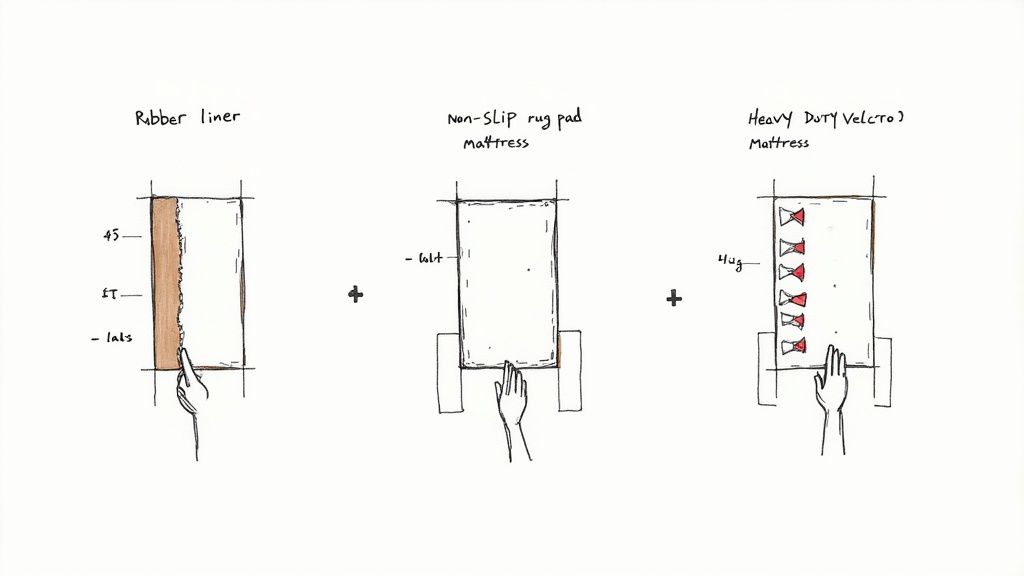
You’d be surprised how many common household items can be repurposed to create the friction needed to hold your bed firmly in place. These clever hacks are often just as effective as commercial products, especially for those minor but annoying sliding issues.
Common Household Items That Work Wonders
Before you spend a dime, take a look around your home for these surprisingly effective materials. Chances are, you already have what you need to stop the sliding today.
- Non-Slip Rug Pads: This is the most popular DIY fix for a reason—it just works. That thin, rubberized pad keeping your area rug from bunching up is perfect for this job. Simply trim it to be a little smaller than your mattress and lay it between the mattress and the bed frame or box spring.
- Rubber Shelf Liners: Very similar to a rug pad, the grippy, textured material used to line kitchen shelves provides excellent traction. It's inexpensive, super thin, and easy to cut to the exact size you need.
- A Thin Yoga Mat: Have an old yoga mat you're not using? It offers a fantastic non-slip surface. Its material is literally designed for grip, which works just as well under a mattress as it does on a hardwood floor.
The goal here is to add a simple layer of friction without creating any uncomfortable lumps or bumps under your mattress. You're just creating a barrier that stops two smooth surfaces from gliding against each other.
A More Secure DIY Approach
If you need something with a bit more muscle, especially for a mattress that shifts dramatically, heavy-duty Velcro strips are an excellent choice. This method creates a direct, physical connection between your mattress and its base, stopping movement completely.
For the best results, attach the soft "loop" side of the Velcro to your bed frame and the rough "hook" side to the underside of your mattress. This prevents the abrasive side from snagging on sheets or damaging the frame if you ever need to remove the mattress.
Just place a few long strips near each corner and maybe one or two in the middle for a really secure hold. Keep in mind that while this is highly effective, it's also a more permanent solution. And don't forget that keeping your bedding in top shape is also crucial for comfort and stability; for more tips, check out our complete guide to bedding and mattress protectors.
These DIY fixes can be incredibly effective, but if you find they're not quite cutting it, it could be a sign of a larger issue with your mattress or foundation.
Customize Your Comfort: Simple Financing & Custom Orders
Sometimes the real reason your mattress is wandering has nothing to do with the mattress itself. The culprit is often the bed frame. At Lucas Furniture, your go-to Lafayette furniture store, we believe your furniture should fit your life perfectly. That’s why we offer custom order options for unique pieces and provide simple financing to make your dream home affordable. Before you add grippers, it’s worth inspecting your bed setup.
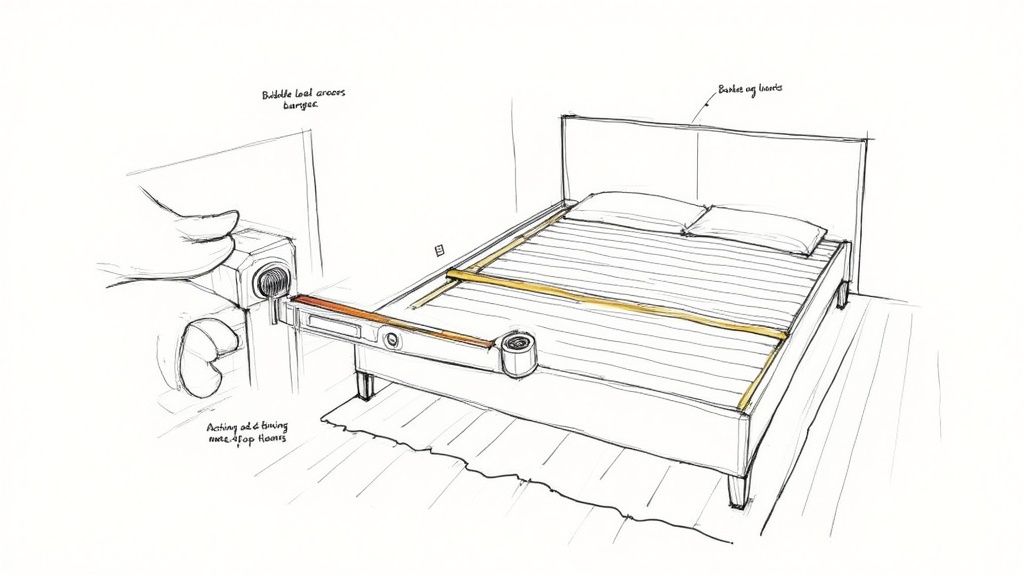
First off, give your bed frame a good old-fashioned shakedown. Are all the bolts and screws nice and tight? Over the months and years, the little movements we make every night can loosen those connections, creating a wobble that encourages your mattress to slide. Grab a wrench or screwdriver and spend five minutes tightening everything up.
Ensuring a Level and Stable Foundation
Next, find out if your frame is sitting level. It’s a sneaky problem, but uneven floors are incredibly common in homes, and even a tiny, invisible tilt can send your mattress on a slow journey to one side of the bed. Pull out a bubble level and check the frame both side-to-side and head-to-foot. If it's off-kilter, slide some small furniture shims or non-slip furniture pads under the legs to fix the imbalance.
And what about a headboard and footboard? They aren't just for decoration; they're excellent physical barriers that box your mattress in and keep it right where it belongs. If your frame is just a simple platform, your mattress has a wide-open invitation to slide off.
Pro Tip: When our in-home delivery team assembles a new bed frame for a customer here in Lafayette, the first thing they do is ensure it's perfectly level and all connections are rock-solid. Getting the setup right from day one prevents a ton of future headaches, including a sliding mattress.
Leveraging Your Bedroom Environment
Looking beyond the frame, your bedroom itself can either help or hurt. If you have slick floors like hardwood or laminate, your entire bed—frame and all—might be shifting slightly. An easy but incredibly effective fix is to place a large area rug under the bed. That extra layer of friction can anchor the whole setup in place.
As you look at your room, remember that the type of flooring you have can really impact how stable your bed frame is. You might find that looking into different floor covering solutions gives you a more secure foundation to begin with.
Even the layout of your room plays a part. A well-arranged space minimizes accidental bumps from people walking by, which can nudge the mattress out of place. For some great tips on this, check out our guide on how to arrange bedroom furniture.
At the end of the day, a secure foundation is everything. You might find it through a few turns of a wrench or by adding a new rug, but it’s the key to a stable, comfortable bed.
Shop Your Way: Online, In-Store, and Delivered to Lafayette
So, you’ve tried the gripper pads, you've vacuumed, and you might have even dabbled with Velcro strips, but your mattress still insists on sliding across the bed frame. It’s frustrating, to say the least.
If you feel like you've exhausted every trick in the book, the problem might not be a lack of friction at all. It could be a tell-tale sign of a much bigger issue: your mattress or foundation is simply worn out. An old mattress or an incompatible foundation often doesn't have the structural integrity to stay put, no matter what you slide underneath it.
Think about it—a mattress that has lost its internal support will start to sag and dip, preventing it from sitting flat on its base. This uneven surface is the perfect recipe for shifting and sliding with every little movement. In the same way, a broken or worn-out box spring just can't provide that solid, level surface your mattress needs to be stable. Here at Lucas Furniture & Mattress, a trusted Lafayette furniture store, we’ve seen this countless times. Sometimes, the only real fix is to get to the root of the problem.
Signs Your Mattress Is the Real Problem
It can be tricky to pinpoint whether the sliding is the mattress’s fault or the frame’s. Here’s a quick checklist to help you figure out if it’s time for an upgrade. A mattress that’s on its last legs will usually show a few of these classic warning signs:
- Visible Sagging or Dips: Take a good look at your mattress. Do you see noticeable body indentations or a big dip right in the middle? A healthy mattress should be a flat plane; any "valleys" are a dead giveaway that the internal structure is breaking down.
- Lumps and Bumps: Run your hands over the surface. If you feel lumps, bulges, or can tell the materials inside have shifted, the support layers have officially failed.
- You Wake Up Sore: This is a big one. If you’re consistently waking up with aches and pains, especially in your back and neck, your mattress isn’t giving you the support needed for proper spinal alignment anymore.
- It’s Over 7-10 Years Old: While every mattress is different, most have a realistic lifespan of about 7-10 years. After that, the materials start to degrade, which leads to issues like sliding, not to mention poor sleep.
At a certain point, a sliding mattress is just a symptom of a bigger issue. If you're constantly fighting with your bed and not getting restful sleep, it's a clear signal that the mattress or foundation has served its time.
Making the Right Choice for Your Next Mattress
If that checklist felt a little too familiar, investing in a new sleep system is probably the most effective long-term solution. When you're ready to replace your old mattress or foundation, you'll need a plan for getting rid of the old one. For bulky items like these, it often helps to call in the pros, and there are great resources for finding a great junk removal company to make it easy.
At Lucas Furniture, serving all of Central Indiana from our Kokomo showroom, we make finding the perfect replacement simple. You can dive deeper by checking out our detailed article on the 7 signs it’s time to replace your mattress. With our simple financing options and Low Price Promise, getting a new, stable mattress is more accessible than ever for families right here in the Lafayette area.
Still Have Questions About Keeping Your Mattress in Place?
Even with a bunch of great solutions, you might still have a few questions. It’s totally normal. Here are some of the most common ones we hear from our customers when they're fighting a runaway mattress, along with some straight-up advice from our sleep experts.
Can I Just Use a Regular Rug to Stop the Sliding?
You absolutely can, and it’s a fantastic DIY fix if you’re in a pinch. Tossing a thin rug or, even better, a non-slip rug pad between your mattress and a slick bed frame or foundation can create instant grip. The texture gives it just enough friction to stop it from wandering off.
For a cleaner look, just trim the rug or pad to be slightly smaller than your mattress so it stays hidden. Keep in mind, though, a dedicated non-slip mattress pad is built for the job—it's more durable and won't compress as much over time.
Will These Fixes Work for an Adjustable Bed?
Ah, the adjustable bed—notorious for mattress slippage. All that movement makes it a real challenge. While some heavy-duty Velcro can certainly help, your best bet is to go with a solution designed specifically for this setup. Look for mattress retainer bars or specialty grippers made to handle the constant motion of an adjustable base.
It's also worth noting that many of the modern mattresses we carry at Lucas Furniture come with grip-enhanced bottom covers for this very reason. Our team can help you find the perfect pairing of a mattress and accessories for your adjustable frame, making sure everything stays locked in place.
Is It Just Time to Replace My Mattress Instead?
This is a big one. If your mattress is creeping up on 7-10 years old, has noticeable dips or lumps, and you're just not sleeping well, the sliding is probably just a symptom of a much bigger problem. When a mattress loses its internal structure and support, it gets floppy and is far more likely to shift around.
When the anti-slip tricks aren't cutting it and you're seeing those other tell-tale signs of wear, it’s a pretty clear signal that it’s time for an upgrade. A new mattress won't just stay put—it will give you the support you need for a good night's sleep. Take a look at our online Mattress Guide for some ideas, or stop by our showroom near Lafayette to find your perfect replacement. Visit our showroom near Lafayette today, or browse our full inventory online with guaranteed in-home delivery to the Lafayette area