Experience our new Lafayette showroom — Now Open! Come Visit Us -->

Headboards for Adjustable Beds: Lucas Lafayette


A lot of adjustable bed projects start the same way. You want the comfort and support of a base that raises and lowers, but you still want the bed to look finished, quiet, and properly put together. The trouble is that a headboard that works with a standard frame does not always pair cleanly with an adjustable base.
That problem shows up often for Lafayette-area shoppers. People come in expecting to pick any headboard they like, then find out they also need to confirm bracket fit, clearance, height, and who will handle setup once the bed is in the room. Online guides usually stop at style ideas. Local buying is more practical than that.
Lucas Furniture & Mattress helps Lafayette customers sort out those details before the order is placed. With a showroom nearby and convenient in-home delivery to the Lafayette area, the process is a lot easier to manage than piecing it together from separate sellers. Shoppers can compare beds, ask about attachment options, and review the benefits of an adjustable base for comfort and daily support while also getting clear advice on whether a specific headboard will work in their space.
A good match is not just about looks. It is about buying a headboard you can install, live with, and enjoy once the adjustable base starts moving every day.
Table of Contents
- The Adjustable Bed Dilemma Finding a Compatible Headboard
- Measuring for a Perfect Fit Before You Buy
- Choosing Your Headboard Style and Material
- Headboard Installation Methods Explained
- Troubleshooting Common Issues and Styling Tips
- Shop at Lucas Furniture Your Lafayette Furniture Store
The Adjustable Bed Dilemma Finding a Compatible Headboard
The most common mistake with adjustable beds isn't choosing the wrong color or shape. It's assuming a standard headboard will behave like it does on a fixed bed frame. Adjustable bases move backward, lift, shift pressure points, and can bring the mattress into contact with the headboard in ways many buyers don't expect.
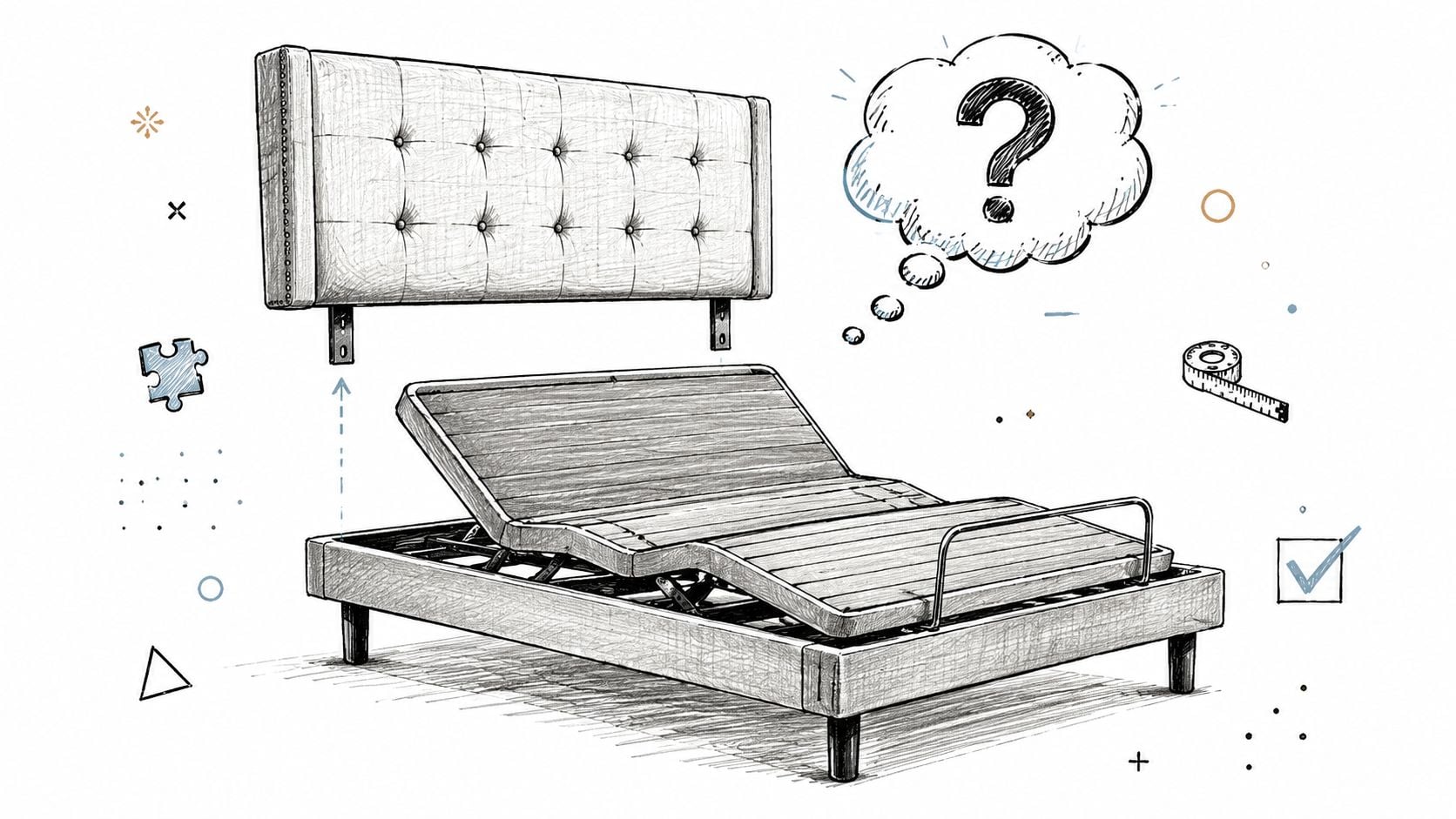
That problem gets worse when shoppers focus only on style. A headboard may look right with the mattress and nightstands, yet still fail because the base needs more room to articulate than the setup allows. A bed that raises smoothly in the showroom can start tapping, scraping, or shifting once it's placed in a real bedroom.
Why standard setups often miss the real issue
A big blind spot is the headboard hugger question. Some adjustable bases are designed to keep the mattress from sliding forward as the head lifts. Others aren't. If the mattress and base travel forward, they can bump the headboard repeatedly, which creates noise and can wear the frame connection over time.
Industry data shows that 30% of adjustable bed users report frame noise within six months, often traced to headboard collision during elevation (adjustable bed headboard guide). That's one of the most useful facts a buyer can know before choosing a headboard.
Practical rule: A beautiful headboard that interferes with bed motion isn't a good fit. Compatibility comes before style.
A second issue is bracket design. Some adjustable bases include connection points for headboards. Others need model-specific hardware. That's why shoppers comparing beds should pay attention to more than fabric, tufting, or storage details.
What local shoppers need to think about
For Lafayette and Central Indiana homeowners, local buying helps because room layouts vary. Older homes may have tighter bedroom dimensions. Newer homes may have thicker baseboards, deeper mattresses, or wall features that affect rear clearance. Those conditions matter just as much as the headboard itself.
Anyone considering an adjustable base can also review adjustable base comfort and support considerations before narrowing down a bed-and-headboard combination. A little planning upfront prevents the usual cycle of buying, assembling, then realizing the bed can't move freely.
A good adjustable bed setup should do three things at once:
- Move cleanly: The base needs room to raise and lower without hitting the wall or headboard.
- Stay quiet: Loose hardware and poor alignment often turn into squeaks and rubbing.
- Look finished: The headboard should anchor the room without fighting the function of the base.
That's the main dilemma. Buyers don't just need a headboard. They need one that works with motion.
Measuring for a Perfect Fit Before You Buy
A lot of adjustable-bed mistakes start the same way. Someone buys a headboard based on mattress size, gets everything home, and then finds out the base sits lower than expected, the brackets do not line up, or the bed needs more room to move than the wall allows.

The fix is simple. Measure the base like a mechanical piece of furniture with moving parts, not like a standard bed frame.
Clean tape-measure habits help more than people expect. Use a firm starting point, keep the tape straight, and write each number down as you go. The Drapery Company's measurement tips are a good refresher if you want a quick review of accurate measuring technique before you start.
The four measurements that matter most
In the store, I usually tell shoppers to check four things before they fall in love with a headboard: width, mounting location, operating clearance, and room fit. Miss one of those, and the project gets harder fast.
Measure the base width
Measure the adjustable base itself, side to side. Do not rely only on the mattress label. A queen mattress does not always tell you exactly what the headboard hardware needs to match.Check the mounting points
Look for pre-drilled holes, slots, or attachment brackets on the base. Some models are ready for a headboard bracket kit. Others need model-specific hardware, and that changes the options right away.Measure wall clearance during motion
Set the base near its intended wall position, then run it through its full range of motion. Watch what happens behind the bed as the head section rises. That movement tells you how much clearance the setup needs.Measure overall room fit
Headboard projects can fail even when the bed and hardware match. Baseboards, outlet covers, window trim, nightstands, and tight walkways all affect the final fit, especially in older Lafayette homes where bedroom dimensions are not always generous.
One measurement gets missed all the time. Height.
Headboard height should be checked from the floor to the mounting area on the base, then compared with the height of the mattress once it sits on the adjustable foundation. That is what tells you how much headboard will remain visible and whether the finished setup will look balanced instead of swallowed up by the bed.
Why standard setups often miss the core problem
The common measuring mistake is treating the bed like it stays flat against the wall. Adjustable bases shift as they raise and lower. If the headboard is chosen before that movement is checked, buyers can end up with rubbing, awkward gaps, or hardware that sits under strain.
That is one reason local help matters. At Lucas Furniture & Mattress, we regularly help Lafayette shoppers sort through measurements before an order is placed, especially when a customer is pairing a new headboard with an existing adjustable base. In some cases, a custom order is the cleanest answer. In others, a different mounting method or a slightly narrower style solves the problem without overcomplicating the room.
A short checklist before ordering
Keep these numbers and notes together before you buy:
- Base width: Measure the adjustable base, not just the mattress size.
- Mounting details: Confirm whether the base has attachment points or needs added hardware.
- Clearance in motion: Test the bed while it is raising and lowering.
- Visible height: Check how the headboard will look once the mattress is in place.
- Room obstacles: Measure around baseboards, outlets, nightstands, and traffic space.
If the order also involves case goods or a full bedroom update, Lucas Furniture's furniture measuring guide for delivery paths and room planning helps you check doorways, stair turns, and bedroom dimensions before delivery day. That saves a lot of frustration, and for Lafayette-area customers, it makes in-home delivery and setup much easier to plan.
Choosing Your Headboard Style and Material
Once the measurements are done, style becomes the fun part. But with adjustable beds, material choice isn't only about appearance. Weight, surface feel, and mounting behavior all affect whether the headboard will work well over time.

Upholstered, wood, and metal each behave differently
Upholstered headboards are often the strongest match for adjustable beds. The padded surface is comfortable when someone sits upright to read, watch TV, or work from bed. The verified installation guidance also identifies upholstered headboards as the optimal technical choice because that softer surface supports comfort during elevation.
Solid wood headboards can look substantial and timeless, but weight matters. The same verified guidance notes that solid wood is often too heavy for frame-attached installation on adjustable bases. That doesn't mean wood is off the table. It means buyers should be more cautious about how it's mounted.
Metal headboards usually land in the middle. They can be lighter and visually open, which works well in smaller bedrooms. The trade-off is that some metal styles show movement or hardware more clearly, so alignment and tightening need extra attention.
How to choose based on function, not just look
A practical way to decide is to match the material to how the bed will be used.
- For frequent sitting up in bed: Upholstery tends to be the most forgiving and comfortable.
- For a cleaner, lighter visual profile: Metal can keep the room from feeling heavy.
- For a classic furniture look: Wood works best when the installation method can support the weight properly.
The right material should fit the way the bed moves, the way the room feels, and the way the owner actually uses the space.
Why custom order can solve awkward fit and finish problems
Standard inventory works for many rooms, but adjustable beds often expose small mismatches. A headboard may be the right width and still miss the mark because the fabric clashes with the mattress base, the height feels off against thick pillows, or the finish doesn't tie in with nearby case goods.
That's where custom order options become useful. Lucas Furniture allows customers to custom order fabrics, finishes, and configurations for many of its collections, enabling personalized design choices that match individual style preferences for custom orders. This matters when a shopper wants a softer upholstered look, a different scale, or a finish that coordinates with the rest of the bedroom instead of settling for the closest available option.
Anyone comparing fabric textures or performance considerations can browse upholstery material guidance for furniture shoppers. That kind of detail helps when the headboard is only one piece of a broader room plan that may also include a mattress, bench, or even a sectional in an adjacent primary suite sitting area.
A good headboard doesn't just match the bed. It belongs in the room.
Headboard Installation Methods Explained
A headboard can look perfect on the sales floor and still become a headache once it meets an adjustable base in a real bedroom. In Lafayette homes, I see the same problem over and over. The headboard itself is fine, but the mounting method does not match the base, the wall, or the way the bed will move every night.
The right install method depends on three practical questions. Does the base accept brackets? How heavy is the headboard? How permanent does the setup need to be?
Headboard Installation Methods Compared
| Method | Best For | Pros | Cons |
|---|---|---|---|
| Frame-mounted | Bases with compatible brackets and lighter headboards | Clean integrated look, stays tied to the bed footprint, common solution | Can wobble if hardware is off-center, depends on bracket compatibility |
| Wall-mounted | Heavy headboards or rooms where bed motion needs full independence | Leaves the adjustable base free to move, creates a stable visual anchor | Needs secure wall fastening, harder to reposition later |
| Freestanding | Renters or buyers avoiding wall attachment | No wall drilling, no dependence on base hardware | Can drift out of position, often leaves a visible gap |
Frame-mounted installation and the mistakes that cause trouble later
Frame-mounting is usually the first method people ask about, and sometimes it is the right call. It works best when the adjustable base was built for headboard brackets or has an approved adapter that fits correctly. Trouble starts when buyers assume every base uses the same hole pattern, bolt size, or setback.
A good install follows a simple order.
Confirm the base hardware first
Check for pre-drilled mounting points and verify the bracket type before the headboard comes out of the box. Universal hardware can help in some setups, but it does not solve every fit problem.Place the base where it will be used
Adjustable beds need motion clearance. If the base shifts even a few inches from the position you tested, the headboard can end up rubbing the wall or sitting too far back.Level the headboard before final tightening
A slightly crooked mount often leads to squeaks, uneven stress on the brackets, and a headboard that looks off every time you walk into the room.Tighten side to side in stages
That keeps the connection even and reduces twisting at the mounting points.Run the base through full articulation
Raise the head and foot sections and listen for rubbing, tapping, or hardware movement before the room is put back together.
Small alignment errors show up fast on an adjustable bed.
At Lucas Furniture, this is one of the places local service matters. Our team can help match the headboard, base, and bracket approach before delivery, and in-home setup saves customers from learning too late that the hardware plan only worked in theory.
When wall-mounting makes more sense
Wall-mounting is often the cleaner answer for heavier headboards, taller statement pieces, or rooms where the bed needs extra travel space. The headboard stays fixed to the wall while the adjustable base moves independently below it. That usually reduces noise and avoids the strain that a heavy panel can put on frame brackets.
Placement still needs care. Stud location, headboard height, outlet placement, and the final mattress height all matter. Homeowners comparing this option can review wall-mounted headboard ideas and installation considerations before choosing hardware or drilling holes.
The installation mindset is similar to the planning used in professional art hanging by Colorado Art Services, especially when the piece is large and placement has to be right the first time.
Freestanding setups and where they fit
Freestanding headboards appeal to renters and anyone who wants the look without attaching anything to the wall or base. They can work, but they require realistic expectations. On carpet, they may settle unevenly. On hard floors, they can creep backward or sideways if the bed is adjusted often.
For some rooms, that trade-off is acceptable. For others, it becomes a recurring nuisance.
If a Lafayette customer is unsure which route is best, the practical answer is to decide based on the room, the base, and who will be installing it. That is often easier to sort out in the store with the actual furniture and mattress specifications in front of you than through a generic online guide.
Troubleshooting Common Issues and Styling Tips
Even a solid installation can need a few adjustments after the first week. Beds settle, rugs compress, bolts seat further, and owners start using elevation positions that reveal small issues.
Quick fixes for the most common problems
A wobble usually points to loose fasteners or an uneven connection between the headboard and bracket arms. Tightening should be done evenly, side to side, rather than cranking down one point at a time.
A squeak often comes from misalignment. If the headboard was mounted slightly off level, the hardware can flex each time weight shifts against it. Rechecking vertical alignment and retightening usually solves it.
A gap between mattress and headboard can be visual, mechanical, or both. Sometimes the mattress moves forward when raised. In other rooms, the headboard sits farther back than expected because the base needed extra clearance. Decorative pillow layering often softens the appearance, but the first step is understanding whether the gap affects comfort or only looks.
- For wall contact: Add felt pads where appropriate to protect painted surfaces.
- For visible movement: Recheck whether the base remains in the tested position on the floor.
- For repeated rubbing sounds: Inspect the hardware connection before assuming the material is defective.
A quiet bed usually comes from small corrections made early, before minor movement turns into repeated wear.
Styling an adjustable bed so it doesn't look clinical
The strongest bedroom setups treat the adjustable base as part of the design, not as equipment that needs to be hidden. A taller upholstered headboard helps soften the mechanical feel. Layered pillows add depth and make any small space between mattress and headboard feel intentional.
Nightstands should align with the visual height of the mattress and headboard, not just the old bed that used to be in the room. Lighting matters too. Wall sconces or table lamps can pull the eye upward and give the whole arrangement more balance.
A cohesive room often includes more than the bed alone. Bedroom shoppers frequently coordinate the headboard with nearby storage, bench seating, or complementary finishes used elsewhere in the home. The same design thinking can carry into a living room sectional, home office pieces, or even seasonal outdoor furniture so the house feels connected instead of pieced together one item at a time.
Shop at Lucas Furniture Your Lafayette Furniture Store
A lot of Lafayette shoppers reach this stage with the same problem. The adjustable base is already chosen, the mattress is handled, and the headboard is the piece that can still go wrong if nobody checks the details before delivery.

Why Choose Lucas Furniture? (Our Value Proposition)
Lucas Furniture & Mattress helps solve the part online listings usually skip. Compatibility. A headboard may look right in a photo and still create trouble once it meets an adjustable base, a taller mattress, tight wall clearance, or a bedroom with narrow access points.
That is where local help matters.
Buyers in the Lafayette area often need someone to confirm whether a headboard should attach to the base, stand on its own bed frame, or mount to the wall. They also need realistic advice about height, fabric durability, and whether a bedroom setup will feel balanced once the base starts moving. Lucas Furniture serves Lafayette from its Kokomo showroom and outlet location, so shoppers can get that guidance from people who work with these setups every day.
Furnish Every Room and Save Big
A headboard purchase often starts with one problem and turns into a full room update. Once the bed is fixed, many homeowners decide to replace mismatched nightstands, add a dresser, or finally update the guest room too.
The outlet and clearance selection helps with that. Shoppers looking for value can often find practical pieces for the bedroom, living room, dining room, home office, or patio without piecing the house together one random item at a time. That is especially useful for families trying to finish more than one project on one budget.
Achieve Better Sleep Your Mattress Options
Adjustable beds ask more from a mattress than a standard flat frame does. The mattress has to bend properly, hold its shape, and still pair well with the headboard height you choose. If the mattress sits too high or too low, even a good-looking headboard can feel off once everything is installed.
A mattress center helps shoppers test comfort and profile in person instead of guessing from a product description. That tends to save trouble later, especially for buyers pairing a new mattress, adjustable base, and headboard in the same purchase.
Customize Your Comfort Simple Financing and Custom Orders
Some bedrooms need a specific width, finish, fabric, or storage feature that is hard to find in stock. Custom order options give shoppers more control over the final fit and look, which matters when the bed is the main focal point in the room.
Financing also helps when the project includes more than just the headboard. Many Lafayette-area customers are buying a mattress, adjustable base, bedroom storage, and delivery at the same time, so spreading out the cost can make the whole project more manageable.
For buyers who need extra function in a smaller room, bed designs with built-in storage and headboard features are worth a close look. They can make a guest room or primary bedroom work harder without adding more furniture than the room can handle.
Shop Your Way Online, In-Store, and Delivered to Lafayette
Delivery is part of the buying decision with adjustable beds. Headboards are bulky, many come in multiple boxes, and some homes have stair turns or hallway corners that look easy until moving day. Local delivery and setup support can prevent a lot of avoidable damage and frustration.
Lucas Furniture & Mattress gives Lafayette shoppers the option to browse online, visit the showroom, and then have the furniture brought into the home by a team that handles these pieces regularly. That local service matters because the primary challenge is rarely just buying the headboard. It is getting the right one into the room, in the right position, with fewer surprises.
A shopper looking for a furniture store near Lafayette IN usually wants clear answers, practical options, and help from measurement through setup. That is the value Lucas Furniture brings to the process.
Visit Lucas Furniture & Mattress to explore bedroom furniture, mattresses, clearance finds, custom order options, and simple financing. Visit our showroom near Lafayette today, or browse our full inventory online.