Experience our new Lafayette showroom — Now Open! Come Visit Us -->

Dresser to Entertainment Center: DIY & Buy Guide 2026


A lot of Lafayette living rooms have the same problem. There's an older dresser that still has good bones, a television that needs a proper home, and a growing pile of remotes, consoles, and cords that no longer fit the room. That's why the dresser to entertainment center idea keeps coming up for homeowners who want character, storage, and better function without jumping straight to a brand-new purchase from a Lafayette furniture store or a furniture store near Lafayette IN.
For some households, converting a dresser is a satisfying weekend project. For others, the smarter move is skipping the sawdust and choosing a finished piece that already handles modern storage, cable routing, and everyday use. That choice matters even more in Lafayette and across Central Indiana, where a locally owned option with delivery can make the entire process easier. Lucas Furniture & Mattress, serving Lafayette and Central Indiana since 2002, offers in-home delivery and operates its main showroom and outlet in Kokomo, giving local shoppers a convenient place to browse larger furniture selections and clearance finds through Lucas Furniture serving Lafayette.
Table of Contents
- Your Next DIY Project or Your Next Great Find at a Lafayette Furniture Store
- Planning Your Dresser to Entertainment Center Conversion
- The Core Build From Deconstruction to Reinforcement
- Finishing Touches Cable Management and Climate-Proofing
- When to Buy Instead Your Best Furniture Store Near Lafayette IN
- Complete Your Lafayette Living Room Makeover
Your Next DIY Project or Your Next Great Find at a Lafayette Furniture Store
An old dresser usually earns a second look for one simple reason. The drawers suggest storage, the frame suggests durability, and the overall footprint often works better in a living room than people expect. A low, wide dresser can hold media gear beautifully once the upper drawers are opened up and the interior is reinforced.
That's the appeal of a dresser to entertainment center project. It gives a room a custom feel that flat-pack furniture often can't match, especially when the wood has some age, grain, or shape worth preserving. Readers looking for layout inspiration can also browse entertainment center ideas for living rooms to compare what a converted piece needs to accomplish in a real space.
Why the idea keeps showing up in Lafayette homes
A practical living room needs more than a top surface for the television. It needs room for a soundbar, streaming box, gaming gear, and the ugly little necessities like surge protectors and hidden cable loops. A dresser already solves part of that problem because it starts with enclosed storage.
For homeowners considering the DIY route, a clean tool setup makes the work smoother and safer. A solid companion resource is Value Tools Co's essential homeowner tools guide, especially for readers figuring out whether they already have the basics for cutting, fastening, and finish prep.
Practical rule: A dresser is only a good candidate if its frame is stronger than its drawers. The shell matters more than the existing storage layout.
When the project is appealing and when it isn't
This kind of build works best when the dresser is sturdy, sits level, and has enough interior width to accept shelves or media openings without weakening the case. It's less appealing when the piece has loose joints, thin veneer that chips easily, or a scale that fights the room.
That's where a local furniture store near Lafayette IN still fits the conversation. Some people want the project. Others want the result. Both are reasonable.
Planning Your Dresser to Entertainment Center Conversion
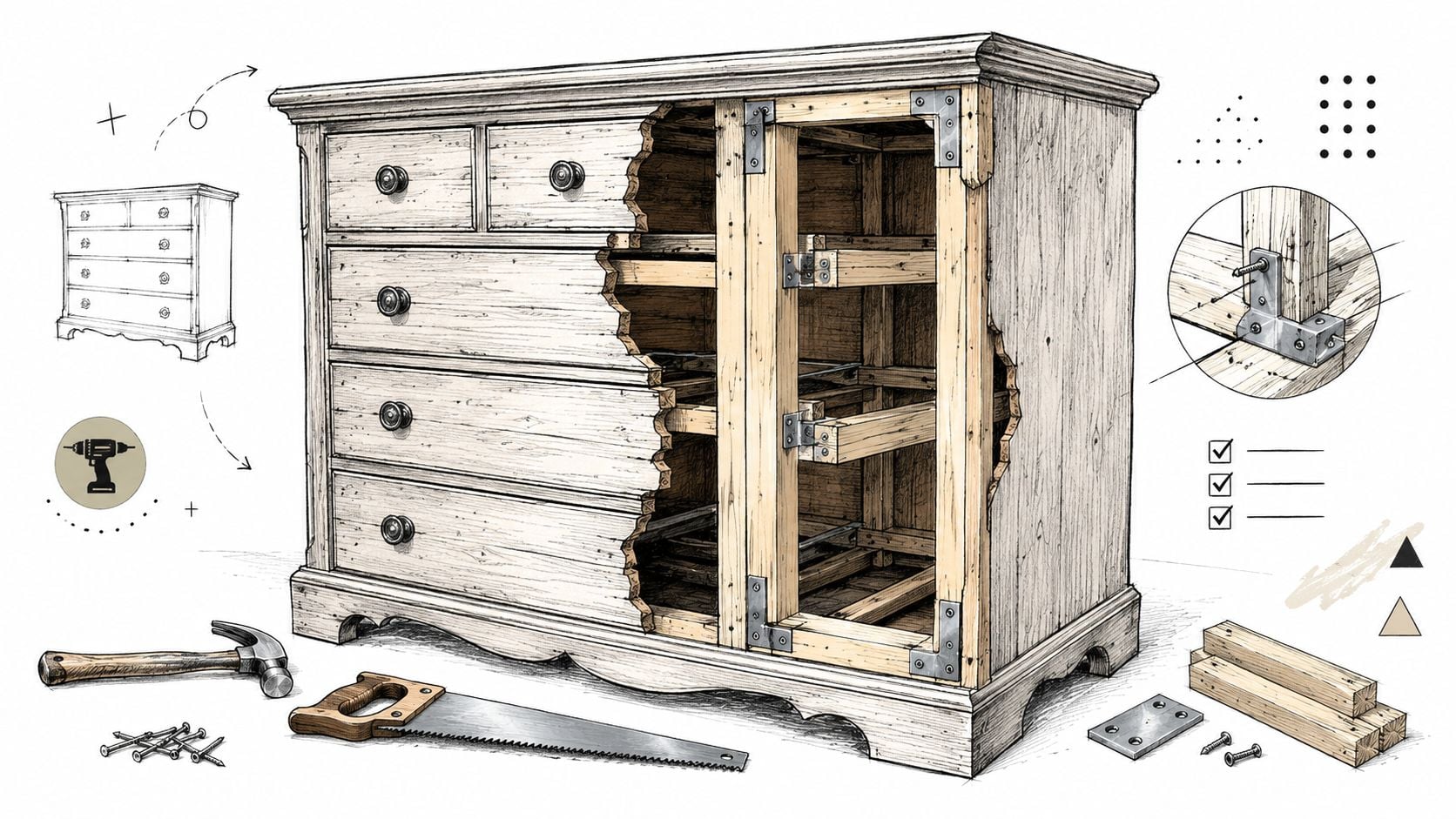
Planning decides whether this project feels satisfying or frustrating. A dresser can become a useful media piece, but only if the size, structure, and finish plan match the room and the equipment it needs to hold.
Measure the room before touching the dresser
Start with the room layout. The dresser is the candidate, not the boss.
A converted piece often fails because the builder measures the TV and ignores everything around it. Depth affects walkway space. Width affects speaker placement and side clearance. Height affects comfort every time the television is on. Before cutting or removing anything, map the wall, seating distance, outlet locations, and trim. This guide to finding the optimal TV positioning is a good reference for matching screen placement to stand height and room setup.
Use a quick field check before you commit:
- TV base or mount plan: Confirm whether the television will sit on the top or hang on the wall above the unit.
- Component size: Measure consoles, streaming boxes, center speakers, and routers with room for airflow.
- Cord path: Leave space behind the case for plugs, cable bends, and surge protection.
- Trim and outlet interference: Baseboards and recessed outlets can keep the dresser from sitting flat to the wall.
- Top load: Older dressers with thin tops may need reinforcement if a large TV will rest directly on them.
One inch on paper can turn into a problem fast once cords, trim, and vent space are involved.
Build a realistic budget and tool list
The appeal of this project is straightforward. Reusing a dresser can cost less than buying a new media unit, especially if you already own the piece and some of the tools. The savings disappear when the dresser needs major structural repair, specialty hardware, or a full finish rebuild. That is the trade-off people often miss.
Budget for materials first, then decide if the base furniture deserves the work. Plywood or solid shelf stock, screws, wood glue, sandpaper, primer, paint or stain, and back-panel materials add up quickly. If the dresser has loose joinery, damaged veneer, or a sagging top, repair time rises with the material bill.
A practical tool list usually includes:
- Drill and bits for hardware removal, pilot holes, and assembly
- Sander or sanding block for finish prep and edge cleanup
- Clamps to hold parts square while glue sets
- Saw suited to the cuts you need for shelves, openings, or back-panel work
- Square and tape measure for layout that stays accurate
- Fasteners and shelf supports chosen for the dresser's material, not just what is on hand
I always recommend sketching the interior before buying supplies. Shelf spacing, vent gaps, and cord openings are easier to correct with a pencil than with filler and touch-up paint.
A simple decision table keeps the project honest:
| Decision point | DIY conversion | Buying a finished unit |
|---|---|---|
| Existing dresser has strong frame | Good candidate | Optional |
| Need exact style match | Good candidate | Custom order may be better |
| Limited time for sanding and rebuilding | Harder fit | Easier fit |
| Want guaranteed finish and cable setup | Mixed result | Better fit |
For Lafayette homeowners, that last row matters more than it gets credit for. A DIY conversion can be rewarding, but a purpose-built entertainment center from Lucas Furniture saves time, avoids structural guesswork, and gives you storage, cable management, and proportions designed for media use from the start.
The Core Build From Deconstruction to Reinforcement
A dresser conversion starts to succeed or fail once the drawers are out and the cabinet is opened up. This part determines whether the finished piece can carry a TV, media components, and daily use without sagging, racking, or looking patched together after a few months.
What gets removed and what stays
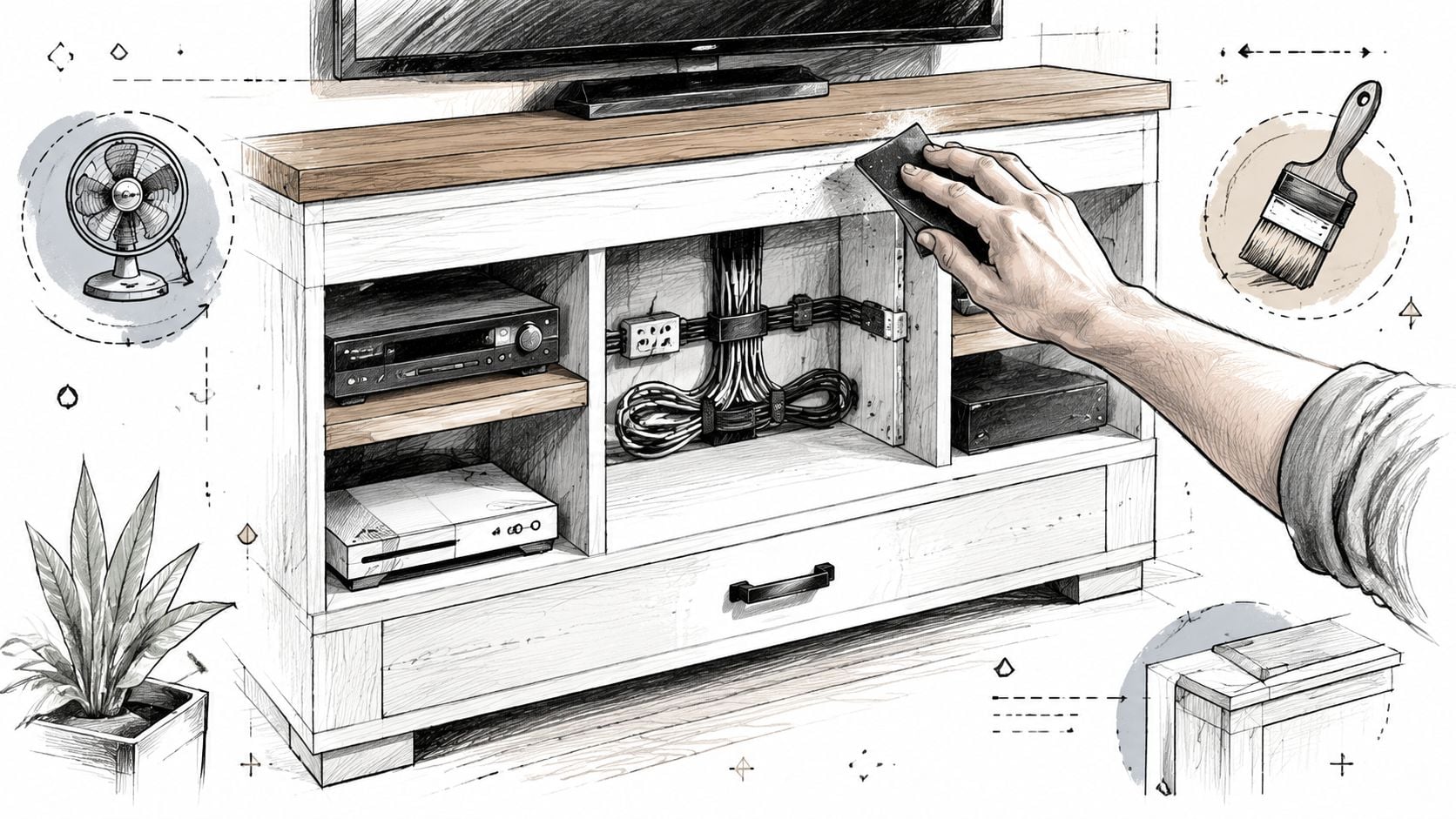
Start by stripping the piece down to the parts that help the cabinet hold its shape. Drawers, slides, and stops usually come out. Side panels, the face frame, and any divider that supports the top often need to stay unless you have a clear plan to replace that strength somewhere else.
That trade-off matters. Opening up the center looks better for electronics, but every divider you remove asks the cabinet to do more with less.
A careful sequence keeps the build under control:
- Remove drawers fully and label anything you may reuse, especially drawer fronts and hardware.
- Pull slides and stops cleanly so the case sides are not splintered or loosened.
- Check each divider before cutting because some are decorative and some are carrying load.
- Mock up shelf locations with scrap or the actual shelf stock before fastening supports.
Readers planning enclosed storage below the TV can borrow some useful alignment ideas from this guide on adding doors to a bookcase, especially where reveal gaps and hinge-side support need to stay consistent.
Build the support system before the shelves
Shelf panels are the visible part of the conversion. The support rails and blocking perform the essential function.
I treat the inside of the dresser like a small cabinet rebuild. If the original drawer webbing is thin, loose, or stapled together, add solid wood cleats or rails on both sides and at the back so the shelf is bearing on something reliable. Fastening a shelf into weak side material without that reinforcement is one of the quickest ways to get sagging, joint failure, or a top that starts to rack out of square.
Keep support spacing reasonable for the material you are using and the weight you expect it to carry. A wide span in particleboard or thin plywood may look fine on day one and bow later once a receiver, game console, or sound system sits in place. Shorter spans and better fastening usually beat thicker trim and cosmetic fixes.
One rule saves a lot of frustration. Correct the cabinet for square before you install permanent shelves. If the case is twisted, every opening will advertise it.
Reinforcement details that improve the result
A stronger build usually comes down to a few disciplined choices:
- Use straight support stock. Crooked cleats create twisted shelf lines and uneven gaps.
- Fasten into solid structure. Screws should bite into rails, sides, or blocking, not just thin paneling.
- Add a back stiffener if needed. Even a partial back or interior brace can reduce racking.
- Check level after each rail goes in. Small errors stack up fast inside a short cabinet.
- Seal cut edges before finish work. For a useful comparison of how coatings behave on cabinetry and furniture, see GTA homeowners' kitchen paint options.
This stage rewards patience more than creativity. A dresser can look solid from the front and still be weak where it counts.
That is also the point where buying instead of rebuilding starts to make sense for some Lafayette homeowners. If the case needs major reinforcement, shelf rebuilding, and squaring before you even get to finish work, a purpose-built entertainment center from Lucas Furniture often delivers the better value. You get storage designed for media use, cleaner proportions, and a structure built for the load from the start.
Finishing Touches Cable Management and Climate-Proofing
A dresser conversion starts to feel like real furniture at the finish stage. Doors and drawers may already fit, but exposed cords, rough cutouts, and a finish that reacts badly to summer humidity will give the piece away fast. That is the difference between a project that looks clever for a week and one that still looks right after a year in a Lafayette living room.
Clean finishes come from prep, not paint alone
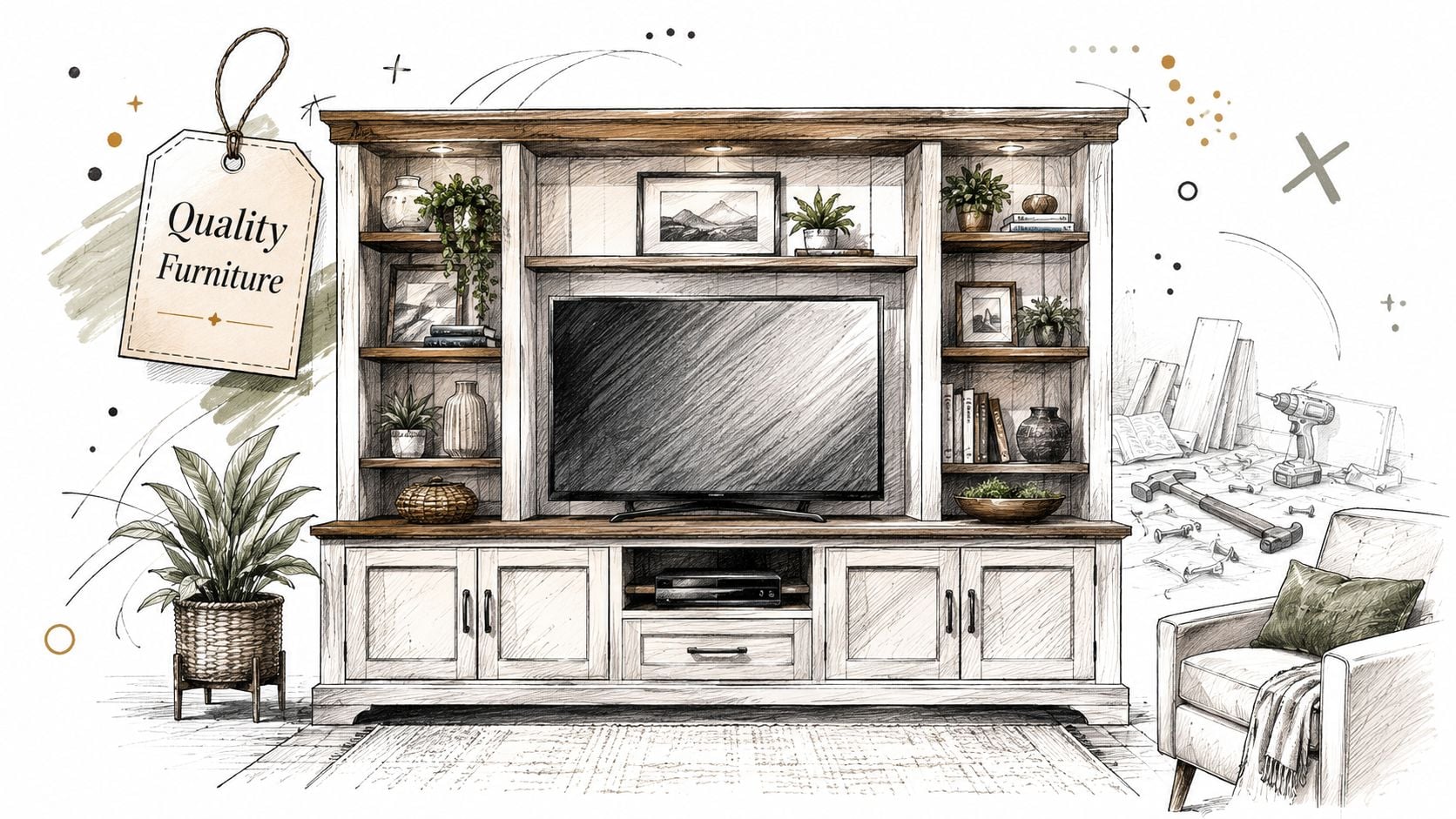
Good paint cannot hide bad prep. Filler ridges, chipped veneer, and fuzzy cut edges telegraph through the final coat, especially on flat drawer fronts and side panels where light hits straight on. Sand until transitions feel flat by hand, not just until they look acceptable from a few feet away.
Cord access deserves the same discipline. A hole saw and a plastic grommet usually give a cleaner result than a rough jigsaw opening, and smaller openings keep more strength in a thin back panel. Place each opening where cords naturally fall behind a component shelf, not in the visual center of the cabinet.
For finish selection, surface prep, and durability concerns that overlap with painted cabinetry, GTA homeowners' kitchen paint options gives a useful comparison of how different coatings handle wear and cleanup. If you want a benchmark for shelf spacing, access, and ventilation before drilling or painting, this guide on how to shop for TV stands helps clarify what purpose-built media furniture gets right.
Climate-proofing matters in Central Indiana
Midwestern humidity is hard on older case goods, especially dressers built with thin veneer, fiberboard backs, or unfinished undersides. Seasonal moisture swings can loosen veneer edges, swell raw cut areas, and telegraph old repairs back through the finish. That risk is one reason I treat converted dressers more like cabinets than décor pieces.
The weak points are usually hidden. Cut shelf notches, the underside of the top, back panel edges, old veneer seams, and any area where you removed drawer webbing all need protection. A wax-only finish is rarely enough for that job.
A practical sequence keeps the piece stable and easier to maintain:
- Sand damaged areas flat: Feather chipped veneer and smooth repaired spots before primer.
- Prime exposed material: Bare wood, filler, and raw composite edges absorb finish differently unless they are sealed first.
- Apply an even topcoat: Consistent sheen helps old and new surfaces read as one piece.
- Seal vulnerable edges: Back panels, underside surfaces, interior cutouts, and veneer seams need attention because they absorb moisture first.
- Leave room for airflow: Media components generate heat, so avoid packing the cabinet tight against the wall or closing off every opening.
That last point gets missed often. Heat and trapped humidity inside a cabinet can shorten the life of electronics and stress the furniture at the same time.
For homeowners who enjoy the build, these finishing details are what turn a recycled dresser into a usable entertainment center. For homeowners who want the look without the trial and error, Lucas Furniture offers the simpler path. A purpose-built entertainment center arrives with cleaner cord routing, better ventilation, and a finish designed for daily living, not retrofitted after the fact.
When to Buy Instead Your Best Furniture Store Near Lafayette IN
Some projects are satisfying because they save money and preserve a piece with character. Other projects become expensive reminders that not every dresser wants to be a media console. That's when buying a purpose-built unit is the better decision.
The trade-off between DIY charm and daily performance
A converted dresser can be beautiful, but it still has to work every day. It needs proper shelf depth, cord paths that don't look improvised, storage that opens cleanly, and a structure that doesn't flex under electronics. If the project dresser is shaky, heavily damaged, or built with materials that won't tolerate modification well, buying is often safer and less frustrating.
That's especially true for households that want a complete room update instead of a single custom experiment. A professionally built entertainment center usually pairs more easily with a sectional, recliner, or coordinated living room setup because the proportions and finishes were designed to function as part of a larger collection.
Why clearance and custom options matter
Shoppers in the Lafayette area don't have to choose between style and practicality. The main showroom and outlet for Lucas Furniture & Mattress is located in Kokomo, covers over 35,000 square feet, and serves as the primary location for Lafayette customers seeking clearance deals of up to 70% off, as shown on the Lucas Furniture showroom and outlet. That matters for anyone who started with a DIY idea because of budget but still wants a finished, durable result.
The strongest buy-instead reasons usually look like this:
- Time is tight: A finished unit avoids weekend rebuilds, drying time, and tool setup.
- Safety matters more than tinkering: A purpose-built stand is made for electronics and repeated use.
- The room needs coordination: Matching an entertainment center to a sectional, home office piece, bedroom storage, or even outdoor furniture shopping is easier in one trip.
- The style is specific: Custom order options can solve the “almost right” problem that often sends shoppers back to another compromise.
For some readers, the right answer is still DIY. For many others, the better answer is a finished piece from a Lafayette furniture store option that values clearance, custom order flexibility, and practical comfort.
Complete Your Lafayette Living Room Makeover
A media console usually changes more than one wall. Once the television area looks intentional, the rest of the room becomes harder to ignore. That's why many homeowners start with a dresser to entertainment center idea and end up rethinking the seating, lighting, and traffic flow around it.
Think beyond the TV stand
The living room works best when the major pieces support each other. A better entertainment center often leads to a better sectional layout, cleaner sightlines, and more useful storage. Readers planning the room around a sofa or sectional can get fresh ideas from these living room arrangement ideas.
A full-room mindset also opens up better decisions in other categories. A household that updates the entertainment wall may also be ready for a new mattress, bedroom set, dining room upgrade, home office setup, or seasonal outdoor furniture that makes the whole home feel more finished.
A better room plan is often easier to afford than expected
For value-conscious shoppers in Central Indiana, financing can be the difference between waiting and getting the room done properly. Lucas Furniture & Mattress provides a Simple Financing program that allows customers to furnish their homes today and pay over time, as outlined through Lucas Furniture's flexible financing options. That flexibility is useful for larger purchases like a sectional, mattress, entertainment center, or coordinated room package.
The best results come from matching the approach to the household. Some readers should refinish the dresser they already own. Others should skip the rebuild, shop clearance, explore custom order options, and have the right piece delivered.
Visit Lucas Furniture & Mattress to shop a locally owned source serving Lafayette and Central Indiana with value, comfort, and selection. Browse online, explore clearance, mattresses, sectionals, bedroom, dining, home office, and outdoor furniture, or make the trip to the Kokomo showroom for a closer look. Visit our showroom near Lafayette today, or browse our full inventory online with guaranteed in-home delivery to the Lafayette area!