Experience our new Lafayette showroom — Now Open! Come Visit Us -->

Stop Mattress Motion Transfer: Sleep Undisturbed

A lot of Lafayette shoppers start looking into mattress motion transfer after the same frustrating pattern repeats for weeks. One person rolls over, gets up early, or climbs back into bed late, and the other person wakes up. By morning, everyone blames stress, work, or a busy house, when the mattress may be part of the problem.
For shoppers seeking a Lafayette furniture store or a furniture store near Lafayette IN, this topic matters because mattress comfort isn't only about softness or firmness. It's also about how well a bed keeps one person's movement from traveling across the surface. That's one reason so many Central Indiana shoppers visit the Kokomo showroom and rely on in-home delivery to the Lafayette area when it's time to replace an old mattress, upgrade a bedroom, or furnish a whole home.
A practical shopping trip often starts with the mattress, then expands into a sectional, dining set, home office pieces, outdoor furniture, or even a clearance find for another room. That local, full-home approach is part of what makes Lucas Furniture serving Lafayette a familiar resource for households that want comfort, value, simple financing, custom order options, and reliable delivery without making the process harder than it needs to be.
Table of Contents
- What Is Mattress Motion Transfer and Why It Matters
- Comparing Mattress Types for Motion Isolation
- How to Test for Motion Transfer at Lucas Furniture
- Why Choose Lucas Furniture Our Value Proposition
- Furnish Every Room and Customize Your Comfort
- Shop Your Way Delivered to Your Lafayette Home
- Mattress Motion Transfer FAQs
What Is Mattress Motion Transfer and Why It Matters
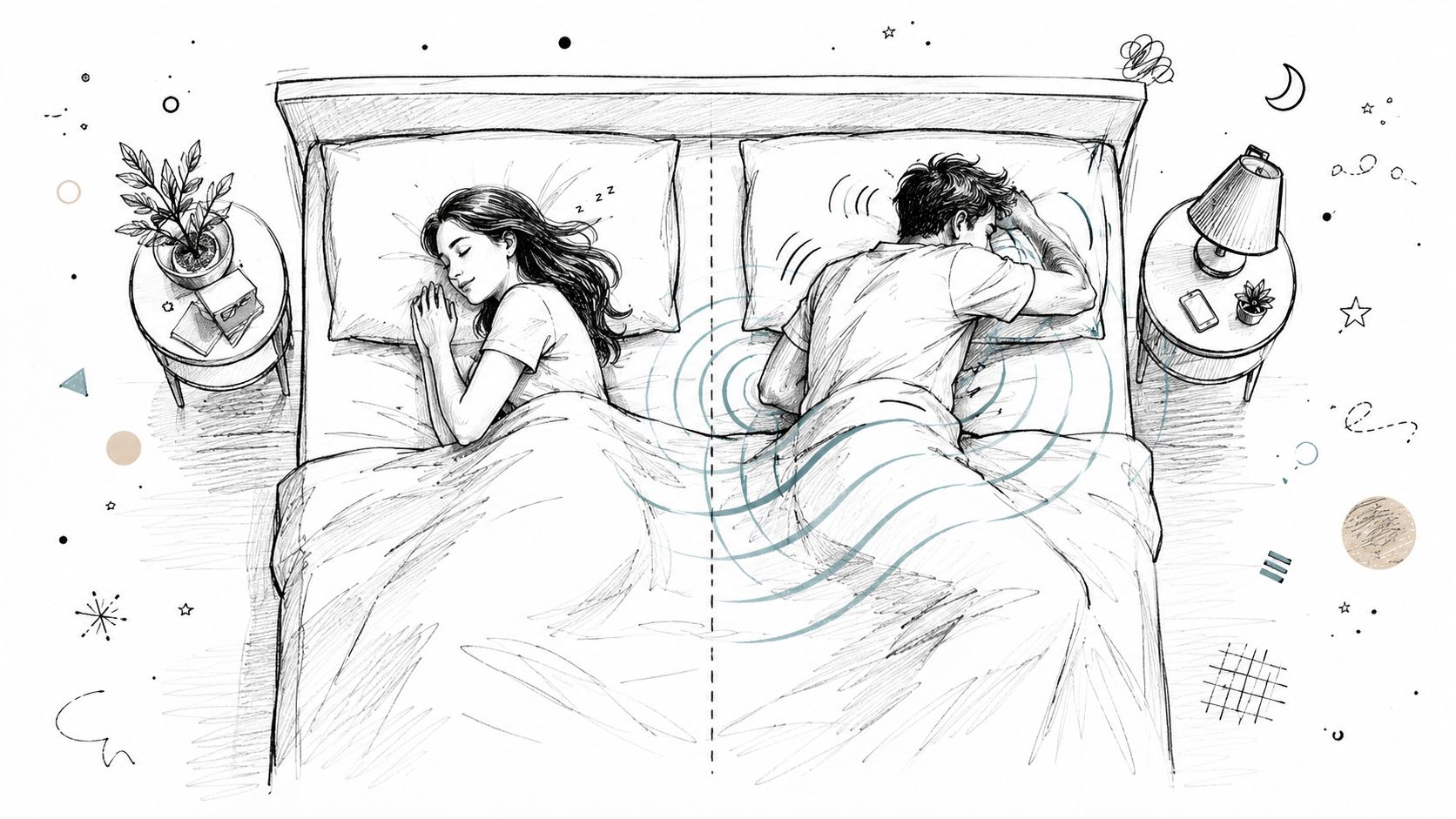
The simplest way to think about mattress motion transfer is this. One person moves on one side of the bed, and the other side reacts. If the mattress spreads that movement across the surface, the second sleeper feels it.
A helpful analogy is a pond. Drop a pebble into still water and ripples move outward. Some mattresses do something similar. A shift in one area creates a wave of movement that reaches the other person.
Why light sleepers notice it first
This problem usually shows up fastest for couples with different schedules, families with children who climb into bed, and anyone who wakes easily. One sleeper may barely notice the movement, while the other feels every turn, leg kick, or trip out of bed.
That's why motion isolation and motion transfer are practical shopping terms, not showroom jargon. They describe whether the mattress absorbs movement or passes it along.
Practical rule: If a sleeper can feel a partner sit down, roll over, or stand up, motion transfer is already affecting comfort.
A major reason this matters is sleep quality, not just annoyance. A landmark sleep-lab study on mattress motion found that when movement was transferred across a mattress, sleepers had a significant increase in lighter Stage 1 sleep and a significant decrease in deep Stage 3/4 sleep. That means stronger motion transfer can interrupt the depth of sleep, even when total sleep time doesn't change much.
What shoppers often misunderstand
Many people assume the issue is their partner's restlessness alone. Sometimes it is. But the mattress can make those movements feel much bigger than they really are.
Three common points of confusion come up in stores all the time:
- “Any thick mattress should stop movement.” Thickness helps only if the materials are good at absorbing energy.
- “Firm means stable.” A firm bed can still transfer a lot of movement if the support system spreads motion.
- “If the mattress still feels comfortable, it can't be the problem.” A mattress can feel fine at first touch and still disturb sleep once two people use it overnight.
Shoppers who want a broader sleep setup checklist can also review ways to improve sleep quality, especially when mattress feel, support, and partner disturbance all seem connected.
Comparing Mattress Types for Motion Isolation
Different mattress categories handle movement very differently. Construction matters more than the label on the tag. The support core, the comfort layers, and how those pieces work together determine whether motion stays put or spreads.
How motion moves through a bed
According to Sleep Foundation's motion isolation methodology, motion transfer is primarily controlled by a mattress's support core and comfort-layer materials. Dense foams absorb kinetic energy, while interconnected innerspring coils transmit it. That's why all-foam mattresses consistently rank highest for motion isolation.
That one idea explains most of the differences shoppers feel in a showroom.
- Memory foam mattresses usually absorb movement well because foam compresses where pressure happens instead of sending a strong rebound across the bed.
- Latex mattresses often provide a more responsive surface than memory foam, but well-constructed latex can still isolate motion effectively.
- Traditional innerspring mattresses tend to pass movement more easily because the coil system acts more like a connected network.
- Hybrid mattresses sit in the middle. Models with pocketed coils usually do a better job than old-style innersprings because each coil can respond more independently.
A mattress can feel lively and supportive while still reducing partner disturbance, but the materials underneath have to control the bounce.
Mattress Motion Isolation Comparison
| Mattress Type | Motion Isolation | Primary Feel | Best For |
|---|---|---|---|
| Memory Foam | High | Contouring, quieter, less bounce | Light sleepers and couples bothered by movement |
| Latex | Moderate to high | Responsive, buoyant | Shoppers who want some spring without heavy ripple effect |
| Traditional Innerspring | Lower | Bouncy, more connected feel | Shoppers who prioritize classic feel over motion control |
| Hybrid | Moderate to high | Balanced, supportive, some bounce | Couples who want support and better motion control than a basic innerspring |
Shoppers around Lafayette often compare memory foam and hybrid models first because those two categories cover a lot of real-world needs. One side of the decision is movement control. The other side is overall feel.
Which type makes sense for different sleepers
A useful way to narrow the field is to match the mattress to the problem.
- For the sleeper who wakes at every shift: all-foam usually deserves the first look.
- For the couple who wants less disturbance but not a deep sink-in feel: latex or a well-built hybrid may be more appealing.
- For the shopper replacing an older spring bed: a hybrid can feel familiar while still improving motion isolation.
- For someone reading labels and specs online: terms like dense foams, comfort-layer thickness, and pocketed coils matter more than marketing names.
Anyone trying to sort through those categories in plain language can use this guide to mattress types explained before narrowing choices in store.
How to Test for Motion Transfer at Lucas Furniture
Reading about motion isolation helps, but testing it in person is what turns the concept into a real buying decision. The most useful showroom test is simple, low-pressure, and easy to repeat on more than one bed.
A simple in-store test that works
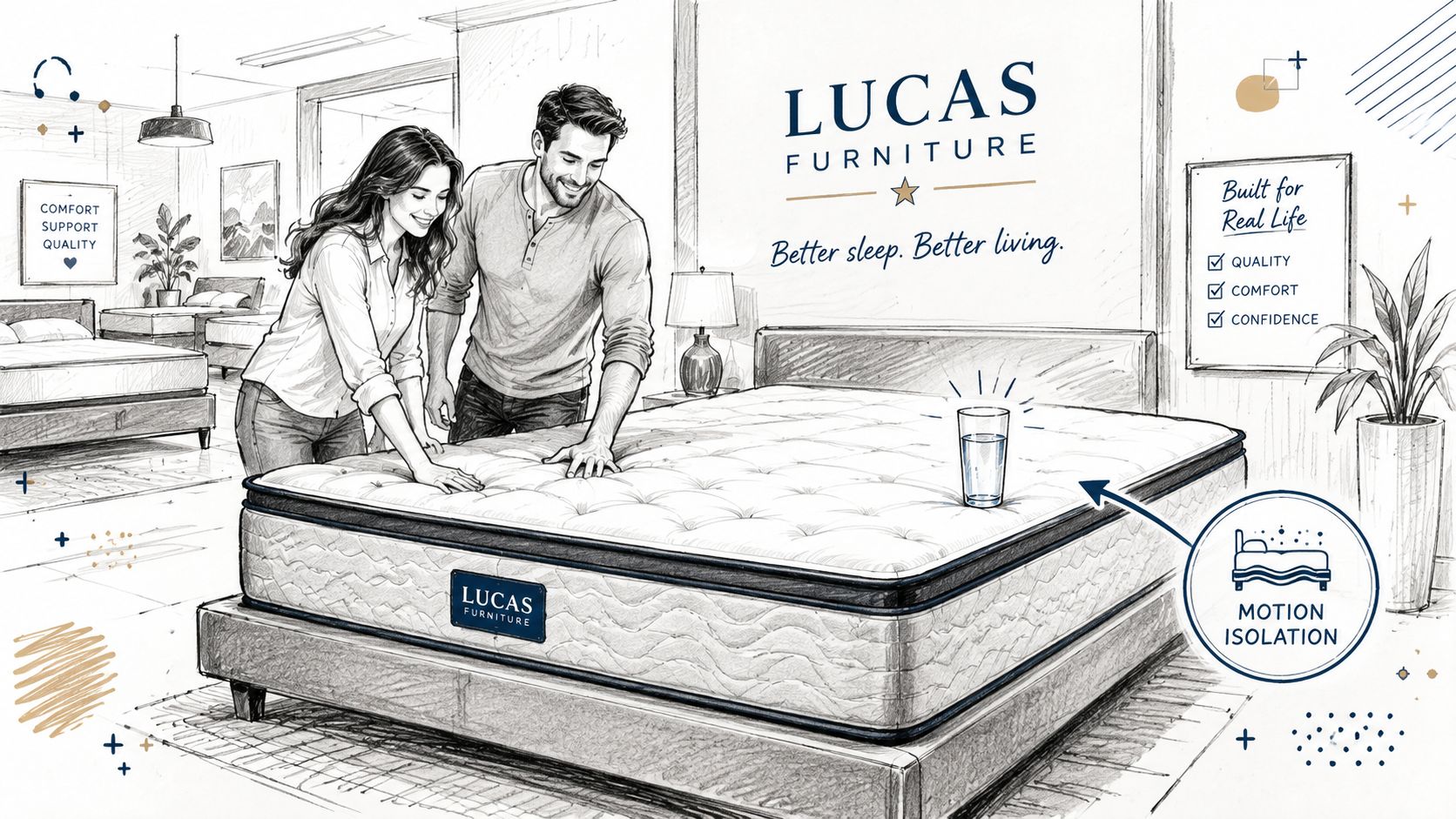
The strongest way to test mattress motion transfer is with two people. One person lies down and keeps eyes closed. The other person gets onto the mattress, changes position, and sits near the edge.
A practical in-store routine looks like this:
- Start still. Let one person settle into a normal sleeping position.
- Add small movement first. The second person sits down and shifts slowly.
- Increase the challenge. Roll once or twice and get out of bed as if leaving early for work.
- Switch roles. Some sleepers are more sensitive than others, so both should test.
- Compare multiple models. The difference is easier to feel side by side.
A partner test is better than pressing a mattress with one hand because sleep disturbance happens with body movement, not fingertip pressure.
What shoppers should notice
The question isn't whether the bed moves at all. Nearly every mattress reacts to some degree. The question is how much of that movement reaches the second sleeper, and how sharp that sensation feels.
Shoppers should pay attention to:
- Surface ripple: Does movement spread quickly across the bed?
- Bounce-back: After someone sits or rolls, does the mattress keep reacting?
- Edge effect: Does getting in and out of bed send a jolt inward?
- Comfort under motion: Can one person remain relaxed while the other changes position?
A good motion test feels a little boring, and that's the point. Less drama on the mattress usually means fewer nighttime interruptions at home.
There's another reason to test carefully. Guidance on motion isolation and mattress aging notes that sagging and material degradation can worsen partner disturbance over time, and that a topper may not be enough to solve it. That matters for Lafayette households replacing an older mattress that used to feel fine but now seems restless and uneven.
For shoppers who want a step-by-step buying checklist before visiting the showroom, this mattress shopping guide is a useful place to start.
Why Choose Lucas Furniture Our Value Proposition
For local shoppers, value usually means more than a sale tag. It means useful guidance, reasonable choices across different budgets, and a store that understands how people in Central Indiana shop. Some households need a mattress only. Others are moving, remodeling, or replacing multiple rooms at once.
What matters to local shoppers
Lucas Furniture & Mattress has served Central Indiana since 2002, with the main showroom and outlet in Kokomo and delivery available to the Lafayette area. That setup gives Lafayette households access to a large selection without giving up local service.
A few parts of the value proposition stand out:
- Low Price Promise: Shoppers want confidence that they're getting fair value.
- Clearance and outlet savings: The store offers savings up to 70% off in clearance and outlet areas.
- Locally owned service: Community-minded support tends to matter more when a purchase affects daily comfort.
- Strong customer reviews: Shoppers often look for proof that the delivery, communication, and product guidance are dependable.
For mattress buyers, return terms matter too. Before making a final choice, shoppers can review the mattress return policy details so expectations are clear from the beginning.
This matters even more with sleep products because the purchase follows someone home every night. A mattress, sectional, recliner, dining set, or bedroom suite isn't a quick impulse item. Local trust and a straightforward process make a big difference.
Furnish Every Room and Customize Your Comfort
A mattress purchase often starts a larger home conversation. Once sleep improves, many households begin looking at the whole comfort picture. That might mean updating a bedroom set, replacing an aging sectional, adding a home office desk, or finally finding outdoor furniture that makes a patio more usable.
One consumer poll cited in a sleep guide found that 24% of people reported a partner disturbing their sleep. That's one reason mattress shopping becomes a practical household issue, not a niche concern, as noted in this discussion of partner disturbance and motion isolation.

Better sleep often leads to a bigger home update
Shoppers rarely think in isolated categories. A renter may start with a mattress and leave thinking about a compact dining set and a clearance accent chair. A growing family may come in for a bed and realize a sectional with better seating works better for movie nights, guests, and daily living.
Typical categories that pair naturally with a mattress purchase include:
- Living room pieces: sofas, sectionals, recliners, lift chairs, and entertainment furniture
- Bedroom furniture: beds, dressers, nightstands, and storage pieces
- Dining and home office: practical options for daily use
- Outdoor furniture: seasonal seating and dining pieces for decks and patios
Flexible ways to furnish a home
Comfort also looks different from one household to another. Some shoppers want a quick in-stock solution. Others need a custom order piece that fits a room layout or style more closely.
That's where flexibility matters:
- Simple financing: spreading payments out can make a full-room purchase more manageable
- Custom order options: fabrics, finishes, and configurations help shoppers fit furniture to the home instead of settling
- Clearance opportunities: outlet and clearance pieces can lower the cost of furnishing multiple rooms at once
For readers who are also considering adjustability in the bedroom, DME Superstore's health benefits article offers a helpful overview of why some sleepers explore adjustable bed features alongside a new mattress.
Shop Your Way Delivered to Your Lafayette Home
A lot of Lafayette shoppers start with the same practical question. How do you pick a mattress that reduces partner movement without turning the whole process into a full-day project?
The easiest answer is to shop in stages. Start at home to narrow the field, then visit the Kokomo showroom to do the part that really matters for motion transfer. Test the mattress with your own body weight, your usual sleep position, and, if possible, the person who shares the bed. That gives you a clearer read than photos or product names ever will.
Some households want to research first. Others would rather lie down on two or three models right away and feel the difference between a mattress that absorbs movement and one that lets it travel across the surface. Both approaches work.
For Lafayette residents, the process can stay straightforward:
- Browse mattress and furniture options from home to narrow your choices
- Visit the Kokomo showroom to test motion transfer in person
- Review in-home delivery options for Lafayette-area purchases before you buy, so timing and setup are clear
- Ask about financing if replacing a mattress now makes more sense than waiting
- Check outlet and clearance pieces if you are furnishing more than one room at the same time
That last point matters more than many shoppers expect. A mattress purchase often happens during a bigger home update, such as setting up a guest room, replacing a worn bed frame, or finally updating the main bedroom so everything works together.
If you are also planning for upkeep after delivery, some renters and relocating households look for outside care guides such as clean mattresses for London tenants, but the first step is choosing a mattress that fits your sleep needs and your home.
Lucas Furniture & Mattress gives Lafayette residents a practical middle ground. You can research at your own pace, test in person before committing, and arrange delivery without having to solve the transport problem yourself.
Mattress Motion Transfer FAQs
Some mattress questions come up after the showroom visit, usually when shoppers start comparing notes at home. These are the ones that matter most.
Will a topper fix motion transfer
Sometimes a topper can soften surface feel, but it won't always solve the underlying problem. If the support system underneath is already spreading movement, the topper may only mask the issue for a short time.
That's especially true with an older bed that already shows sagging or uneven wear. If the mattress structure has changed, replacement may work better than layering on another product.
Does body weight affect what each sleeper feels
Yes, it can. A heavier sleeper may create more force when shifting position, and a lighter sleeper may be more sensitive to what reaches the other side. Sleep position, speed of movement, and how close both people sleep to the center also matter.
The key point is consistency. If one partner regularly wakes when the other moves, the mattress isn't controlling energy well enough for that household's needs.
Some couples don't need a perfectly still surface. They just need a bed that turns sharp movement into a softer, less disruptive response.
What mattress type is the strongest alternative to memory foam
Latex is often the main alternative shoppers consider. Expert estimates suggest a high-quality latex mattress may transmit only 10% to 20% of a disturbance, while a poorly isolating mattress can approach a near 1:1 transfer of motion, according to these expert estimates on latex motion isolation.
That doesn't mean every latex mattress will outperform every hybrid or foam model. Construction still matters. But latex is a legitimate option for shoppers who want motion control with a more responsive feel than classic memory foam.
Does the bed frame matter
Absolutely. A weak, flexing, or uneven frame can make motion feel worse because the whole setup moves more than it should. Even a good mattress can underperform on a poor foundation.
A sturdy, properly supported frame helps the mattress do its job. If a bed suddenly feels more active than expected, the base is worth checking before drawing conclusions.
For households thinking about long-term care as part of mattress performance, this guide on clean mattresses for London tenants is a useful reminder that mattress condition and upkeep play a role in how a bed feels over time.
Lafayette shoppers who are ready to sleep with less partner disturbance can browse Lucas Furniture & Mattress online, compare mattress options, explore clearance savings, ask about simple financing, and arrange in-home delivery to the Lafayette area. Visit the showroom near Lafayette today, or browse the full inventory online with guaranteed in-home delivery to the Lafayette area.