Experience our new Lafayette showroom — Now Open! Come Visit Us -->

Full Size Bed vs Queen Size Bed: Which Is Right for You?

A queen mattress offers 4,800 square inches of sleeping area, compared with 4,050 square inches for a full, giving the queen about 18.5% more space. That difference can transform a shared bedroom, but it isn't automatically the right choice for every Lafayette home. A solo sleeper in a compact room may value open floor space, easier furniture placement, and a lower overall purchase cost more than extra mattress area.
For shoppers comparing a full size bed vs queen size bed at a Lafayette furniture store, the decision comes down to sleepers, room dimensions, comfort habits, and the complete setup, including the mattress, frame, bedding, and delivery. Lucas Furniture & Mattress serves Lafayette and Central Indiana from its main showroom and outlet in Kokomo, with in-home delivery available throughout the Lafayette area.
Choosing the Right Bed Size for Your Lafayette Bedroom
Queen mattresses hold about 47% of U.S. mattress volume share, while full-size mattresses account for about 12%, according to an industry history of mattress standardization (mattress-size history and market context). Those figures explain why queen is often treated as the default upgrade. They don't prove that every bedroom needs one.
A Lafayette renter furnishing an apartment may have a different priority than a family arranging a larger primary bedroom. A teenager may need a comfortable full without losing room for a desk, dresser, or sectional-style reading chair. A couple may appreciate the queen's additional width every night, while a guest-room owner may prefer the full's smaller footprint for occasional visitors.
The showroom conversation that matters
A useful bed-size conversation starts with questions rather than assumptions:
- Who sleeps there: One adult, two adults, a child, or rotating guests?
- How they sleep: In one position, or with frequent movement and stretching?
- How tall they are: Length becomes important for sleepers who need more legroom.
- What the room must hold: Consider dressers, nightstands, doors, closets, desks, and walking paths.
- What the full purchase includes: Add the mattress, foundation or frame, sheets, protector, and delivery to the budget.
Lucas Furniture & Mattress carries full and queen bedroom options across different comfort levels and price points. Customers can browse online or visit the Kokomo showroom serving Lafayette, where testing a mattress in person can make the difference between choosing a size by reputation and choosing one that fits the actual household.
Practical rule: The bigger mattress is only better when the room, sleepers, and budget can support it.
The full size bed vs queen size bed decision also has a local dimension. Older Lafayette homes, apartments, guest rooms, and multi-use spaces may reward the smaller footprint. A couple furnishing a dedicated bedroom may find that the queen's extra room is worth reorganizing the layout. Neither choice is a compromise by definition.
Full Size Bed vs Queen Size Bed Exact Dimensions and Surface Area
The U.S. measurements are standardized enough to make this comparison straightforward. A full mattress measures 54 inches wide by 75 inches long, while a queen measures 60 inches wide by 80 inches long.
| Measurement | Full Size | Queen Size |
|---|---|---|
| Width | 54 inches | 60 inches |
| Length | 75 inches | 80 inches |
| Surface area | 4,050 square inches | 4,800 square inches |
| Difference from full | Baseline | 6 inches wider and 5 inches longer |
| Shared width per adult | About 27 inches | About 30 inches |
The queen's 750-square-inch increase equals roughly 18.5% more sleeping area than the full. The calculation is simple, but its effect is personal. The extra width creates more room for changing positions, separating blankets, and avoiding accidental contact. The extra length gives taller sleepers more usable space at the foot of the mattress.
For two adults, the comparison becomes especially clear. A full provides about 27 inches of width per person, while a queen provides about 30 inches per person. Three inches per sleeper can sound minor in a showroom, but it becomes noticeable when both people move, sleep on their sides, or share the bed every night.
What the measurements don't tell you
The mattress dimensions don't include the frame, headboard, footboard, or surrounding furniture. An upholstered bed can extend beyond the mattress edges, and a storage bed may need additional clearance for drawers. Bedding also changes the visual footprint, especially with thick comforters or a wide headboard.
For shoppers replacing existing sheets or checking whether a frame will work, Lucas Furniture's bed sheet measurements guide helps clarify the difference between full and queen bedding. The labels aren't interchangeable, so the mattress, frame, fitted sheet, protector, and comforter should all match the selected size.
Who Should Choose a Full Size Bed and Who Should Choose a Queen
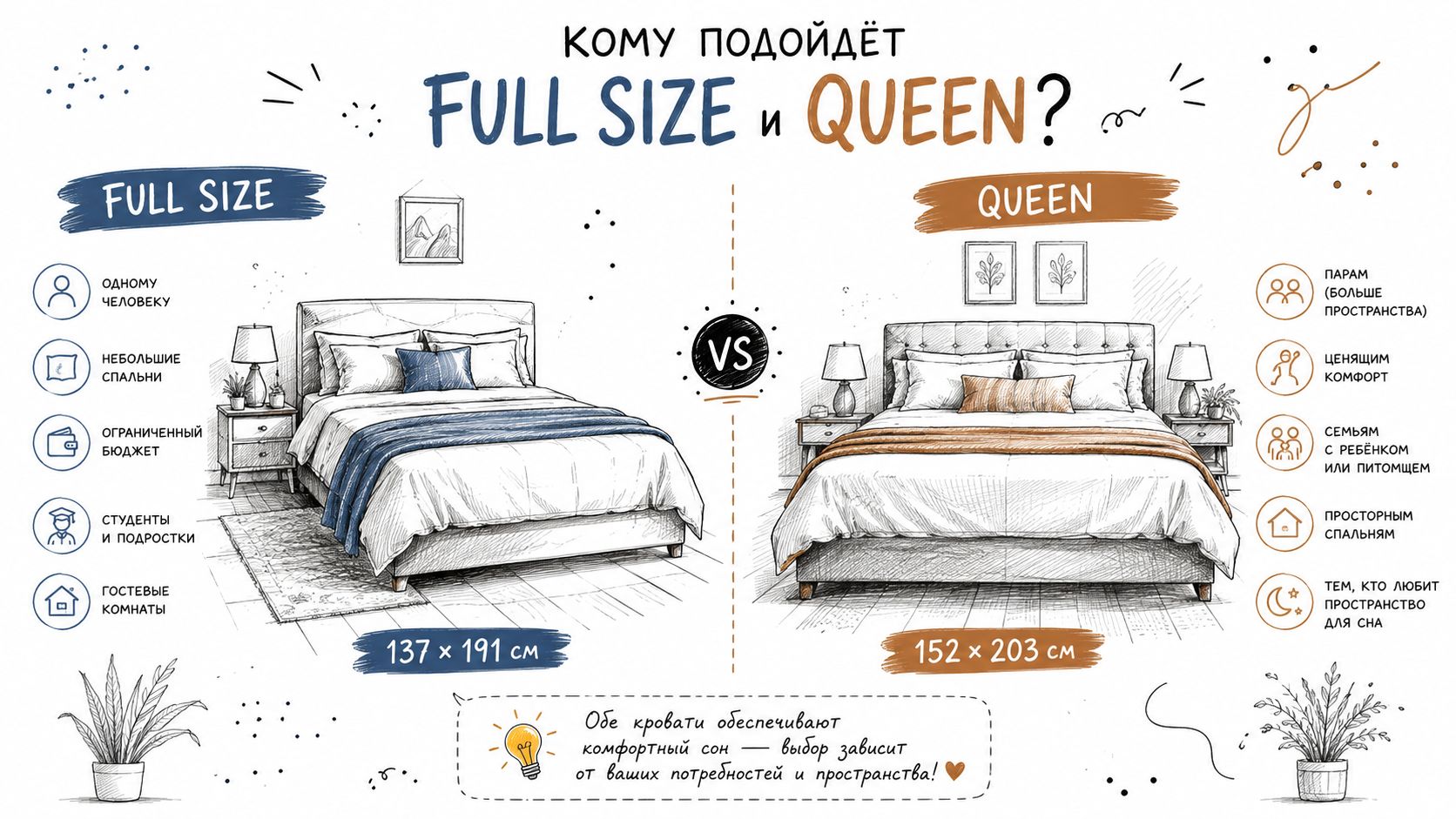
A full bed makes the most sense when one person needs comfortable room without claiming as much of the bedroom. A queen becomes more compelling when two adults share the bed or when a solo sleeper wants additional length and freedom to spread out.
Solo adults and taller sleepers
For a solo adult who sleeps in a compact room, the full offers a practical balance. Its 54-inch width gives one person more room than a narrow single-sleeper option, while its smaller footprint leaves more space for a dresser, desk, chair, or exercise area.
A taller solo sleeper should look carefully at the 75-inch length. The queen's 80-inch length can provide a better fit for someone who needs more legroom, particularly if the sleeper stretches out or prefers a pillow position that uses the upper part of the mattress. Height isn't the only issue, but it can shift the decision toward queen even when only one person sleeps there.
Couples and families
For couples, queen is usually the more comfortable starting point because each adult receives about 30 inches of width, versus about 27 inches on a full. A full can work for occasional sharing, but nightly use often makes the narrower sleeping area more apparent.
Families may choose a full for a teenager's room because the bed supports growth while preserving space for schoolwork and storage. A guest room can follow the same logic. If most visitors sleep alone, a full can leave more room for a nightstand, luggage, or a home office function.
The solo-sleeper tradeoff
Many buyers hear “queen” and assume the upgrade is always sensible. A full may be smarter when the buyer sleeps alone, doesn't sprawl, and needs to protect circulation space. The narrower and shorter footprint can preserve access to closet doors, windows, and storage, which often matters more than unused mattress area.
A full isn't the lesser bed. For the right solo sleeper, it's the more efficient use of the room.
International labels create another potential mistake. A U.S. full is commonly 54 by 75 inches, while a UK double uses the same stated dimensions, and the word “queen” can refer to different formats in other markets. Buyers importing furniture or ordering bedding online should confirm the actual measurements instead of relying on the name alone.
Room Size and Layout Does Your Bedroom Fit a Queen
A queen mattress typically needs a room measuring at least 10 by 10 feet, while 10 by 12 feet or larger creates a more comfortable layout for nightstands, dressers, and movement. A full can be easier to place in a smaller bedroom because it is 6 inches narrower and 5 inches shorter.
Measure before choosing
Start with the room's actual interior dimensions, not the advertised square footage. Then mark the likely mattress position with painter's tape or removable floor markers. Add the frame and headboard dimensions if those measurements are available.
Check the following points before ordering:
- Walking routes: Make sure the bed doesn't block the main path into the room.
- Door swings: Account for bedroom, closet, and bathroom doors.
- Furniture access: Dresser drawers and nightstands need room to open comfortably.
- Windows and outlets: Avoid placing a tall headboard where it interferes with windows, heat sources, or electrical access.
- Delivery access: Measure hallways, stairways, turns, and door openings before selecting a large frame.
A room can technically fit a queen and still feel uncomfortable. The mattress is only the center of the layout, so a full may create a better daily experience if the queen forces furniture against walls or narrows the walking route. Readers looking for an easy access bed arrangement can use placement guidance to evaluate traffic flow before moving heavy furniture.
For a more complete planning process, Lucas Furniture's room measuring guide helps shoppers record wall dimensions, openings, and furniture placement. A scaled sketch can reveal problems before delivery day.
Lafayette layout example
A compact Lafayette bedroom with one occupant may work better with a full, leaving room for a dresser and a work surface. A larger primary bedroom with two adults may justify a queen, especially when the bed can sit centrally with clear access on both sides. The right answer comes from the complete floor plan, not from mattress size alone.
Mattress Options Bedding Compatibility and Price Differences
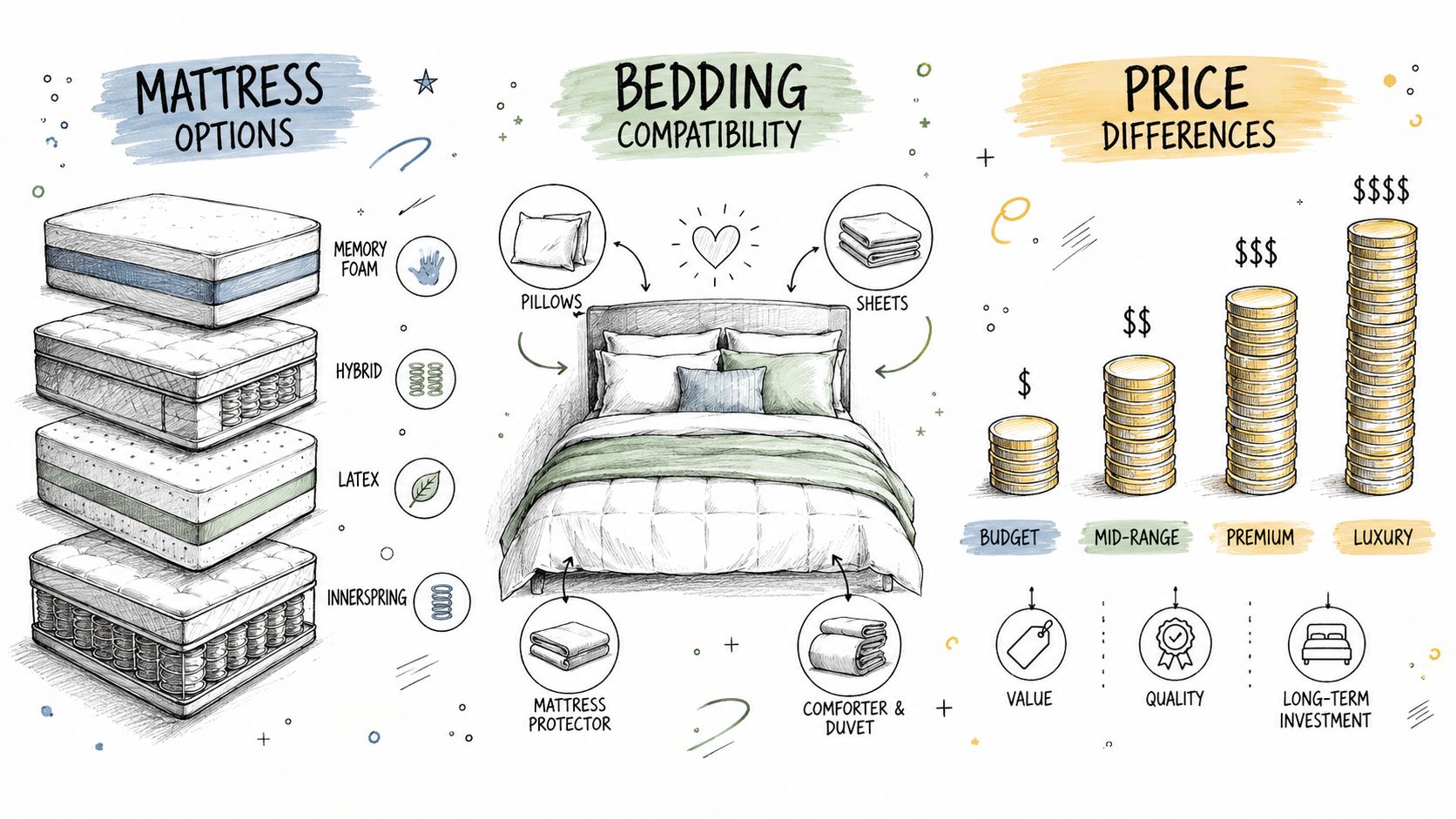
The full and queen categories both offer choices in firmness, construction, foundation style, and upholstery. The practical difference is availability. Queen bedding and frames are generally produced in greater variety, while full-size accessories may offer fewer style choices in some stores.
Look beyond the mattress ticket
A buyer comparing prices should calculate the complete sleep setup:
- Mattress: Compare comfort construction and support, not only the size label.
- Foundation or frame: Confirm that the base is designed for the selected mattress.
- Bedding: Include fitted sheets, a protector, blankets, and a comforter.
- Bedroom furniture: A full may reduce the need to replace a dresser or relocate a desk.
- Delivery: Verify whether in-home delivery reaches the Lafayette address and includes placement.
Queen is often the more widely stocked size, which can make it easier to find matching sheets, protectors, frames, and bedroom sets. Full bedding can still work well, particularly for a teenager's room or guest room, but shoppers should check the label carefully. A full fitted sheet won't fit a queen mattress securely, and a queen frame won't automatically provide the correct support for a full.
This is also where the purchase context matters. Clearance and outlet inventory can change the price relationship between sizes, and a locally available full may offer stronger value than a standard-priced queen. Lucas Furniture & Mattress provides a mattress types guide for shoppers comparing construction and comfort priorities before selecting a size.
When the full saves more than floor space
A full can lower the total furnishing burden because its smaller footprint may allow existing furniture to remain in place. That matters for renters and homeowners working within a fixed room layout. A queen may provide greater sleeping comfort, but the upgrade becomes less attractive if it requires replacing a headboard, moving a dresser, or sacrificing a useful workspace.
The reverse can also be true. If two adults will use the bed for years, the queen's additional sleeping area may justify the added investment. Clearance, outlet savings up to 70%, simple financing, and a low-price promise can help Lafayette shoppers evaluate the complete purchase rather than treating the mattress label as the only cost decision.
Why Shop a Local Lafayette Furniture Store for Your Bed
A bed-size decision is easier when shoppers can test the mattress, inspect the frame, and discuss delivery before placing an order. Lucas Furniture & Mattress is a locally owned retailer serving Lafayette, Indiana, and Central Indiana, with a main showroom and outlet in Kokomo.
See the difference in person
Online dimensions explain the measurements, but they can't show how a sleeper feels when turning, sitting on the edge, or sharing the surface. In the Kokomo showroom, Lafayette shoppers can compare full and queen bedroom furniture, test available mattress options, and consider how a headboard or frame changes the room's overall footprint.
The store's selection extends beyond mattresses. Bedroom shoppers can coordinate beds with dressers and nightstands, then furnish other spaces with living room seating, sectionals, dining furniture, home office pieces, entertainment furniture, and seasonal outdoor furniture.
Value and service remain connected
A low-price promise gives buyers a clear value reference, while clearance and outlet selections can create savings of up to 70%. Simple financing options may help qualified shoppers spread payments over time, and custom order capabilities allow selected furniture pieces to be specified with different fabrics, finishes, or configurations.
Reliable in-home delivery to Lafayette is another practical advantage. Large bedroom furniture can be difficult to transport, carry, and assemble without the right vehicle or help. A local retailer can coordinate the order and bring the selected pieces to the customer's home area.
Customers researching the local option can review mattress stores serving Lafayette, Indiana before deciding whether to shop online or visit the Kokomo location. Strong customer reviews and community-focused service give shoppers another way to assess the buying experience alongside price and selection.
Making Your Final Decision with a Simple Step-by-Step Framework
The best choice becomes clearer when the household treats the purchase as a short evaluation rather than a popularity contest. The following framework keeps comfort, room function, and value in the same conversation.
Start with the sleepers
Count the people who will use the bed regularly. One average-height adult in a smaller room often has a strong case for full. One taller adult may prefer queen for its additional length. Two adults usually benefit from queen's extra shared width.
Then consider movement. A quiet solo sleeper may not use the full surface, while someone who sprawls, changes positions, or shares blankets may appreciate the queen. Children and occasional guests rarely need the same nightly space as a couple.
Measure the room and total the setup
Confirm the room can accommodate the mattress, frame, headboard, nightstands, dresser, and walking paths. A queen generally calls for at least 10 by 10 feet, with 10 by 12 feet or more offering a more comfortable arrangement. A full may preserve better circulation in a smaller room.
Next, price the complete setup rather than the mattress alone. Include the frame, bedding, protector, delivery, and any furniture that must be replaced. Clearance, outlet savings, flexible financing, and custom order options may change which size fits the household budget.
Test, confirm, and order
A showroom visit can settle questions that measurements leave open. Lafayette shoppers can visit the Kokomo showroom serving the area, lie on both sizes, compare mattress feels, and inspect the furniture surrounding each bed. The mattress shopping guide can help organize the comfort questions before the visit.
There isn't one universal winner in the full size bed vs queen size bed comparison. The full is often the smarter selection for solo sleepers, smaller rooms, guest spaces, and buyers protecting their budget. The queen is usually the stronger fit for couples, taller sleepers, and anyone who wants more personal space each night.
Lucas Furniture & Mattress offers full and queen mattresses, bedroom furniture, clearance and outlet savings, simple financing, custom order options, and reliable in-home delivery to Lafayette from its Kokomo showroom. Visit Lucas Furniture & Mattress to compare available styles online, or plan a showroom visit and let the room, sleepers, and complete budget guide the final choice.