Experience our new Lafayette showroom — Now Open! Come Visit Us -->

Solid Wood Construction: Lafayette Buyers Guide 2026


Shopping for a dining table, bedroom set, or media console in Lafayette often starts the same way. A shopper finds a piece they like, reads “solid wood”, and then wonders what that means. Is the whole piece made from real wood, or just the visible parts? Will it hold up to daily use, moves, and changing styles, or will it look tired in a few years?
Regarding a Lafayette furniture store or a furniture store near Lafayette IN, that confusion is common. Lucas Furniture & Mattress serves Lafayette and Central Indiana with a main showroom and outlet location in nearby Kokomo, plus reliable in-home delivery to the Lafayette area. Since furniture is a long-term purchase, understanding solid wood construction helps shoppers make a better choice the first time, whether they're buying a dining set, a sectional, a mattress, or looking through clearance pieces for the whole home.
Table of Contents
- Introduction
- What Does Solid Wood Construction Really Mean
- Solid Wood vs Veneers and Engineered Materials
- Evaluating the Pros and Cons of Solid Wood Furniture
- A Buyer's Guide to Spotting High-Quality Construction
- Why Lafayette Chooses Lucas Furniture for Quality and Value
- Furnish Your Lafayette Home from Sofas to Sectionals
- Simple Financing and In-Home Delivery for Central Indiana
Introduction
A Lafayette homeowner might be replacing a starter dining set, furnishing a first apartment, or finally buying a bedroom suite that feels permanent. The hard part isn't usually finding styles. The hard part is sorting through furniture terms that sound reassuring but don't always tell the full story. Solid wood construction is one of the biggest examples.
For shoppers looking for a Lafayette furniture store or a furniture store near Lafayette IN, the most useful starting point is simple. Solid wood construction means the furniture is built from real wood boards rather than a manufactured core. The detail that often gets missed is the difference between solid wood and all-solid wood. Those aren't always the same thing in a showroom.
Lucas Furniture & Mattress helps Lafayette shoppers make that distinction in plain language. The main showroom is in Kokomo, and the store serves Lafayette and the rest of Central Indiana with in-home delivery, so customers don't have to choose between local guidance and convenience. That matters whether someone is comparing a solid wood dresser, a custom order dining table, a new mattress, or a clearance find that needs to work hard for the budget.
Practical rule: If a piece is described as solid wood, a shopper should still ask which parts are solid and which parts, if any, use veneer or engineered panels.
What Does Solid Wood Construction Really Mean
When furniture makers use the term solid wood construction, they're referring to pieces made from actual lumber rather than boards built from fibers, particles, or laminated cores. That sounds straightforward, but the phrase gets fuzzy fast once marketing language enters the picture.
A table can have a solid wood top and still use engineered material on the sides, back, or interior parts. A dresser can feel heavy and look authentic from the front while relying on other materials where buyers rarely look. That's why shoppers in Lafayette benefit from learning one distinction early.
Solid wood and all-solid wood aren't identical
The phrase all-solid wood means every major component is wood. That's very different from a piece marketed as solid wood because one visible section is made from real lumber. One of the clearest warnings for shoppers is that only 30% of furniture labeled “solid wood” has all components solid, while many pieces use solid tops with engineered sides or back panels, which can limit durability and refinishing options, according to this explanation of how to tell if furniture is really solid wood and not veneer or MDF.
That gap matters for everyday ownership. A family that wants to refinish a tabletop after scratches, repair a dresser after a move, or keep a dining set for years should care about what's underneath the finish and behind the drawer fronts.
Why this matters in real homes
Solid wood offers practical advantages because wood can often be repaired, sanded, and refreshed. Engineered panels can still have a place in furniture design, but they usually don't offer the same flexibility if the surface chips, swells, or wears through.
A shopper comparing two similar bedroom chests might see little difference at first glance. Over time, the differences show up in places like:
- Surface repairability when a top gets scratched
- Long-term durability in drawers, sides, and backs
- Refinishing potential if the style needs updating
- Structural feel when the piece is moved or used daily
For readers who want a deeper look at wood species and how they affect durability and style, Lucas also offers a helpful guide on choosing the right hardwood for longevity and style.
The smartest question in a showroom isn't “Is this solid wood?” It's “Which parts are solid wood, and which parts are not?”
Solid Wood vs Veneers and Engineered Materials
Not every piece of furniture needs the same construction. A nightstand used lightly has different demands than a dining table, kitchen island stool, or dresser drawer opened every day. The best buying decision comes from matching the material to the job.
A quick look at the common material types
Solid wood uses real lumber throughout the components that matter structurally or visually. It tends to appeal to buyers who want a natural grain pattern, a substantial feel, and the option to keep the piece long term.
Wood veneer uses a thin layer of real wood over another core material. Veneer isn't automatically low quality. In some pieces, it can give a clean, attractive finish. The limitation is that surface damage may be harder to sand out because the top layer is thin.
Engineered wood often refers to MDF, particleboard, or similar manufactured panels. These materials can help keep costs down and may work well in some applications, but they usually don't offer the same repairability or resale confidence as solid wood.
Furniture Construction Material Comparison
| Material Type | Durability | Typical Cost | Refinishing Potential | Best For |
|---|---|---|---|---|
| Solid wood | High with proper care | Higher | Strong | Dining tables, dressers, bed frames, pieces meant to last |
| Wood veneer | Moderate, depends on core and finish | Mid-range | Limited | Style-focused pieces where budget and appearance both matter |
| Engineered wood | Varies by build quality and use | Lower to mid-range | Low | Budget-conscious purchases, lower-wear applications |
| Composite materials | Varies widely | Often budget-friendly | Low | Utility pieces, temporary rooms, cost-first decisions |
This table helps a Lafayette shopper think practically instead of emotionally. A media cabinet in a low-traffic room may not need the same construction as a family dining table used for meals, homework, crafts, and holidays.
How to choose without overbuying
A useful approach is to decide where the wear will happen. Tables, bed frames, and dressers often benefit from stronger construction because they take stress at joints, edges, and drawer openings. Accent pieces may allow more flexibility.
A buyer who wants help decoding furniture descriptions before shopping can use Lucas Furniture's guide to read furniture product descriptions and buy with confidence.
- For daily-use rooms, prioritize stronger materials and better joinery.
- For guest spaces, style and budget may matter more than lifetime refinishing potential.
- For family homes, think about moving, spills, drawer use, and whether the piece may be handed down.
The goal isn't to treat every engineered piece as a poor choice. The goal is to know what's being purchased and whether it fits the room, the budget, and the expected lifespan.
Evaluating the Pros and Cons of Solid Wood Furniture
Solid wood furniture earns its reputation for a reason, but it isn't magic. A well-informed buyer should know both the upsides and the tradeoffs before bringing a piece home.
The strengths buyers usually notice first
The biggest benefit is durability. Solid wood can take years of normal use and still remain serviceable. It also carries visual depth that printed grain patterns can't fully copy. Natural variation, grain movement, and texture give each piece character.
In the building world, the durability potential of some wood forms is striking. Solid-sawn heavy timber, defined as lumber with a minimum cross-sectional dimension of 5.5 inches, has enhanced fire resistance compared with dimensional lumber because it forms a protective char layer during combustion, as described in the Canadian Wood Council explanation of solid-sawn heavy timber. Furniture isn't structural timber, of course, but the principle highlights why many buyers associate real wood with strength and long service life.
The tradeoffs that deserve honest attention
Solid wood usually costs more at the start. It can also respond to humidity and seasonal changes. A buyer may notice slight expansion, contraction, or movement depending on the species, design, and room conditions. Weight is another factor. A solid wood dresser or dining table often feels substantial because it is substantial.
That doesn't make it a bad fit. It means the buyer should choose with realistic expectations.
A solid wood piece should feel like something worth keeping, not something designed to be replaced at the next move.
A practical showroom inspection list
When a shopper stands in front of a piece, these checks help:
- Open the drawers. They should move smoothly and feel stable.
- Look at the back and underside. Hidden areas often reveal shortcuts.
- Check the grain pattern. Real wood usually shows variation rather than perfect repetition.
- Test the weight and rigidity. The piece shouldn't rack or wobble easily.
- Ask about care. Good furniture should come with sensible guidance, not vague promises.
Shoppers who want furniture that can age gracefully often find solid wood worth the higher upfront investment. Buyers furnishing a temporary space may decide differently, and that's fine too. The right choice depends on how long the piece needs to serve and how hard it will be used.
A Buyer's Guide to Spotting High-Quality Construction
Furniture quality usually shows up in small details before it shows up in a price tag. A shopper in Lafayette doesn't need to be a woodworker to spot those details. A careful look at joints, finish, drawer construction, and hardware tells a lot.
Start with joinery and structure
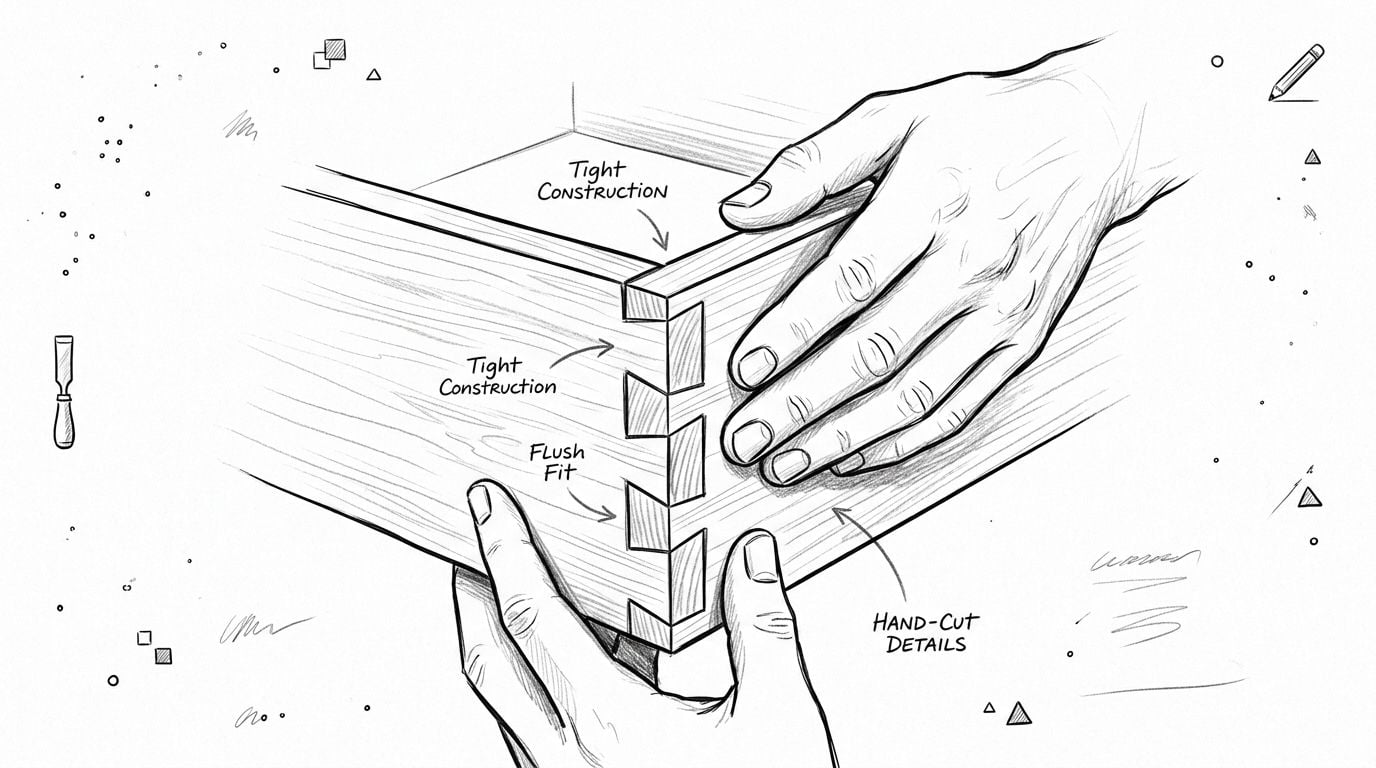
Joinery is the hidden backbone of a piece. Strong joints help furniture stay square, resist wobbling, and hold up through years of use. Dovetail drawers are a familiar example because they lock pieces of wood together in a way that adds strength without relying only on fasteners.
Quality wood construction also depends on layered thinking. In building standards, that attention to structure is very explicit. The International Building Code states that interior partitions in solid wood construction must be formed by at least two layers of 1-inch matched boards or laminated construction, a reminder that real structural performance comes from careful assembly, not just appearance, as shown in Chapter 23 of the 2018 IBC wood provisions.
That same mindset helps in furniture shopping. Better construction usually means more than a nice stain color.
What to examine with hands and eyes
A strong inspection routine can be short and effective:
- Drawer corners: Look for fitted joinery instead of thin panels merely stapled together.
- Back panels: Check whether the back feels sturdy and integrated, not like an afterthought.
- Finish quality: Run a hand across edges and tops. A good finish should feel even and intentional.
- Hardware: Pulls, glides, and hinges should feel secure and consistent.
- Underside clues: Rough hidden surfaces, flimsy supports, or excessive wobble often signal shortcuts.
For cabinetry and utility spaces, material choice matters too. Readers comparing options for practical rooms may find this resource on choosing wood for laundry cabinets useful because it frames wood selection around moisture, wear, and day-to-day function.
Why local guidance matters
A shopper can read labels online all day and still miss what matters most in person. That's where showroom guidance helps. A good store team should answer direct questions, explain which parts are solid wood, and point out the construction details that justify the cost.
For anyone evaluating storage pieces, Lucas offers a practical article on what to look for when buying chests, dressers, and cabinets.
If a seller can't clearly explain how a piece is built, the buyer doesn't have enough information yet.
Why Lafayette Chooses Lucas Furniture for Quality and Value
Families in Lafayette often want the same mix of things. They want furniture that looks good, holds up, fits the budget, and doesn't turn shopping into a chore. That's where a local, service-focused store stands out.
Since 2002, Lucas Furniture & Mattress has operated as a family-run business in Kokomo and Lafayette, Indiana, with in-stock items typically delivered in 3 days or less, according to the store's reasons to shop page. That combination of local ownership, product availability, and delivery support matters when someone is furnishing a whole room instead of just browsing.
Why choose Lucas Furniture? (Our Value Proposition)
A trip from Lafayette to the Kokomo showroom can solve several needs at once. A shopper can compare a bedroom set, sit in a sectional, look at dining furniture, test a mattress, and check the clearance area for extra savings.
The value side matters too. Lucas emphasizes a Low Price Promise, strong customer reviews, simple financing, and the option to custom order certain collections in different fabrics, finishes, and configurations. For buyers who want one store that can help furnish living spaces room by room, that flexibility removes a lot of friction.
Furnish every room and save big
A realistic shopping day often looks like this:
- Living room first: Compare sofas, recliners, and a sectional that fits the actual floor plan.
- Bedroom next: Look for dressers, beds, and nightstands with better construction details.
- Dining and office: Match style with function for everyday meals or remote work.
- Clearance stop: Check outlet and clearance pieces for savings of up to 70% off.
- Outdoor furniture: Consider patio or deck pieces at the same time, especially during seasonal refreshes.
That breadth is useful for new homeowners, renters upgrading key rooms, and families trying to stay efficient with their time and budget.
Furnish Your Lafayette Home from Sofas to Sectionals
A well-furnished home rarely comes together from one category alone. Most shoppers in Lafayette are balancing several projects at once. They may need a living room refresh now, a mattress soon, and a dining upgrade after that.
Room-by-room options that make sense
Lucas carries furniture for daily life across the home, including living room seating, dining furniture, bedroom pieces, home office furniture, entertainment options, and seasonal outdoor furniture. That variety helps shoppers coordinate style without feeling boxed into one look.
For living rooms, sectionals deserve extra planning because size, orientation, and traffic flow all matter. This guide on what to know before buying a sectional helps buyers think through layout before they buy.
Achieve better sleep with mattress options
A furniture purchase often overlaps with sleep needs. A dedicated mattress center gives shoppers the chance to compare comfort levels and support preferences in the same trip. The online mattress guide can also help narrow choices before visiting the showroom.
Customize your comfort with simple financing and custom orders
Some rooms need a specific solution. A family might want a sectional in a different fabric, a dining set in a certain finish, or a bedroom piece that better matches existing wood tones. Custom order options help shoppers tailor furniture to the room instead of settling for whatever is easiest to ship.
Budget flexibility matters too. Simple financing can make it easier to furnish the home in a sensible order instead of delaying every purchase until the perfect moment. That becomes especially useful when a move, renovation, or growing household changes several rooms at once.
Simple Financing and In-Home Delivery for Central Indiana
Convenience often decides where people buy. A shopper may find a piece they like, but if the process feels complicated, the purchase stalls. Straightforward payment options and reliable delivery remove that barrier.
Shop your way online, in-store, and delivered to Lafayette
Some buyers want to browse online, shortlist favorites, and visit the showroom only when they're ready to sit, open drawers, or compare finishes in person. Others want the full in-store experience from the start. Both approaches work.
For customers reviewing payment options ahead of time, Lucas provides information on flexible financing options. That can help buyers plan around a single-room update or a larger whole-home project.

Delivery matters just as much as financing. For Lafayette and the wider Central Indiana area, in-home delivery means the store team brings the furniture in, handles assembly and setup, and removes packaging. That service is especially helpful with larger purchases like a sectional, bedroom set, mattress, or solid wood dining table.
Good delivery service doesn't just drop furniture at the curb. It helps the customer start enjoying the room right away.
Ready to find furniture that lasts? Visit Lucas Furniture & Mattress near Lafayette today, or browse the full inventory online with guaranteed in-home delivery to the Lafayette area. The Kokomo showroom makes it easy to compare solid wood construction, clearance finds, mattress options, outdoor furniture, custom order possibilities, and simple financing in one place.