Experience our new Lafayette showroom — Now Open! Come Visit Us -->

Dining Room Tables Small: Space-Saving Picks 2026

A table marked “small” can still make a Lafayette dining area feel unusable. A buyer may measure the tabletop, place an order, and discover that chairs block the walkway, a door can't open fully, or the table seats fewer people than the household needs. For dining room tables small, the tabletop is only part of the decision. Chair movement, traffic flow, table shape, and daily use matter just as much.
Lucas Furniture & Mattress serves Lafayette, IN, from its Kokomo main showroom and outlet, with in-home delivery to Lafayette. For households comparing a furniture store near Lafayette IN, the local advantage is practical: shoppers can inspect scale, test chair comfort, discuss custom order possibilities, and arrange delivery before committing to a piece.
Why Small Dining Tables Need Careful Planning
A table that fits neatly on a showroom floor can make a Lafayette dining area difficult to use at home. Chairs may block the kitchen route, a door may open into the seating area, or the tabletop may leave too little room for the household's daily needs. Dining Room Tables Small should be judged by the entire setup, not by tabletop dimensions alone.
Small dining areas require precise planning because each inch affects movement. A rectangular table can sit against a wall while leaving a cramped corner at the far end. A round table can make passing easier, yet its widest point may consume more floor space. A drop-leaf table saves room when closed, but the expanded position needs its own layout plan.
Start with the household, not the product label
Measure the room and list its normal uses before choosing a table. A two-person breakfast spot has different requirements from a family table that also handles homework, remote work, games, serving, or occasional guests. Chairs need enough clearance to pull out without interrupting the path between the kitchen, entry, patio, and living room.
Ask these practical questions:
- Daily seating: How many people need a comfortable place at most meals?
- Traffic: Which routes must remain open while diners are seated?
- Flexibility: Will extra seating be needed for guests?
- Storage: Can chairs stay around the table, or must they tuck beneath it?
- Multiple uses: Will the surface support work, homework, games, or serving?
Choose a narrow farmhouse-style table when its proportions preserve a clear walkway and suit the room's character. Readers considering that look can explore budget friendly farmhouse dining for ideas that keep style tied to practical furnishing.
Think beyond the tabletop
Plan the table, chairs, walls, and nearby furniture as one system. A compact design can still fail if a chair collides with a cabinet or leaves no comfortable route around the end. Lucas Furniture & Mattress' room design guidance helps households assess the dining area within the larger floor plan.
The right order is straightforward: measure the usable area, identify required seating, map traffic flow, then choose the shape and table type. Consider a drop-leaf, gateleg, or extendable design when the household needs daily compactness and occasional capacity. A table that protects movement will feel more spacious than a larger model that interrupts every path.
Standard Dimensions and Sizing Rules
Small dining rooms punish guesswork. Start with the table's height, usable edge, and footprint before choosing a style. Most dining tables sit 28 to 30 inches high, while a comfortable place setting generally needs about 24 inches of table width per diner. These dimensions protect knee room, elbow space, and the fit between the chair and tabletop. Use this dining table size guide to compare listed dimensions before visiting a showroom or arranging delivery.
For a compact two-person table, look at 30 to 36 inches long by 24 to 28 inches wide. A small four-person rectangular table often measures about 60 inches long by 36 inches wide. Treat these figures as starting points, not proof that the table suits your room. A table can meet the seating target and still block the route to the kitchen.
Common small dining table sizes
| Seating Capacity | Typical Length | Typical Width | Best For |
|---|---|---|---|
| Two people | 30 to 36 inches | 24 to 28 inches | Breakfast nooks, compact apartments, intimate daily dining |
| Four people | Up to about 60 inches | About 36 inches | Small dining rooms, family meals, multipurpose spaces |
| Six people | About 72 inches | 36 to 42 inches | Larger dining areas, regular family seating |
| Eight people in tighter conditions | About 72 inches | 36 to 42 inches | Occasional hosting with slimmer chairs |
These ranges describe typical planning sizes, not guaranteed occupancy. Leg placement, chair width, table supports, and serving dishes all change the usable capacity. Choose a wider top when meals include platters, because the added depth protects place-setting space and limits elbow contact. A narrow table may fit the room yet feel cramped during every meal.
Apply the 24-inch rule correctly
Measure the usable table edge, not just the advertised length. Thick corners, pedestal positions, and trestle bases can reduce the space available for chairs. Armchairs need more room than slim armless chairs, so count the actual chair width and its movement path.
Table height must match the seating. A standard-height table should pair with dining chairs that let feet rest comfortably and allow legs to slide beneath the top. Counter-height furniture uses a different seating relationship. Do not mix chair types based only on appearance.
Practical rule: Judge a table by its usable edge, chair clearance, and base position, not its seating label.
Before ordering, outline the table with painter's tape or cardboard. Include pulled-out chairs and the routes people use around it. This test exposes blocked doors, tight corners, and delivery concerns before the furniture arrives.
Choosing the Right Shape and Table Type
Shape changes how a small room functions. Rectangular, round, square, and expandable tables can all work, but they solve different problems. The right selection depends on the room's geometry, the busiest walkway, and whether the table needs to remain compact every day.
Rectangular tables
Rectangular tables are usually the most efficient choice when one long side can sit near a wall. They provide clear seating positions along the length and work well in narrow dining areas. A compact rectangular table can also create a defined separation between the dining zone and an adjacent living or kitchen area.
The limitation is corner management. Sharp corners can interrupt traffic, especially where people pass from the kitchen into the rest of the home. A table with a heavy base may make the ends feel even tighter.
Round tables
Round tables improve visual flow by removing corners. A round pedestal table can also reduce leg conflicts because diners aren't forced to work around four corner legs. Conversation feels natural because each person faces the center.
The trade-off is placement. A round table can't always sit flush against a wall without sacrificing usable seating, and its widest point must still fit within the room's circulation envelope. Round tables make the most sense in square dining nooks, open kitchen areas, and rooms where people move around the table from multiple directions.
Square tables
Square tables suit intimate dining areas with balanced proportions. They can provide equal space on each side and work well when a table needs to sit in the center of a compact nook. Their limitation is flexibility. A square top may waste space in a long, narrow room and usually offers fewer practical expansion options.
Drop-leaf and extendable tables
Expandable designs are the strongest choice for households that need a small everyday footprint but occasional hosting capacity. A drop-leaf table can stay narrow during daily meals, while an extendable model can open for additional diners when the room is prepared for guests.
The closed and expanded configurations must both be measured. The most useful guide to table shapes and seating arrangements helps shoppers compare those trade-offs.
Multifunctional tables deserve serious consideration. In a compact home, one surface may serve as a dining table, work surface, homework station, or game table. The best option isn't the one with the smallest closed dimensions. It's the one that supports the household's most frequent activities without creating a permanent obstacle.
Measuring Your Space and Planning Layout
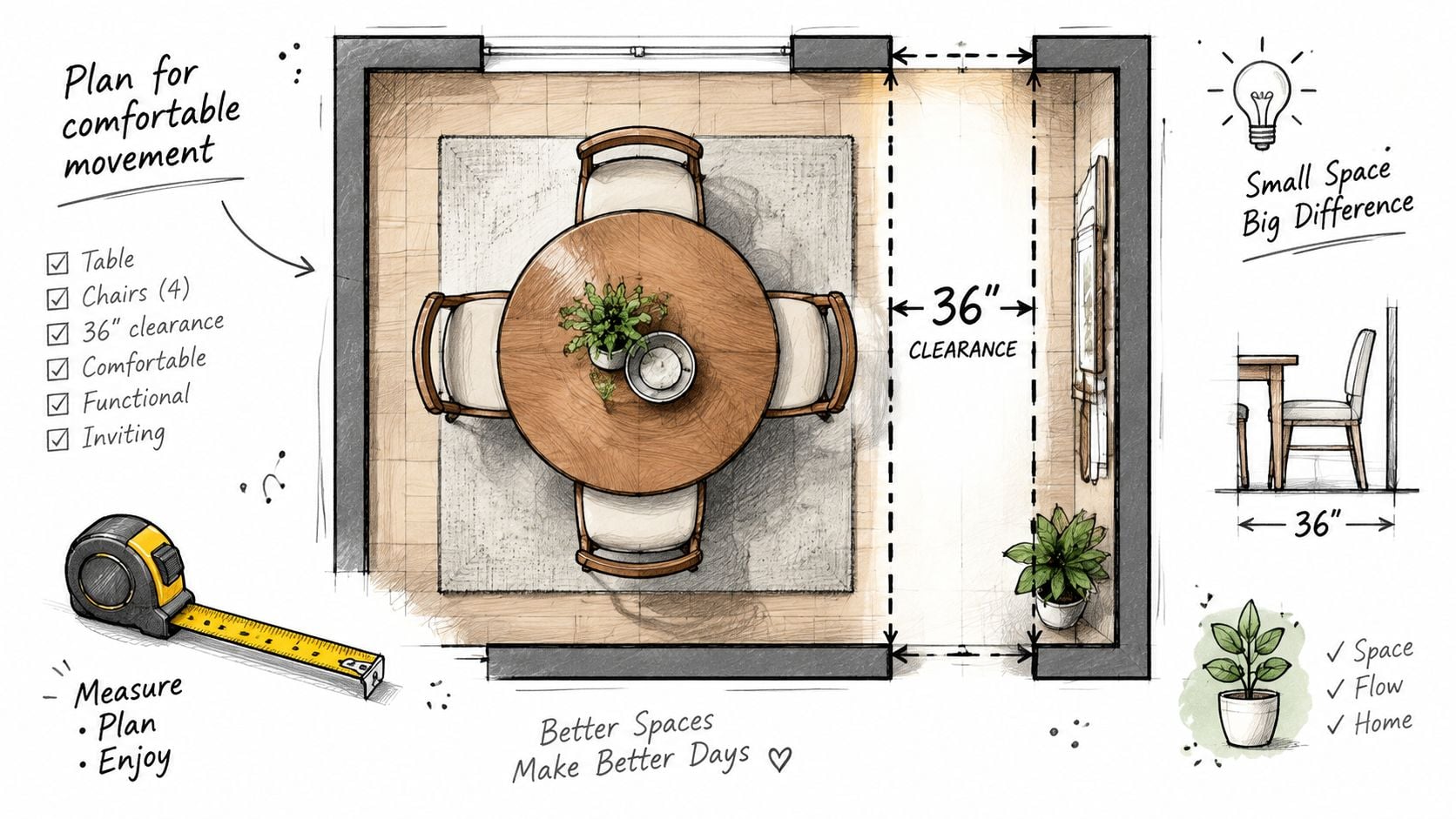
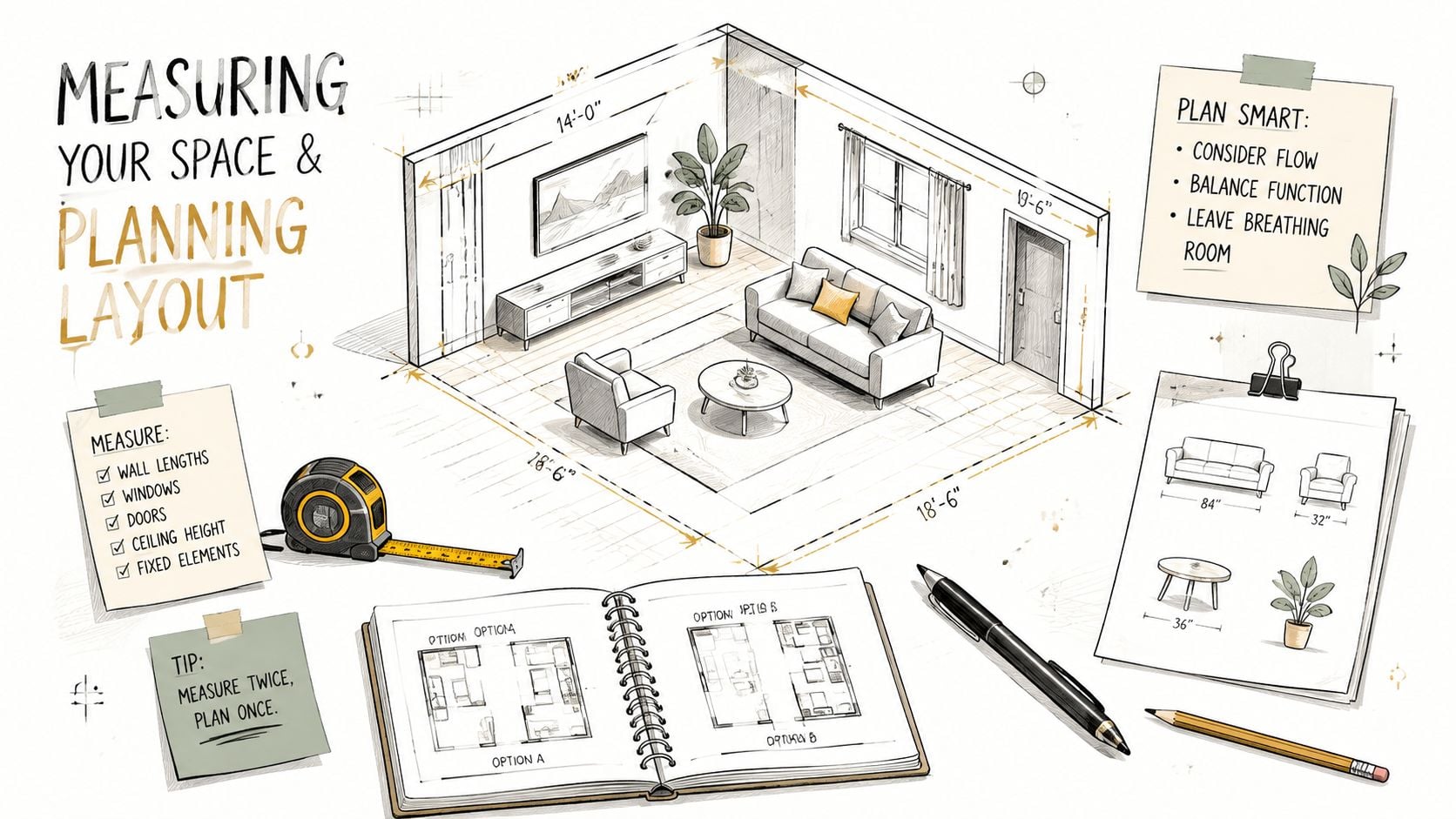
A table measurement only tells part of the story. The room must also accommodate chair pull-back space and the movement of people behind seated diners. For small dining areas, the planning rule is to leave at least 36 inches between the table edge and a wall or another piece of furniture. Where people regularly pass behind seated diners, 42 to 48 inches is preferred, according to this dining table clearance guide.
A chair zone commonly needs 24 to 30 inches just for someone to sit down comfortably. If the room can't support that envelope, the table may technically fit while the dining area remains frustrating to use.
Use a four-step measuring process
Measure the room's usable dimensions. Record the distance between walls, but exclude areas occupied by permanent cabinets, islands, radiators, or other fixed obstacles.
Mark the table footprint. Use tape on the floor to outline the full tabletop, not just the central portion. Include any extension leaves in a second outline if the table expands.
Add the chair envelope. Mark the area needed for chairs to pull out. Repeat the test with the widest chairs under consideration, especially if the household prefers armchairs.
Trace the traffic route. Walk from the kitchen, entry, hallway, and nearby doors. A layout that blocks a primary route needs a smaller table, a different shape, or a revised furniture arrangement.
Avoid the common measuring mistakes
People often measure the dining area but forget door swings and nearby storage. A sideboard, bar cart, or kitchen island can reduce usable clearance even when it doesn't touch the table. Doorways also matter during delivery, so measurements should include the entry path into the home.
Another error is assuming chairs will stay perfectly tucked under the table. They won't during normal use. People pull chairs back, turn sideways, stand to let others pass, and leave a chair slightly out after a meal.
A small table succeeds when the whole room remains easy to use, not when the tabletop merely fits between two walls.
Households can use Lucas' room measurement guide before visiting a showroom. Bringing room dimensions, doorway measurements, and a quick sketch makes in-person shopping far more productive.
Materials and Style Considerations for Small Spaces
Small dining tables must balance visual lightness with daily durability. A table that makes a room look open but shows every mark may frustrate a busy household. A heavier solid-looking design may withstand regular use but make a compact room feel crowded.
Glass-topped tables create visual openness because light can pass through the surface and the base remains visible. The drawback is maintenance. Fingerprints, crumbs, and smudges stand out, so glass works best for households willing to wipe the surface frequently.
Light oak and natural wood tones can brighten a dining nook without relying on a reflective top. Wood also brings warmth to apartments and open-plan interiors. The finish, edge treatment, and construction matter more than color alone, particularly for households with children, pets, or frequent hosting.
Match the material to the routine
- For visual openness: Glass and slim mixed-material designs can reduce the sense of visual weight.
- For warmth: Light wood tones help a compact room feel welcoming without requiring bold decoration.
- For active households: A durable finished surface and stable base should take priority over delicate detailing.
- For long-term value: Solid wood and well-built furniture may offer repair or refinishing potential, depending on construction and finish.
- For a controlled budget: Quality veneer and engineered construction can provide a consistent appearance and practical value.
The guide to choosing the best wood for a dining table can help shoppers evaluate grain, finish, and care requirements before selecting a style.
Chair pairing also changes the room's appearance. Slim armless chairs tuck more easily into compact layouts, while benches can provide flexible seating along one side. Upholstered chairs add comfort but may look visually heavier. A good pairing repeats one finish or color without making every piece identical.
The strongest recommendation is to judge a material by maintenance as well as appearance. A beautiful table that requires constant special care isn't a practical choice for every home. Durability, cleanability, and the ability to live with ordinary marks should guide the final decision.
Shopping for Small Dining Tables in Lafayette
Shopping in person gives Lafayette households information that product photography can't provide. A showroom visit allows buyers to test how chairs pull out, check whether knees fit beneath the tabletop, compare round and rectangular proportions, and see whether a finish feels visually heavy in a real setting.
Lucas Furniture & Mattress is a locally owned furniture store serving Central Indiana, with a Lafayette showroom at 3210 Builder Dr, Lafayette, IN 47909, and a Kokomo Main Showroom at 96 County Road West 300 S, Kokomo, IN 46902. The company states that its Kokomo showroom and outlet provide in-home delivery to Lafayette, which simplifies the final step for shoppers who don't have a suitable vehicle.
Households with a tight budget can review Lucas' clearance and outlet inventory, where advertised savings reach up to 70% off according to the company's clearance furniture selection. Shoppers can also ask about simple financing, custom order options, dining collections, mattress choices, sectional seating, home office furniture, and seasonal outdoor furniture when furnishing more than one room.
For households needing a flexible surface, expandable dining tables deserve particular attention. Seeing both the closed and open configurations helps confirm that the table will serve everyday life without sacrificing occasional hosting.
Lucas Furniture & Mattress offers small dining tables, flexible seating, clearance and outlet savings, simple financing, custom order options, and in-home delivery to the Lafayette area. Visit Lucas Furniture & Mattress to compare practical dining solutions online or visit the Lafayette showroom and choose a table that fits the room, the traffic flow, and the household.