Experience our new Lafayette showroom — Now Open! Come Visit Us -->

Affordable Couches for Small Spaces from Lucas Furniture

A Lafayette living room can look fine until the old couch gets pushed back against the door, blocks the walkway, and makes every trip to the kitchen feel like a squeeze play. That is usually when shoppers start hunting for affordable couches for small spaces, and that's where a furniture store near Lafayette IN with real local service matters. Lucas Furniture & Mattress serves Lafayette with in-home delivery, and its main showroom and outlet in Kokomo give Central Indiana shoppers a place to sit, measure, compare, and buy with fewer regrets.
Why a Small Lafayette Living Room Deserves a Smarter Couch
A small Lafayette apartment or starter home doesn't need a dramatic sofa. It needs one that fits the room, clears the front door, and leaves the walkway usable after the coffee table and lamp are already in place. That's the true test, because a couch that looks good in a warehouse can still turn a living room into an obstacle course.
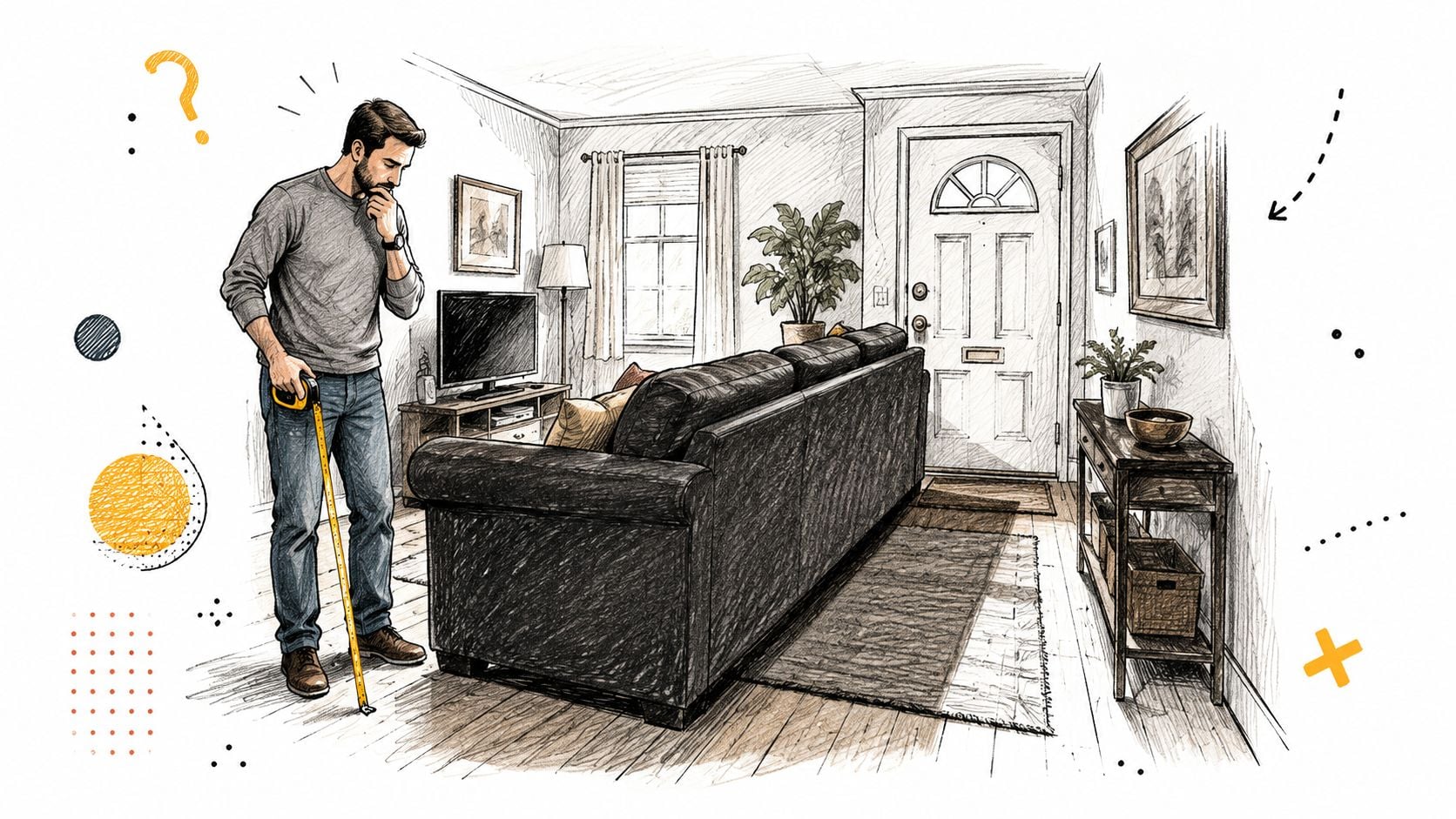
Lucas Furniture & Mattress has been serving Lafayette and Central Indiana since 2002, with a 35,000-square-foot showroom and outlet in nearby Kokomo, plus delivery right to Lafayette homes. That local setup matters because the buyer is not just choosing upholstery, the buyer is choosing a delivery path, a layout, and a budget that has to survive real life.
Practical rule: A small-space couch is only a good deal if it fits the room, gets through the house, and still leaves the room easy to live in.
That's the standard this guide uses. It comes down to three questions, and each one deserves a yes.
| Question | What It Means | Where It's Solved |
|---|---|---|
| Will it fit the room? | The sofa footprint has to leave usable circulation space. | Measuring and tape-testing before buying |
| Will it hold up? | Cheap fabric and weak cushions can cost more later. | Material and frame selection |
| Will it fit the budget? | The sticker price is only part of the real cost. | Clearance, financing, and custom order choices |
For Lafayette shoppers, the smartest move is usually not the largest couch on the floor. It's the one that respects the room, the hallway, and the delivery crew, then still leaves enough money for the rest of the space.
small living room decorating tips
Measure First and Tape It Out Before You Browse
A sofa can look right on a showroom floor and still fail in a Lafayette apartment. The room is smaller, the turns are tighter, and the delivery path matters just as much as the living room wall you had in mind. Measure first.
Measure the whole route, not just the room
Start with the room dimensions, then measure the doorway, hallway turns, stairwell bends, and every tight corner the delivery team has to clear. That route check is what keeps a couch from becoming a return headache. Then tape the full sofa footprint on the floor so the size is visible in the actual room, not in your head.
The most useful small-space guidance says to keep about 30 to 36 inches for primary walkways and 16 to 18 inches between the sofa and the coffee table so circulation does not get pinched. If you want under-sofa storage, leave at least 6 inches of leg clearance. Those numbers are not decoration, they are the difference between a room that flows and one that feels cramped. Measuring and layout guidance for small-space couches
Measure the route first, then measure the furniture. If the couch cannot pass the door and still leave the walk space intact, it is the wrong couch.
A taped outline also shows whether the sofa crowds a narrow wall or steals too much depth from the room. That matters in older Lafayette layouts, where the room can feel tighter than the square footage suggests. A small room can handle a sofa that fits the footprint, but it will not forgive a sofa that blocks the circulation path.
Use a proper room-measuring checklist from Lucas Furniture's guide on how to measure a room for furniture before you shop.
Use the tape test to set your maximum size
Once the outline is on the floor, step back and check three things. First, whether the taped sofa leaves the walkways open. Second, whether the coffee table would still fit with breathing room. Third, whether the delivery path from truck to room is realistic.
If the tape version already feels tight, the couch will feel tighter. That is why the tape test saves money. It keeps the shopper from buying an oversized frame just because the arm style looked right under showroom lights.
For shoppers who need a smaller seating option in a side room or reading nook, compact chairs for tight spaces can solve the layout without crowding the room.
The buyer should leave with a hard maximum width, depth, and diagonal before browsing listings. That filter keeps a small Lafayette living room from turning into a furniture regret.
Match the Sofa Type to Your Room Scenario
Once the footprint is known, the next mistake is easy to avoid. Different rooms need different couch types, and the wrong shape wastes money even when the price looks fair. For tight Lafayette homes, the best choice usually comes from matching the room's job to the sofa's job.
Choose the shape that solves the layout
A small couch is often defined as under 84 inches long, which is a clean threshold for shoppers who want something more specific than “compact.” Another common benchmark puts many small-space sofas in the 70 to 74 inch range, with 72 inches often acting like the sweet spot for apartments and small rooms. A broader expert ceiling puts many small-space options at no more than 90 inches wide, but most Lafayette buyers will do better staying closer to the tighter range when the room is small. Small couch size threshold, small-space width guidance, small-space sofa sizing benchmarks
| Room Scenario | Best Couch Type | Target Width | Trade-off to Expect |
|---|---|---|---|
| Studio or narrow den | Loveseat or apartment-size sofa | About 70 to 74 inches | Less lounging stretch, better circulation |
| L-shaped room or open layout | Apartment-size sectional | Keep the footprint compact and modular | More setup decisions, but better room anchoring |
| Guest-room hybrid | Sleeper sofa | Stay close to the room's real maximum | Heavier piece, more planning for delivery |
| Renter who needs storage | Convertible piece or storage ottoman pairing | Smaller footprint is safer than a long sofa | Less visual drama, more function |
The right choice depends on the room, not on the catalog fantasy. A loveseat works when the room is basically asking for breathing space. An apartment-size sectional works when the room needs one clean anchor and the layout can support a corner or chaise.
Don't overbuy the length just because it looks fuller
The comfort benchmarks matter too. The same expert guidance points to 21 to 24 inches of seat depth for lounging and recommends modular or reversible layouts in tight rooms because they reduce the risk of a bad fit. That's the kind of detail that keeps a buyer from choosing a couch that looks right but sits wrong. Small-space sofa comfort and layout guidance
For shoppers comparing categories, the safest picks are usually a loveseat for the tightest rooms, a compact sectional for awkward corners, and a sleeper only when overnight guests are a real need, not a wish. If the room is simple and the budget is tight, a clearance sofa with a clean silhouette beats an oversized statement piece every time.
For a quick visual aid on chair scale in tight rooms, the idea behind compact chairs for tight spaces is useful too. The same principle applies to sofas, smaller shapes look calmer, leave more floor visible, and usually work better in compact layouts.
Materials, Frames, and Cushions That Hold Up
A cheap couch stops being cheap the moment it needs replacing. In a small Lafayette apartment, that mistake shows up fast, because the sofa gets used every day and there is not much room to hide a bad buy. Judge the piece by cost per year, not sticker price.
What usually wears out first
Fabric, cushion fill, and frame quality decide how long a sofa stays worth keeping. Standard upholstery can look fine on day one and still start showing wear sooner than a tighter-weave or performance option. A washable slipcover helps because it protects the frame, makes moving day easier, and gives an affordable piece a longer useful life.
Frame construction matters just as much. A kiln-dried hardwood frame generally gives more confidence than a weak engineered frame, especially when the couch is going to be used every day. Cushion core matters too, because a high-resilience foam core usually holds support longer than a soft fill that collapses early.
If the couch has to do double duty, spend on the frame and cushion core first, then save on the finish. That is the smart durability-for-dollar move.
Practical rule: Buy the strongest frame and cushion core the budget allows, then choose the easiest cover to live with.
A washable or removable cover has a simple payoff. It extends the useful life of an affordable couch and gives renters a way to change the look without replacing the whole piece. That same logic shows up in the guide to That Blanket Co fleeces, where texture and care are treated as part of the value, not just the appearance.
Keep the build simple when the room is small
Small rooms punish fussy designs. Loose cushions that shift too much, weak arms, and flimsy legs tend to show their weakness faster in compact spaces where the couch gets used constantly and moved more often. A clean frame with supportive cushions usually ages better than a trendy shape that looks clever but feels fragile.
Lucas Furniture's upholstery guidance helps shoppers compare finish options before they commit, and the store's custom-order route gives buyers a way to pair a room-fitting frame with a tougher fabric choice. our upholstery materials guide
The sharpest move is simple. Fit the room first, then choose the strongest build your budget can handle, then treat the cover as the style layer.
Budget Ranges and How to Stretch Every Dollar
Affordable means different things to different shoppers, so the safer way to shop is by tier. That makes the decision clearer, especially for Lafayette buyers who want the couch now but also need the purchase to fit the rest of the month.
Match the price to the job
An entry budget under $800 usually means simple construction, fewer customization choices, and a stronger need to inspect the frame and cushions closely. A mid-range budget of $800 to $1,500 usually opens the door to better finishes, sturdier support, and more room-friendly silhouettes. A premium affordable range of $1,500 to $2,500 is where shoppers usually start seeing more flexibility in materials and layout options, especially for compact sectionals or sleeper styles.
That range framework is useful because it stops the buyer from chasing the wrong deal. A tiny room does not need a giant sofa just because it's on sale, and a good budget should protect the room's function before it chases the biggest upholstery panel.
Use the Lucas levers that actually lower the bill
The biggest savings opportunity is clearance and outlet shopping, where Lucas Furniture says discounts can reach up to 70% off. The Low Price Promise also matters because it keeps the shopper from feeling pressured to overpay just to get the right fit. Add simple financing, and the buyer can split the cost instead of settling for a weaker couch that won't last. shop the clearance page, review flexible financing options
If the room needs a specific size, shape, or fabric, a custom order can be the better deal even when the sticker price is higher.
That sounds backward until the room is measured. A custom order solves layout mismatch, which is often more expensive in the long run than paying a little more up front for the right footprint. In-stock showroom pieces make sense for quick move-ins, clearance works for value hunters, and custom order is the answer when the layout is picky.
For shoppers balancing furniture with other home decor, the same logic shows up in advice like luxury faux fur on a budget. Spend where the structure matters, save where the finish can be substituted.
Styling Tips and How to Buy from Lucas Furniture
A small couch can either open up a room or make it feel heavier than it is. Color, leg height, and placement decide which way it goes. The smartest choice usually looks calm from across the room and doesn't block the floor visually.
Make the room feel larger, not more crowded
Light-to-mid neutrals work best when the room is already tight because they keep the couch from dominating the space. One stronger accent can work too, but only if the rest of the room stays quiet. Visible legs help as well, because they expose more floor and make the furniture feel less bulky.
Placement matters just as much. The couch should mirror the room's longest wall whenever possible, because that usually preserves the cleanest traffic line. If the sofa has to face a window or anchor an open room, the same principle still applies, the longest uninterrupted wall is usually the most forgiving place.
The buying process is straightforward. Shoppers can browse 24/7 online or visit the Kokomo showroom in person, then ask about custom orders when the layout gets unusual. If the sofa doubles as a sleeper, Lucas Furniture's Mattress Guide is the right next stop before the order is placed. how to choose a sofa
Buy with delivery, not around it
For Lafayette shoppers, the delivery plan is part of the purchase, not an afterthought. In-home delivery to the Lafayette area removes a lot of risk, especially when the couch is compact but still awkward to carry through a tight route.
Sign up for emails before buying. Exclusive offers tend to make the clearance and outlet path a lot more interesting.
Lucas Furniture also keeps the room count broad, with living, dining, bedroom, home office, outdoor furniture, and mattress options under one roof, so shoppers can solve more than one problem in a single trip. That's helpful when a couch purchase is tied to a move, a refinance, or a room that still needs matching pieces.
Strong reviews, local ownership, and a showroom-driven buying process make the decision easier for people who want to sit first and measure second, or measure first and sit second.
Your Next Step Toward the Right Small-Space Couch
A good small-space couch for Lafayette should clear the doorway, respect the walkway, and stay comfortable long enough to justify the price. The three decisions that matter most are still the same, fit, durability, and budget. Get those right, and the room starts working instead of fighting back.
For fit, use the tape outline and the room-route check. For durability, lean toward better frame and cushion construction instead of paying only for looks. For budget, use clearance, financing, or custom order based on which problem is in front of the shopper.
The Kokomo showroom serves Lafayette buyers who want to test the size and feel in person, and the Lafayette delivery option makes the final step easier once the right piece is chosen. A shopper who wants to move quickly can browse online first, then make one smart trip instead of wandering through random options.
Visit the Kokomo showroom near Lafayette today, or browse the full inventory online and arrange in-home delivery to the Lafayette area through Lucas Furniture & Mattress.
A CTA for Lucas Furniture & Mattress.