Experience our new Lafayette showroom — Now Open! Come Visit Us -->

Clean Memory Foam Mattress: Your 2026 Guide


A drink tips over on the nightstand. A child climbs into bed after an accident. A dog claims the corner of the mattress after a rainy walk. That's usually when people start searching for the safest way to get a clean memory foam mattress without making the problem worse.
For many households looking for help from a furniture store near Lafayette IN, their primary concern isn't just the stain. It's the fear of soaking the foam, trapping moisture inside, and ending up with a lingering odor that won't leave. Shoppers who visit a Lafayette furniture store often ask the same practical question: what works on memory foam, and what ruins it?
Memory foam needs different care because it wasn't created as a simple cushion material. Its story goes back to 1966, when NASA-related research and engineer Charles Yost helped develop viscoelastic foam for aircraft seating, and it reached the consumer mattress market later, with commercial mattress introduction in 1992 according to this memory foam history overview. That long development path is one reason the material feels so distinct. It also explains why careless cleaning can damage it.
Households in Lafayette and across Central Indiana also want practical support after the sale, especially when the main showroom is in Kokomo and delivery matters. Good mattress care protects comfort, helps the bed stay fresher longer, and lowers the odds of turning a small spill into a bigger replacement decision.
Table of Contents
- Your Guide to a Fresh Mattress from Your Lafayette Furniture Store
- Gathering Your Safe Cleaning Supplies
- How to Spot-Clean Common Mattress Stains
- The Critical Steps for Drying and Deodorizing
- Troubleshooting Odors and Long-Term Care
- Achieve Better Sleep with a New Mattress from Lucas Furniture
- Financing and Delivery Made Simple for the Lafayette Area
Your Guide to a Fresh Mattress from Your Lafayette Furniture Store
A spill at bedtime puts a lot of Lafayette homeowners in the same spot. They want the stain gone fast, but one heavy spray can push moisture into the foam and leave them worrying about mildew by morning. That concern is valid. Memory foam does not forgive over-wetting.
In the store, I often explain memory foam care this way. Clean the surface with control, protect the inside from excess moisture, and do not rush the drying step. That approach keeps a clean memory foam mattress from turning into a lingering odor problem a few days later.
Why memory foam needs a different approach
Memory foam is absorbent, slow to dry, and easy to damage with too much heat or too much liquid. A careful method protects the comfort layers you paid for and lowers the risk of trapped moisture, stale smells, and mold concerns inside the bed.
A straightforward outside perspective on that risk appears in this guide on Rubber Ducky Birmingham cleaning, which also stresses careful moisture control instead of saturation. That matches what we see with customers who bring cleaning questions into Lucas Furniture. Small amounts of cleaner, blotting, airflow, and patience beat soaking every time.
Practical rule: Use enough cleaner to lift the spot, not enough to soak the foam.
What people usually get wrong, and what to do instead
The mistakes are usually simple, and the fix is simple too:
- Using too much solution. Use a lightly damp cloth and apply cleaner to the cloth first when possible, not directly across the mattress.
- Scrubbing hard. Blot from the outside of the stain toward the center so the spot does not spread through the cover.
- Making the bed again too soon. Leave the mattress uncovered until it is fully dry to the touch and has no cool, damp feel underneath the fabric.
- Using harsh household chemicals. Stick with mild fabric-safe options in small amounts so you do not break down the foam or irritate the cover materials.
That last point matters more than people think. A mattress is a long-term purchase, and cleaning habits affect how well it holds up over time. Sleep experts at the Sleep Foundation note that mattress lifespan depends heavily on materials, use, and care in their guide to how long a mattress lasts and when to replace it.
If a stain comes out but the odor stays, the problem is usually one of two things. Moisture is still trapped below the surface, or the spill reached deeper than the cover. In that case, do not add more liquid right away. Increase airflow, let the mattress dry completely, then reassess. For related fabric care around the bedroom, Lucas Furniture also shares practical advice on how to remove furniture stains safely.
Good cleaning protects comfort, cleanliness, and the value of a mattress you expect to use for years. That is especially true with quality memory foam models, where the wrong cleaning method can do more harm than the original spill.
Gathering Your Safe Cleaning Supplies
A memory foam mattress can be damaged before the stain is even touched. I see that happen most often when people grab whatever is under the sink, use too much liquid, and leave the foam holding moisture for hours. The safer approach is simpler. Gather a small set of supplies that clean the surface, limit water use, and help the mattress dry fast.
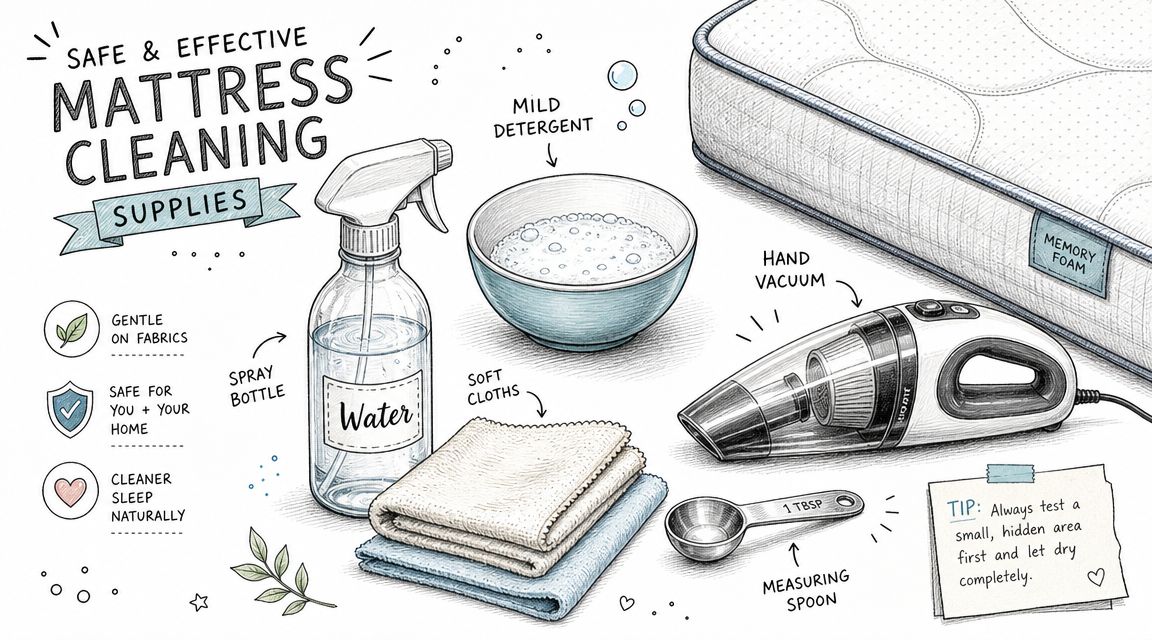
The short supply list that actually helps
Start with tools that keep the job controlled:
- Vacuum with upholstery attachment for dust, lint, and debris along the top and seams
- White microfiber cloths for blotting without transferring color
- Mild detergent mixed lightly with water
- Diluted vinegar solution for limited spot treatment
- Baking soda for surface odor control
- Fan to keep air moving while the mattress dries
- Waterproof mattress protector to reduce future spills and sweat soaking into the cover
If the spill spread to a headboard, bench, or other upholstered piece, Lucas Furniture also shares practical steps for removing furniture stains safely.
Memory Foam Mattress Cleaners to Use and Avoid
| Safe Cleaners (Use Sparingly) | Cleaners to Avoid (Will Cause Damage) |
|---|---|
| Mild detergent in a very small amount | Bleach |
| Diluted vinegar | Ammonia |
| Baking soda for deodorizing | High-heat cleaning methods |
| Enzyme cleaner tested first on a small area | Any cleaner applied so heavily that it soaks the foam |
Harsh chemicals and heat are a bad match for memory foam. Manufacturers and home-care guidance commonly warn against bleach, ammonia, steam, and other high-heat methods because they can break down foam structure, affect adhesives, and leave the mattress harder to dry fully. The better setup is low moisture, light blotting, and steady airflow.
A mattress does not need a heavy perfume smell to be clean. Strong fragrance usually means too much product is sitting in the fabric.
Why prevention matters more than stain removal
A waterproof protector does more for a clean memory foam mattress than any cleaner bottle. It keeps body oils, sweat, and accidental spills from reaching the foam, which matters because memory foam is difficult to dry once moisture gets below the cover. That is one reason we often recommend a protector with any new mattress at Lucas Furniture. It protects comfort, keeps cleanup manageable, and helps the mattress hold up like the investment it is.
Shoppers replacing worn bedding basics can also check clearance and outlet savings for value-minded options around the bedroom.
Moisture control matters for hygiene too. Damp material that stays wet gives odor and bacteria problems more time to build. This overview of the Pseudomonas aeruginosa threat gives useful context on why prompt cleanup and complete drying matter in the home.
How to Spot-Clean Common Mattress Stains
Spot cleaning works best when it stays narrow. The mattress should be treated one area at a time, with just enough cleaner to lift the stain and no more.
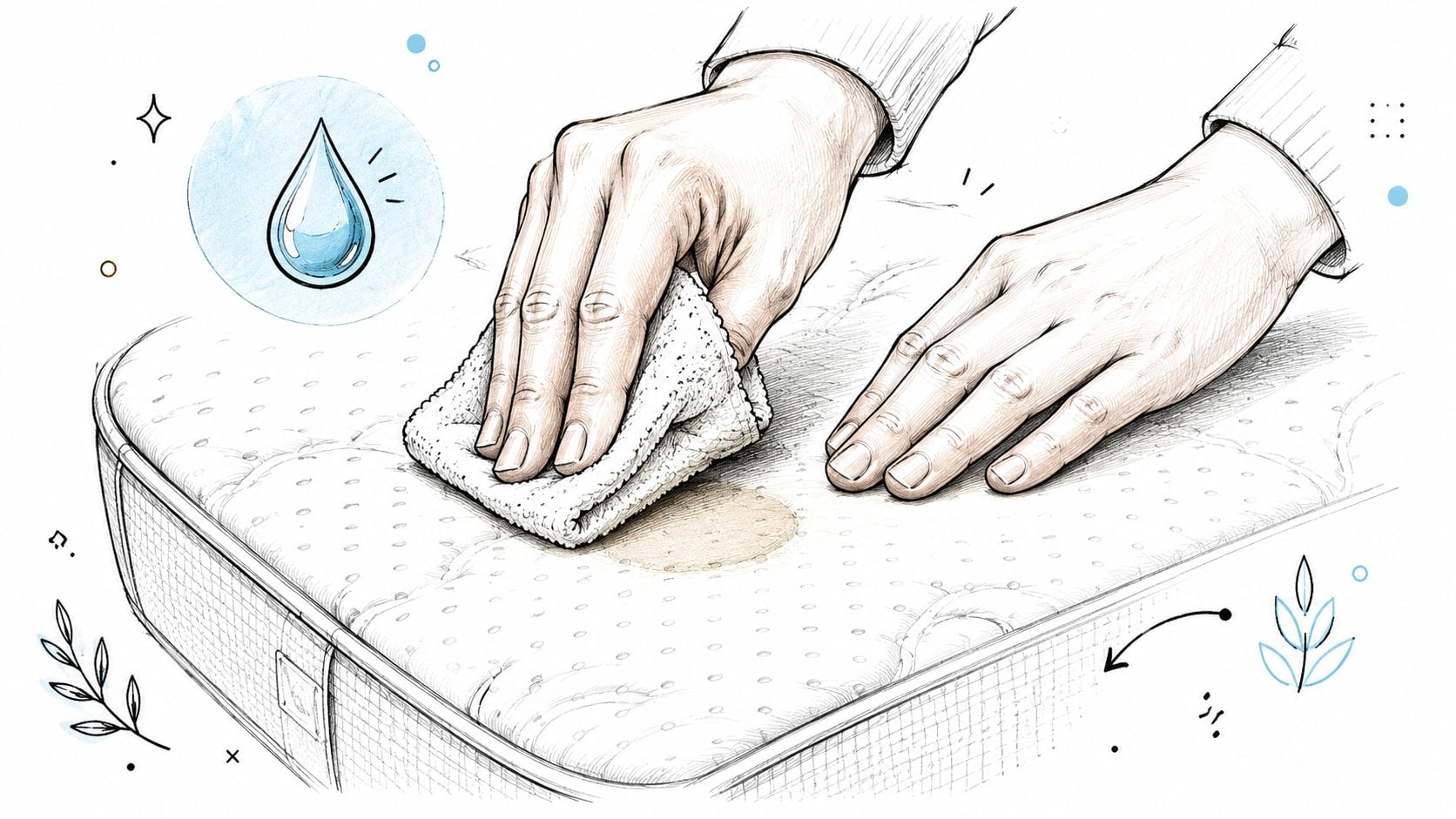
The standard workflow is consistent. Strip the bed, vacuum the mattress surface, spot-clean with a small amount of mild detergent or diluted vinegar, and make sure it's fully dry before use. Over-wetting is the primary cause of mold and mildew risk, as explained in this memory foam mattress care guide.
For coffee, juice, and everyday liquid spills
Fresh liquid spills are the easiest to fix if they're handled fast.
- Blot immediately. Use a dry white cloth and press down. Don't rub.
- Apply a small amount of cleaner to the cloth, not the mattress. This keeps the surface from getting too wet.
- Blot the stain again. Work from the outside toward the center.
- Use a dry cloth to pull moisture back out.
- Leave the area open to air.
The biggest mistake with drink spills is spraying the mattress directly until the fabric feels wet. That often pushes the liquid deeper than the original spill did.
For sweat and body oil marks
These stains are usually less dramatic but more stubborn. They build slowly and may show up as discoloration or a dull patch on the cover.
A gentle approach works best:
- Vacuum first so surface debris doesn't get worked into the fabric
- Dab lightly with mild detergent solution
- Blot repeatedly with a dry cloth
- Use baking soda later for odor control once the area is only slightly damp
This same light-touch method also works well on nearby upholstered pieces. For people cleaning a whole bedroom setup, this guide on how to clean a fabric sofa follows many of the same principles about using less moisture and avoiding harsh chemicals.
Scrubbing feels productive, but on mattress fabric it usually spreads the problem.
For pet accidents, urine, and other organic stains
People frequently overcorrect. A pet or child accident creates odor anxiety, so many homeowners use too much liquid too quickly. That's exactly what memory foam can't handle.
A safer process looks like this:
- Blot first and keep blotting. Remove as much fresh moisture as possible before adding anything.
- Use a very small amount of cleaner. If an enzyme cleaner is being considered, test it on a small hidden area first.
- Blot again with dry cloths. The cloth should be doing most of the work.
- Apply baking soda after the surface treatment. That helps pull lingering odor from the fabric layer while the mattress dries.
For readers dealing with urine cleanup elsewhere in the home, the Onsite Pro carpet cleaning guide offers practical blotting logic that carries over well to mattress care, especially the need to lift moisture before adding more product.
What never helps
A few methods should be ruled out from the start:
- Don't soak the spot
- Don't pour cleaner directly onto the mattress
- Don't use bleach or ammonia
- Don't use high heat to force drying
- Don't remake the bed while the cleaned area still feels cool or damp
A clean memory foam mattress is usually the result of restraint, not force.
The Critical Steps for Drying and Deodorizing
Cleaning gets most of the attention, but drying is where the mattress is either saved or compromised. If moisture stays trapped in the foam, the surface may look fine while the inside keeps holding odor.
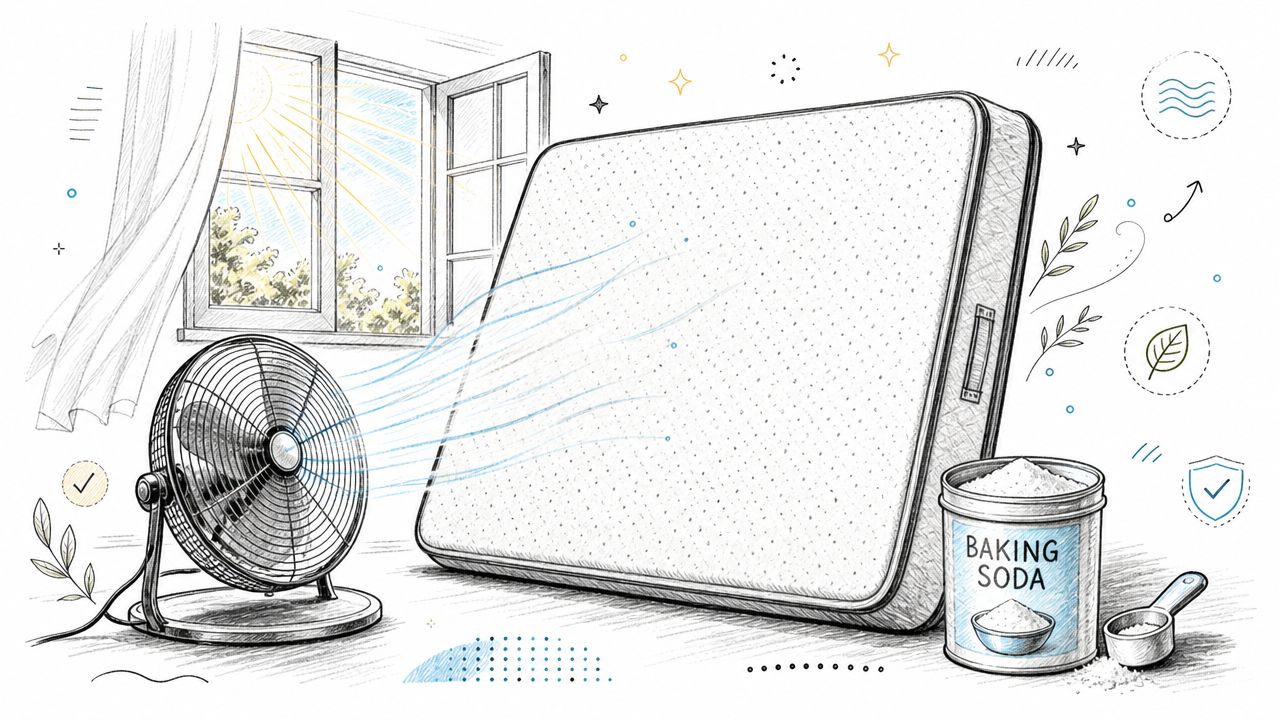
How to dry the mattress the safe way
Air movement matters more than heat. A fan pointed across the cleaned area helps carry moisture away without stressing the foam. Open windows can help if the air is dry and moving. A cool, ventilated room is also useful because memory foam is sensitive to heat and moisture, which can contribute to breakdown over time, as discussed in these mattress care tips for warm-weather cleaning.
A practical drying routine:
- Lift bedding off completely and keep it off
- Run a fan across the surface
- Improve room ventilation
- Check the spot by touch before remaking the bed
- Wait longer if there's any coolness or damp feel left
The mattress should feel dry all the way through the treated area, not just dry on top.
How to use baking soda for odor control
Baking soda works best after the stain has been blotted and the surface is no longer wet. It isn't a substitute for drying. It's a follow-up step.
Use it this way:
- Sprinkle a light, even layer over the affected area.
- Let it sit while airflow continues.
- Vacuum it thoroughly with an upholstery attachment.
- Smell the area again only after vacuuming.
This method helps with mild odor left near the cover. It won't fix a saturated mattress, which is why the earlier cleaning steps have to stay controlled.
What to avoid while drying
Drying shortcuts cause many repeat odor complaints.
- No high heat from a strong dryer setting
- No covering the mattress too early
- No stacking blankets over the damp area
- No assumption that “almost dry” is good enough
The foam has to be dry before normal use returns. That part can't be rushed.
Troubleshooting Odors and Long-Term Care
A memory foam mattress can fool people after a cleanup. The cover looks fine, the stain is lighter, and then that smell shows back up two days later. In the store, that is one of the most common follow-up problems we hear about in Lafayette homes, especially after pet accidents, kids' spills, or any cleanup that used too much liquid.
With memory foam, lingering odor usually points to one of three issues. Moisture is still trapped below the surface. The original source reached deeper than expected. Or the foam has absorbed enough contamination that a light surface treatment cannot reach it.
A lot of basic cleaning advice stops too early. Homeowners are told to blot, sprinkle baking soda, and vacuum. The harder part is deciding what the smell means after that.
What to do if the odor is still there
Use the smell and the feel of the mattress together.
If the odor is light and the area feels fully dry, repeat a light deodorizing treatment and check it again later that day.
If the odor is stronger and the foam feels cool, clammy, or slightly damp, stop adding products and keep working on drying. Odor often improves once hidden moisture is gone.
If the smell fades, then returns after a day or two, the problem is usually deeper in the foam or under the cover.
If the odor is sharp, sour, or musty after careful drying, treat that as a warning sign that the mattress may have been over-wet.
That mold concern is real with memory foam. Foam holds moisture longer than many people expect, and once liquid gets driven inward, cleanup gets much harder. I tell customers to be cautious with sprays for that reason alone. A small amount in the right spot is manageable. Saturation is where trouble starts.
A mattress that still smells after controlled cleaning often has a moisture problem, not just a surface odor problem.
Long-term care that protects the mattress
Good maintenance is easier than recovery work after a deep spill. It also protects the value of a mattress you expect to keep for years.
Our mattress maintenance and cleaning tips to extend its lifespan cover the habits that matter most in everyday use. Keep the surface protected, clean up accidents quickly, and reduce the dust and debris that settle into seams and edges over time.
A practical routine includes:
- Using a mattress protector from the start
- Vacuuming the surface and edges on a regular schedule
- Rotating the mattress based on the manufacturer's guidance
- Letting the mattress air out when changing bedding
- Handling small spills right away before they set or spread
A deeper refresh every several months also helps, especially in homes with pets, allergies, or higher humidity. Focus on surface debris and odor control without over-wetting the foam.
When cleaning stops being the right fix
Some mattresses recover well. Some do not.
If odor keeps returning after the area is fully dry, if accidents have happened more than once in the same spot, or if the foam has started to lose support, replacement may be the better call. That is not giving up on the mattress too soon. It is recognizing when the material has absorbed more than a safe home cleaning can solve.
That matters even more with a quality mattress. Proper care helps protect the investment, but there is a point where continued cleanup costs time, comfort, and confidence. When customers come into Lucas Furniture with that concern, we usually tell them to judge the mattress by three things: how it smells after full drying, how it feels at night, and whether they trust it to stay fresh. If all three are not there, the mattress may be telling you it is time for a different solution.
Achieve Better Sleep with a New Mattress from Lucas Furniture
A mattress can reach a point where cleaning is no longer the smart answer. If a spot keeps holding odor after careful drying, or the foam no longer feels supportive in the areas you use most, better sleep usually starts with replacement, not another round of cleanup.

Why mattress quality and care go together
In the showroom, I often tell customers the same thing. Good care protects a good mattress, but it cannot reverse deep contamination or worn-out foam.
That matters with memory foam because people are often cautious about over-wetting it for good reason. Too much moisture can soak below the surface, dry slowly, and leave you dealing with the same odor problem again. A well-made mattress gives you a better starting point. It is built for comfort and support over years of normal use, and proper maintenance helps preserve that value.
For Lafayette households, the goal is simple. Buy a mattress that fits how you sleep, then protect that purchase so you are not replacing it sooner than necessary.
Replacement should solve the right problem
A new mattress makes sense when the old one has two issues at once: comfort has dropped off, and confidence in cleanliness is gone. That combination is common after repeated spills, recurring odor, or visible wear around the areas that carry the most weight.
Customers usually notice it in practical ways:
- The mattress smells fine one day and stale the next
- The same section feels softer, flatter, or less supportive
- Sleep quality drops even after cleaning and fresh bedding
- They hesitate to keep using the mattress after an accident or moisture issue
Those are real signs that the mattress is no longer giving the support or peace of mind it should.
More than a mattress purchase
Many shoppers who come in for a mattress end up refreshing the room at the same time. Once the bed is being replaced, it often makes sense to update the frame, nightstands, dresser, or storage pieces so the whole space works better. Some families also use that visit to pick out a new sectional, furnish a guest room, or add outdoor furniture for another part of the home.
That is one advantage of shopping local. It is easier to match comfort, budget, and room layout in one stop instead of piecing everything together from several places.
What a better buying experience should include
Mattress shopping should be straightforward and useful. At Lucas Furniture, shoppers usually want a few basic things done well:
- Comfort guidance based on how they sleep
- Options for different room sizes and budgets
- Custom order choices when standard pieces are not the right fit
- Flexible payment plans through Lucas Furniture mattress financing options(https://www.lucasfurniturestore.com/mattress-financing-options/)
- Reliable delivery to homes around Lafayette and Central Indiana
Better sleep starts with a mattress you trust. If cleaning has done all it can do, replacing the mattress with the right model is often the clearest path back to a room that feels clean, comfortable, and ready for rest.
Financing and Delivery Made Simple for the Lafayette Area
Replacing a mattress usually happens on a real-life timeline, not an ideal one. A spill, odor problem, or worn-out bed doesn't wait for a perfect month in the budget. That's why financing and delivery matter just as much as the mattress itself.
Flexible ways to buy
For many Lafayette-area shoppers, the difference between delaying and moving forward comes down to payment flexibility. Options like flexible mattress financing make it easier to bring home the right mattress now and spread out the cost over time.
That same flexibility also helps when the purchase expands beyond the mattress. A customer may start with a bed and then decide to add a frame, a bedroom set, a sectional, or even a custom order piece for another room.
Shopping in person or from home
Some people want to test mattresses and browse furniture in person. Others prefer to shop online first, compare styles, and narrow down options before making the trip. Both approaches are useful, especially when the showroom is in Kokomo and serves households throughout Lafayette and Central Indiana.
A strong shopping experience should make room for both styles:
- In-store browsing for comfort testing and room ideas
- Online shopping for convenience and planning
- Custom order flexibility for size, finish, or configuration needs
- Clearance opportunities for shoppers focused on value
Delivery is where convenience becomes real
Delivery is what turns a furniture purchase into a practical solution. A mattress is difficult to move, and larger items for the home can become a major hassle without dependable service. In-home delivery to the Lafayette area removes that problem and helps the whole purchase feel manageable.
For shoppers furnishing more than one room, that's even more important. A home update may include bedroom furniture, living room seating, dining pieces, office furniture, or seasonal outdoor pieces. Reliable delivery makes those larger plans realistic instead of exhausting.
For households ready to replace a hard-to-clean mattress or furnish a room with better comfort and value, Lucas Furniture & Mattress serves Lafayette from its Kokomo showroom with mattress options, sectionals, custom order flexibility, simple financing, clearance savings, and dependable in-home delivery to the Lafayette area. Visit the showroom near Lafayette today, or browse the full inventory online with guaranteed in-home delivery to the Lafayette area.