Experience our new Lafayette showroom — Now Open! Come Visit Us -->

Decorative Outdoor Lamp Posts: Buyer’s Guide 2026


A lot of Central Indiana homeowners reach the same point with their exterior. The patio furniture is in place, the landscaping is decent, and the front walk works during the day, but at night the whole property feels flatter than it should. A well-chosen lamp post can solve that. It adds light, yes, but it also gives the yard a focal point and helps the outdoor space feel finished.
To find a furniture store near Lafayette IN or a trusted Lafayette furniture store, it also helps to think bigger than one fixture. Outdoor lighting works best when it supports the way people use a patio, porch, driveway, or seating area. That's especially true for homeowners around Lafayette, with many shopping through the Kokomo showroom and relying on delivery into the Lafayette area for larger home updates.
Table of Contents
- Choosing Your Lamp Post Style and Material
- Sizing Placement and Lighting Technology Explained
- Installation and Electrical Safety for Indiana Homes
- Coordinating Lighting with Your Outdoor Furniture
- Why Lafayette Chooses Lucas Furniture and Mattress
- Customize Your Comfort and Furnish Every Room
- Achieve Better Sleep with Our Mattress Experts
Choosing Your Lamp Post Style and Material
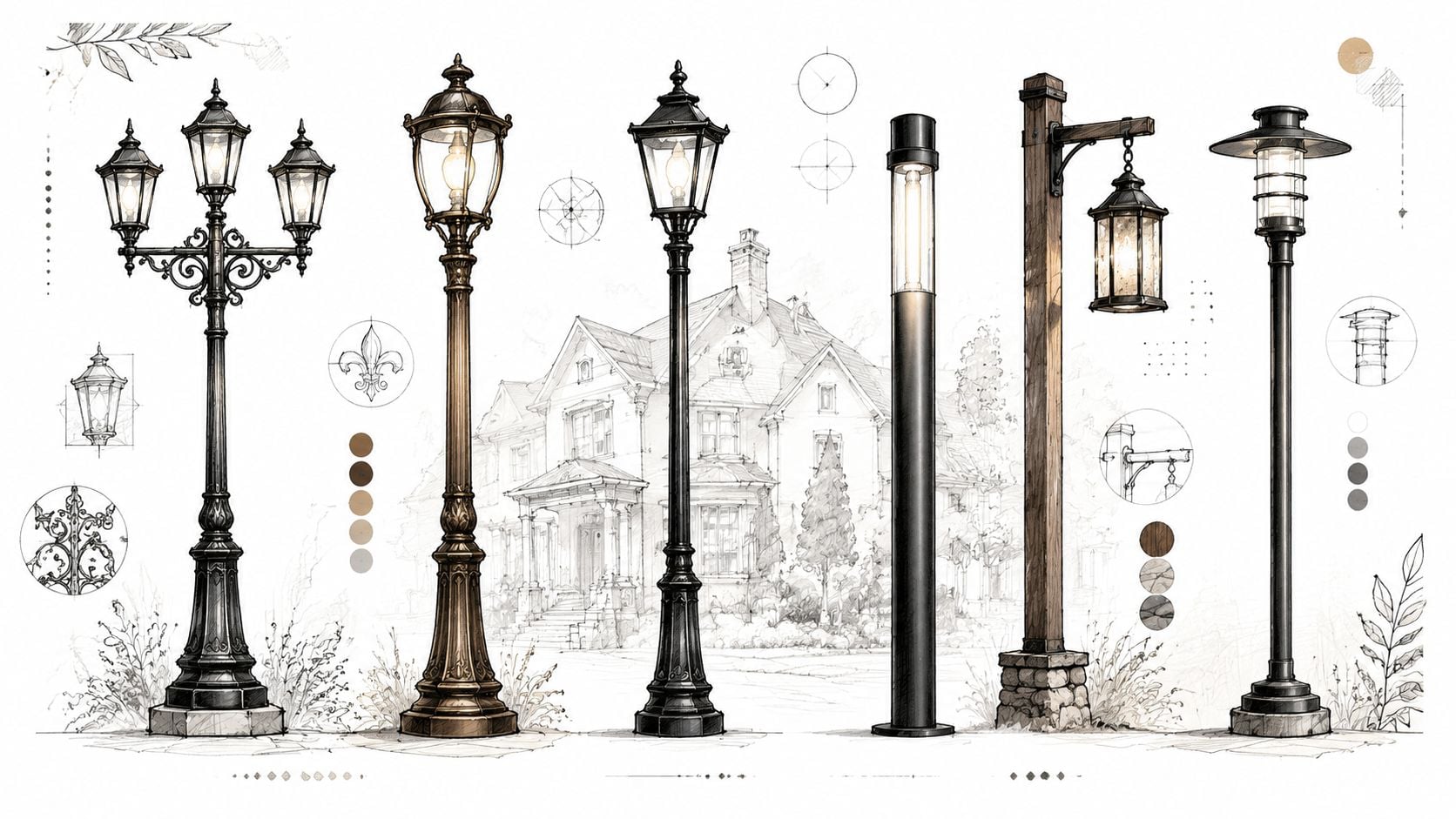
The first decision usually looks like a style question, but it's really a style and maintenance question. Decorative outdoor lamp posts can lean traditional, craftsman, farmhouse, or modern. The best choice is the one that fits the house in daylight and still looks right when the fixture is off.
Match the architecture first
A simple rule helps. If the home has more trim, shutters, brick detail, or a formal entry, a classic lantern-style post usually feels consistent. If the exterior is cleaner and more minimal, a straighter profile with less ornament tends to work better.
Material choice changes the long-term experience more than most buyers expect. In Central Indiana, weather is the ultimate test. Product pages often emphasize weather resistance, but the more useful question is upkeep over time in snow, salt, and freeze-thaw conditions, especially around finishes, hardware, and wiring access points, as noted in this outdoor lamp post and mount overview.
Practical rule: The best-looking finish on day one isn't always the best finish after a few winters.
What tends to work in Indiana weather
Some materials make ownership easier than others.
- Cast aluminum usually appeals to homeowners who want lower fuss. It's lighter, widely available, and often a practical choice where rust anxiety is a major concern.
- Powder-coated steel can feel substantial and look sharp, but chips and scratches deserve attention. Once the finish is compromised, maintenance becomes more important.
- Brass develops character over time. That can be a benefit or a drawback, depending on whether the homeowner wants a polished look or is comfortable with visible aging.
- Composite materials can make sense when the priority is low visual maintenance and durability over decorative weight or old-world styling.
For buyers comparing fixture shapes, glass styles, and LED-ready designs, this guide to Golden Lighting outdoor lighting solutions is a useful visual reference for common post-light directions.
A lamp post should also relate to the rest of the exterior hardware. If the home already has black door hardware, darker window trim, or metal rail accents, the fixture should feel connected to those elements instead of standing alone. Coordinating those details is often what separates a polished exterior from one that feels pieced together. More on that design logic shows up in this look at metal accents in home design.
Sizing Placement and Lighting Technology Explained
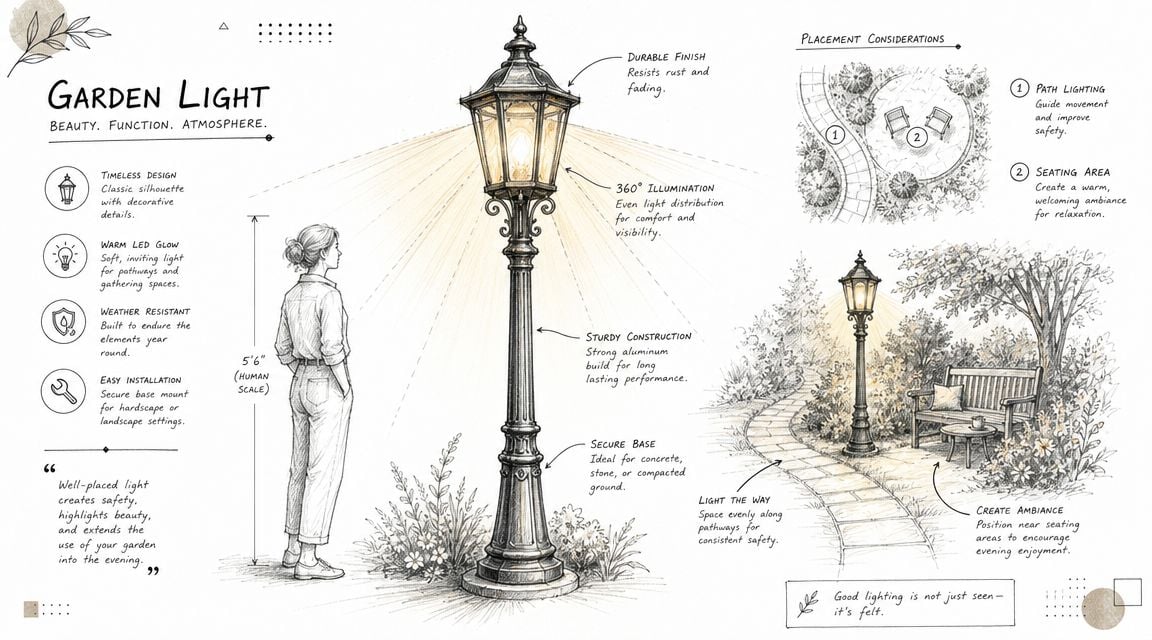
A lamp post can be beautiful and still fail if it's too short, too tall, too dim, or in the wrong spot. Decorative outdoor lamp posts are meant for human-scale lighting, not highway lighting. Typical mounting heights are 8 to 15 feet, according to this guide on lamp posts versus street lights. That range is one reason these fixtures feel comfortable in gardens, walkways, patios, and residential entries.
Height and placement should serve the space
Think of lamp-post height the same way a room designer thinks about ceiling fixtures indoors. The right scale makes the space usable without making it harsh. Near a front walk, a lamp post should help people see where they're stepping. Near a patio, it should support conversation and movement without throwing glare into seated eye level.
A few placement patterns tend to work well:
- At the front walk or drive edge when the goal is arrival, orientation, and curb appeal.
- Near a patio transition when people move between the house and seating area after dark.
- At the edge of a garden or lawn feature when the post is meant to anchor the outdoor space visually.
Brightness matters more than shoppers think
Lighting output varies widely. Decorative and post-top fixtures in major product catalogs can range from 1,250 lumens to 78,000 lumens, while a consumer-facing guide notes that solar post lights are often around 100 to 400 lumens and hardwired fixtures are often 500 to 1,000+ lumens, as shown in this decorative post-top lighting catalog. The practical takeaway is simple. Ambient solar lighting and functional hardwired lighting are not interchangeable.
A lamp post that looks right from the street can still underlight the area if output and mounting height don't match the job.
For a seating area, lower and warmer light usually feels more welcoming. For a walkway or driveway edge, homeowners often prefer stronger functional illumination. Shoppers often overfocus on the fixture body and underfocus on how the light lands on people, steps, cushions, and pavers.
That same thinking applies indoors. The room feels better when the light level matches the activity. This article on putting your living room in the best light follows the same principle from the interior side.
Installation and Electrical Safety for Indiana Homes
A lamp post that leans after one winter or develops water problems at the base was usually set up poorly from the beginning. Installation affects appearance, stability, and safety at the same time. Even homeowners who plan to hire out the work should know what proper setup looks like.

Stability starts below grade
A useful structural rule is to bury roughly one-third of the post below grade. One installation guide gives a concrete example of a 96-inch post set about 30 inches deep in an 18-inch-diameter hole, with compacted aggregate used to help resist wind loads and leaning. That example appears in this granite lamp post installation guide.
That matters in Indiana because the ground moves, moisture changes, and bases take abuse from weather and maintenance equipment. A decorative post isn't just a fixture mount. It's a vertical element exposed to real lateral force.
Know when to call a professional
Many homeowners can handle planning and layout. Electrical tie-in is where caution should take over. Outdoor fixtures need proper weather-rated components, careful wiring, and installation that respects local code. If trenching, conduit, switching, or line-voltage work is involved, a qualified electrician is often the better path.
A smart checklist includes:
- Wet-location suitability for the fixture and all exposed connections.
- Ground-fault protection where required.
- Drainage awareness so the base area doesn't trap water.
- Straight alignment checked during installation, not fixed later.
The expensive part of a bad install usually isn't the first day. It's the slow failure that shows up after storms, frost, and a couple of seasons.
For homeowners who want a broader look at residential exterior planning, these Colorado Springs outdoor lighting experts offer a useful example of how professionals approach layered outdoor lighting rather than treating one fixture as a stand-alone fix.
Coordinating Lighting with Your Outdoor Furniture
The strongest outdoor spaces don't treat lighting as a utility add-on. They treat it as part of the furniture plan. A decorative lamp post can frame a seating area, soften the edge of a patio, and make the whole yard feel intentional after sunset.

Build an outdoor room, not just a lit yard
A matte black lamp post near a sectional with dark metal framing usually feels cohesive. A warmer bronze finish often works better around wood-look surfaces, tan cushions, or more traditional architecture. Brushed finishes can help modern patios feel crisp without becoming too cold.
A useful design approach is to look at the whole outdoor zone at once.
| Outdoor element | What the lamp post should support |
|---|---|
| Seating area | Comfortable, non-glaring evening light |
| Dining area | Clear visibility without harshness |
| Walk to patio | Safe movement and visual guidance |
| Fire feature area | Ambient boundary light, not competition |
In many backyards, elements come together effectively. A post light near the path can guide movement, while the patio itself stays relaxed and layered. For buyers planning benches or a gathering spot around a fire feature, these Van Dyke Outdoors fire pit benches show the kind of seating arrangement that benefits from surrounding ambient light rather than a single overhead blast.
Let the furniture finish the story
When the furniture is too casual for the fixture, the lamp post can feel overstyled. When the fixture is too plain for a thoughtfully designed patio, the space can feel unfinished. Balance matters.
- With a sectional, the lamp post should usually sit to the perimeter, not in the conversational center.
- With an outdoor dining set, the fixture can help define the route from door to table.
- With lounge chairs or conversation seating, softer output tends to preserve comfort.
For homeowners planning the whole exterior at once, this outdoor furniture buying guide is a helpful way to think through layout, materials, and use before making separate purchases that don't work together.
Why Lafayette Chooses Lucas Furniture and Mattress
A decorative lamp post rarely stands alone in a real backyard plan. In Lafayette, it usually has to work with the patio layout, the front walk, winter weather, and the furniture people use from April through late fall. That is one reason many local homeowners want to see more than a single fixture sample before they buy.
Seeing outdoor seating, dining sets, and accent pieces in person helps people judge where a lamp post belongs and where it does not. A tall post can look balanced beside a deeper seating group, then feel oversized next to a compact bistro setup. I have found that homeowners make better lighting decisions when they can look at the whole setting at once instead of choosing a fixture in isolation.
Better planning starts with the full outdoor picture
The Kokomo showroom gives Lafayette shoppers a practical way to test that bigger picture. You can compare furniture scale, finishes, and traffic flow, then picture how a post light will guide someone from the driveway, sidewalk, or gate to the seating area without crowding it. That matters in Central Indiana, where snow piles, freeze-thaw movement, and road salt all punish outdoor materials and make placement more than a style decision.
A good showroom visit answers questions photos usually miss. Will a black post disappear beside darker woven seating. Will a bronze finish feel warmer with wood-toned pieces. Is there enough room for a base near the path after accounting for winter shoveling and summer foot traffic.
Local homeowners want coordination, not random pieces
Lucas works well for buyers who are furnishing in stages but still want the exterior to feel connected to the rest of the home. A family may start with patio seating and a lamp post near the walk, then realize the view from the back door also includes the family room. For that kind of project, browsing affordable living room furniture sets can help tie indoor and outdoor sightlines together so the house feels considered from both sides of the glass.
That local, whole-home perspective is why Lafayette homeowners keep Lucas in the conversation. The store is useful not because it pushes unrelated products, but because it helps people build spaces that work together, handle Indiana conditions, and still feel welcoming year-round.
Customize Your Comfort and Furnish Every Room
A good lamp post plan rarely stands alone. Once the post height, finish, and light output are set, the rest of the space has to support that decision. Seating should sit in the light, not outside it. Walkways need enough clearance in winter. Entry views should feel settled instead of pieced together.
That is usually the point where outdoor furniture choices matter.
In Lafayette and across Central Indiana, I usually suggest treating the lamp post as one anchor point in a larger outdoor layout. A post near the walk can define arrival, but the patio still needs furniture sized for the space, materials that hold up through wet springs and hot summers, and finishes that do not fight the lighting. A black post paired with heavy dark seating can make a small patio feel flat at night. Warmer wood tones or lighter cushions often balance that effect and keep the area more inviting after sunset.
Custom options can help when standard patio sizes leave awkward gaps or crowd the traffic path between the door, grill, and seating area. Homeowners who want more control over layout and finish choices can look at custom furniture made simple to see how that process works.
A coordinated outdoor plan usually comes down to a few practical decisions:
- Keep paths clear so lamp post bases, chairs, and side tables still leave room for shoveling snow and daily foot traffic.
- Match finish temperature so the post and furniture feel related. Black and pewter read cooler. Bronze and wood tones read warmer.
- Choose materials for Indiana weather because freeze-thaw cycles, road salt, and pooled water wear down the wrong finishes fast.
- Light the use area so conversation seating, steps, and transitions stay visible without harsh glare in people's eyes.
The goal is a yard that works on an ordinary weeknight, not just in a staged photo. When the lamp post, furniture, and layout support each other, the whole exterior feels easier to use and better resolved.
Achieve Better Sleep with Our Mattress Experts
A decorative lamp post does its job outside. It defines the entry, improves visibility, and helps the house feel finished after dark. The article has already covered how to choose one that fits Indiana weather and the way you use your yard.
For the next step, stop at the exterior plan. Homeowners around Lafayette usually get the best result by treating lighting, furniture, and traffic flow as one project instead of a string of unrelated purchases. A good lamp post should support how people arrive, gather, carry groceries, move around in snow, and use the front walk on a January evening when the pavement is wet and the light fades early.
That bigger view is one reason local shoppers visit Lucas Furniture & Mattress. The goal is not to sell an unrelated category into the conversation. The goal is to help people make the whole home feel settled, from the porch and patio to the rooms just inside the door.
If a lamp post is still on your shortlist, bring a few basics with you before you buy:
- A photo of the house front so the finish and scale can be judged against the siding, brick, and trim
- A rough measurement of the walk and setback so placement does not crowd traffic or snow removal
- Notes on exposure including pooled water, wind, street salt, and plowed snow
- A sense of the full outdoor plan so the lighting works with the furnishings and entry experience instead of fighting them
That approach saves money, cuts down on second-guessing, and usually leads to a better-looking result.
Visit Lucas Furniture & Mattress to browse online or plan a trip to the Kokomo showroom serving Lafayette and Central Indiana. Whether the next project is decorative outdoor lamp posts, a new sectional, outdoor furniture, or a custom order for another room, Lucas offers simple financing, clearance savings up to 70% off, and dependable in-home delivery to the Lafayette area.