Experience our new Lafayette showroom — Now Open! Come Visit Us -->

DIY Cafe Curtains: A Lucas Furniture & Mattress Guide


A window can make a room feel finished or forgotten. Many homeowners and renters start with the big pieces, then notice the kitchen, breakfast nook, or laundry room still feels a little bare. That's where DIY cafe curtains work so well. They add softness, privacy, and pattern without taking over the room, and they pair naturally with a broader refresh from a furniture store near Lafayette IN.
For shoppers looking for a Lafayette furniture store, Lucas Furniture & Mattress serves the Lafayette area with reliable in-home delivery, while the main showroom and outlet location in Kokomo make it easy for Central Indiana households to see full-room setups in person. A small project like cafe curtains can be the detail that ties together a dining space, bedroom corner, or sunny sitting area before the larger furniture pieces arrive.
Table of Contents
- Planning Your Perfect Cafe Curtain Project
- How to Measure and Choose Fabric
- The No-Sew Method for a Quick Update
- Creating a Classic Sewn Cafe Curtain
- Mounting, Styling, and Completing Your Room
- Why Lafayette Chooses Lucas Furniture for a Full Home Makeover
Planning Your Perfect Cafe Curtain Project
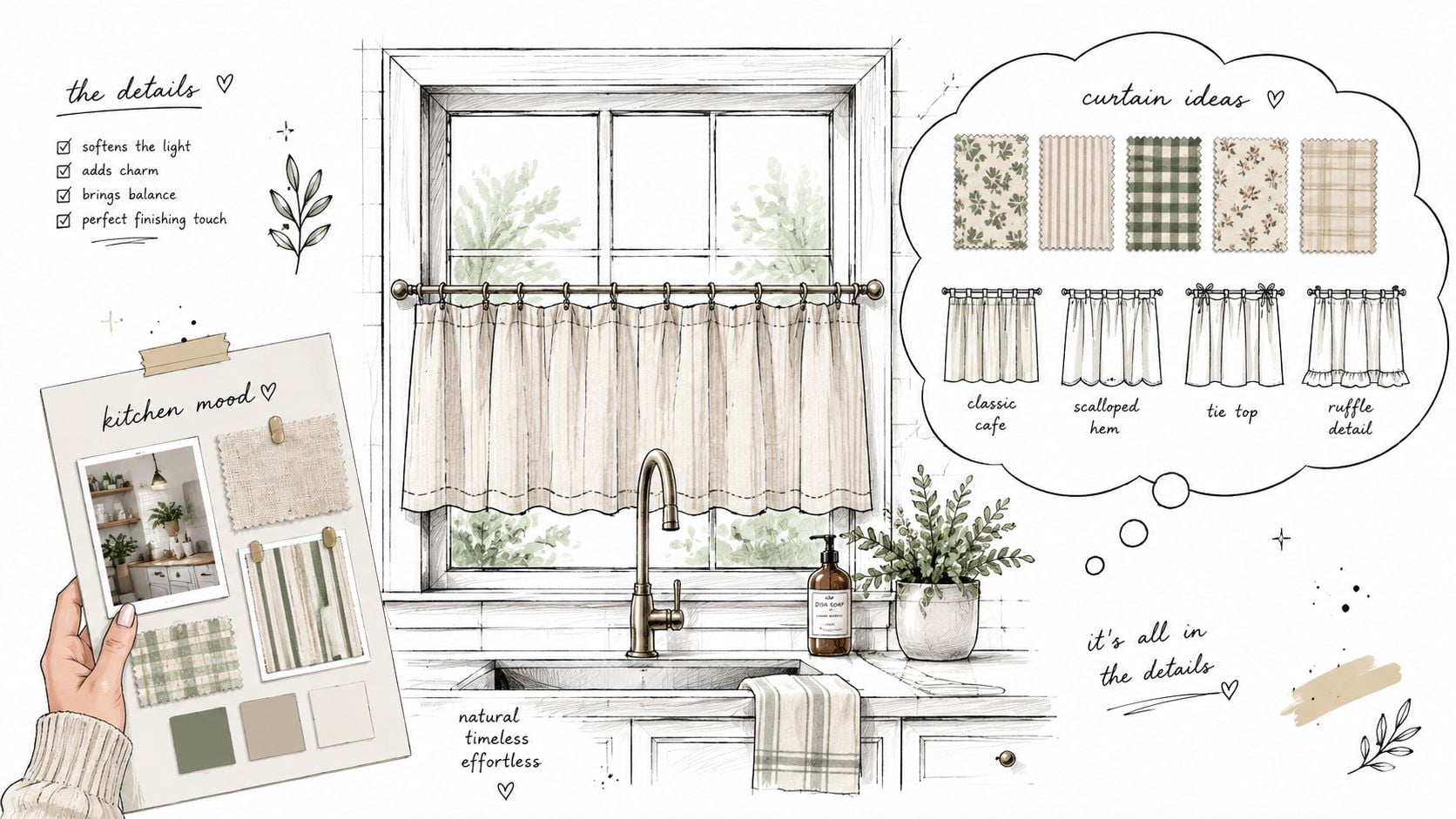
Cafe curtains work best when the room needs privacy but still depends on daylight. Kitchens are the obvious choice, but they also fit bathrooms, mudrooms, laundry spaces, and breakfast nooks. The reason is simple. They cover the lower part of the window while leaving the upper glass more open, so the room keeps its light and looks softer at the same time.
Start With the Room, Not the Fabric
The most successful DIY cafe curtains match the room's purpose first. A hardworking kitchen usually needs washable fabric and a style that won't feel fussy. A guest bath can handle something more decorative. A breakfast nook often looks best with a curtain that feels structured enough to sit near wood furniture, upholstered chairs, or a bench.
A quick planning pass keeps the project from looking random:
- Choose the window carefully. Pick the space where glare, privacy, or visual softness matters most.
- Match the curtain style to nearby finishes. Casual linen looks different next to painted cabinets than it does beside rich wood tones.
- Decide how polished the result needs to be. Clip rings feel relaxed. A sewn rod pocket feels more custom.
Practical rule: Cafe curtains should look intentional from across the room, not just cute up close.
For households trying to improve a room without overspending, Striped Circle's budget decorating guide offers useful ideas for balancing small updates with larger purchases.
Gather Tools Before Cutting Anything
This project stays manageable when the supplies match the method. No-sew versions usually need fabric, an iron, hem tape, clip rings, and a rod. Sewn versions add a machine, thread, pins, and a measuring tape. Both benefit from pressing the fabric before measuring.
It also helps to look at the room as a whole before starting. A window treatment can support a larger plan for furniture placement, color balance, and traffic flow. That's why many homeowners find it useful to review home design starting points for room planning before making even small decor changes.
How to Measure and Choose Fabric
Bad measuring creates most curtain problems. Panels end up flat, skimpy, too short, or awkwardly bulky at the sill. Good measuring solves nearly all of that before any cutting begins.
Measure Width for Fullness
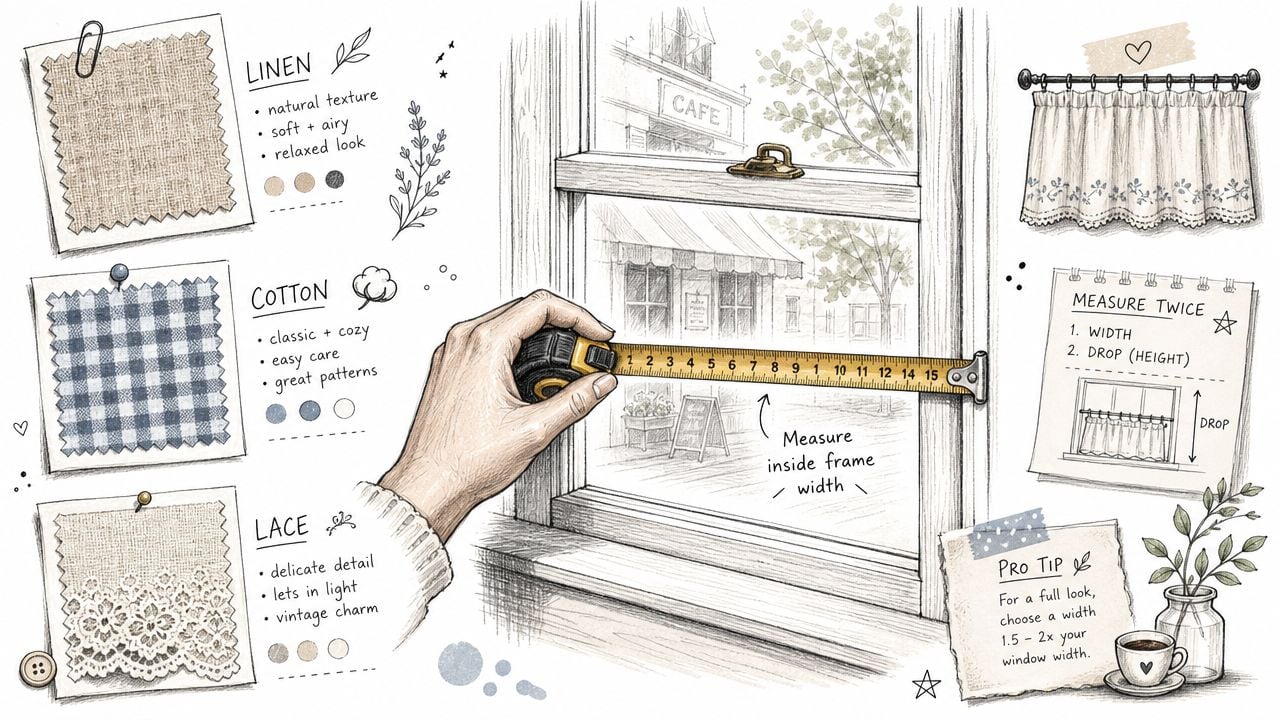
The key measurement isn't just the window width. It's the finished curtain width after fullness is added. A common rule for DIY cafe curtains is to make the total finished width 1.5 to 2 times the window width, and for a fuller, more structured look, some designers recommend a 2x fullness ratio with a deep 4-inch double hem at the top and bottom according to this cafe curtain measuring guide.
That matters because a curtain cut to the exact width of the glass usually looks flat. Fullness creates folds, and folds are what make cafe curtains feel warm rather than stiff.
A simple measuring order works well:
- Measure the width of the area the curtain needs to cover.
- Decide whether the look should be relaxed or more structured.
- Multiply for fullness.
- Split that total across one or two panels.
More width than expected is usually the right answer. Most first-time DIYers underbuy fabric.
Measure Length for the Way the Curtain Will Hang
Length depends on where the rod will sit. Some cafe curtains end at the sill. Others stop just below it for a softer line. The important part is consistency. Measure from the rod placement to the desired finished end point, then account for hems based on the construction method.
Fabric choice affects the final look almost as much as size. Lightweight cotton feels casual and easy. Linen blends create a breezy texture. Prints can be charming, but they need to make sense with everything already in the room, including rugs, dining chairs, counter stools, and nearby upholstery.
For readers thinking beyond the window, this guide to upholstery fabric is useful because it helps connect curtain texture to bigger room materials. That's often the difference between a room that feels collected and one that feels mismatched.
A Quick Fabric Reality Check
Use this table before buying yardage:
| Curtain goal | Better choice | Watch out for |
|---|---|---|
| Soft and airy | Linen blend or light cotton | Too little fullness can make it look thin |
| Structured and crisp | Slightly heavier woven fabric | Thick fabric can bunch if the rod is small |
| Easy maintenance | Washable fabric | Delicate weaves near sinks and stoves |
| Patterned accent | Small-scale print | Large motifs may look chopped on narrow windows |
The No-Sew Method for a Quick Update
Not every room update needs a sewing machine. For many windows, the no-sew approach is the smartest option because it's fast, forgiving, and easy to swap later if the room changes.
Clip Rings for the Fastest Finish
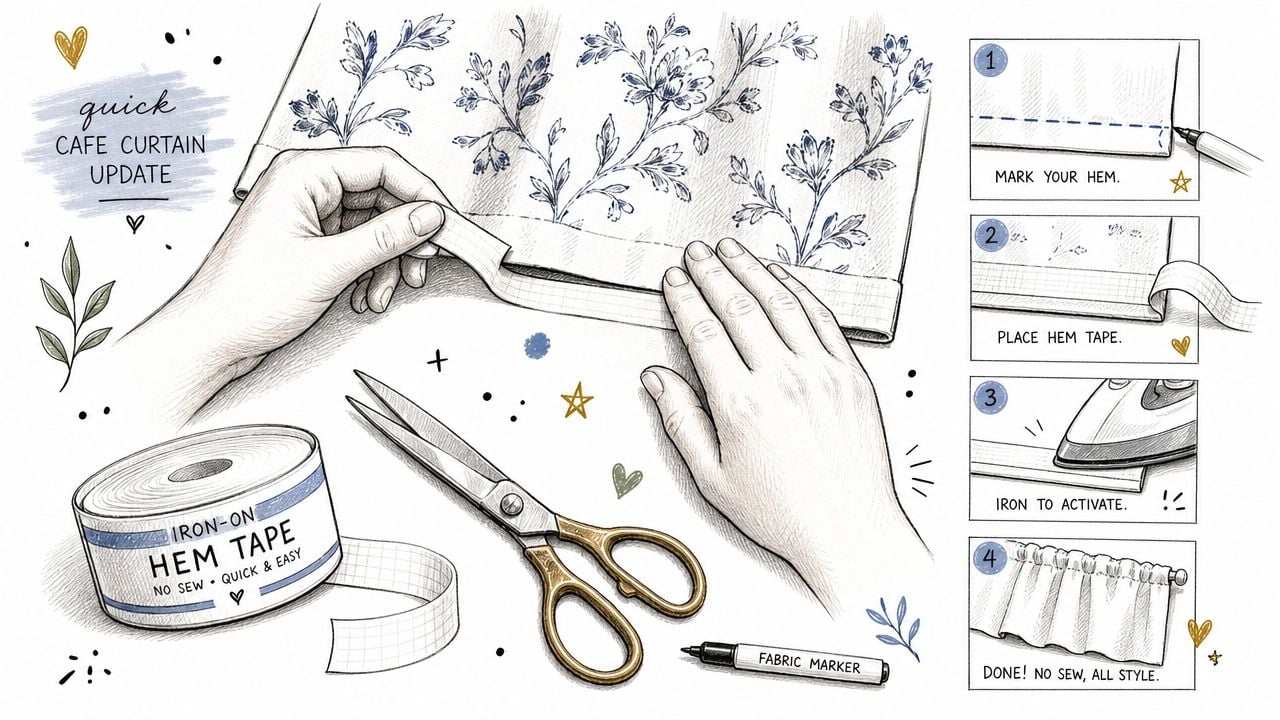
Some no-sew tutorials show cafe curtains can be made and installed in about an hour using clip rings, and one example project uses two yards of fabric to create a pair of 54-inch by 36-inch panels, as shown in this quick DIY cafe curtain tutorial. That method is popular for good reason. It skips complicated construction and still looks charming when the fabric choice is right.
The basic workflow is straightforward:
- Press the fabric first. Wrinkles throw off cutting and make the finished curtain look homemade in the wrong way.
- Create clean edges. Hem tape and an iron can handle this well for lightweight fabrics.
- Use clip rings evenly. Spacing matters because uneven clips make the top edge sag.
- Hang and adjust by eye. Tiny shifts in clip placement can improve the drape.
When No-Sew Works Best
This method shines in apartments, guest spaces, and casual kitchens. It also makes sense when the room is still evolving. A renter may not want a permanent treatment. A homeowner may be waiting on a bigger furniture update and just needs the window to stop looking unfinished.
No-sew also fits the kind of seasonal refresh that changes the feel of a room without replacing everything. These summer living room refresh ideas follow the same principle. Small changes in textiles and styling can reset a room quickly.
A no-sew curtain succeeds when it looks light, neat, and intentional. It fails when the fabric is too heavy or the top edge looks lumpy.
What Usually Goes Wrong
The most common mistake is choosing fabric that's too stiff for clip rings. The second is skipping the iron. The third is trying to fake fullness with fabric that's barely wide enough. A quick project still needs proportion.
If the goal is speed, keep the design simple. Straight hems, clean fabric, and modest hardware usually look better than trying to force extra trim or complicated folds into a no-sew curtain.
Creating a Classic Sewn Cafe Curtain
A sewn cafe curtain gives more control over the finish. The hems sit flatter, the top edge looks cleaner, and the curtain moves more predictably on the rod. It takes more time, but the result usually looks more integrated with the room.
The Measurements That Matter
For a standard sewn curtain, a common practice is to cut the fabric width at 1.5 to 2 times the window's width to ensure a full look, with typical seam allowances of 1 1/2 inches for the top rod pocket and 2 1/2 inches for the bottom hem, based on this sewn curtain tutorial. Those allowances matter because they affect both the final size and the way the curtain hangs.
A good sewn panel usually includes side hems, a bottom hem with enough weight to hold the shape, and a rod pocket sized to the hardware. Precision matters more here than in the no-sew version. Uneven top stitching or a twisted hem will be visible once the light comes through the window.
A Better Sewing Sequence
This order tends to work well:
- Hem the sides first so the panel width is controlled.
- Build the rod pocket at the top.
- Finish the bottom hem last so the final length can be checked.
- Press after each seam, not only at the end.
For beginners who want a little extra support before tackling curtain sewing, master your first sewing project is a helpful place to build confidence with the basics.
Pressing during construction is what makes sewn curtains look custom. Skipping that step is usually obvious.
Trim, pattern, and fabric direction also matter more in sewn curtains because the finish is more precise. This guide to working with patterns in room design can help when the curtain fabric needs to coordinate with other textiles in the space.
Mounting, Styling, and Completing Your Room
A good curtain can still disappoint if the rod placement is wrong. Mounting decides whether the window feels balanced, cramped, casual, or polished.

Choose Hardware That Fits the Curtain
Tension rods are easy and low-commitment. Mounted rods feel more substantial. Clip rings read casual, while a rod pocket looks cleaner and more traditional. None of those choices is automatically better. The right one depends on the room.
A narrow kitchen window above a sink can handle a slim profile. A breakfast nook beside a substantial dining table usually looks better with hardware that has a little presence. The curtain shouldn't feel heavier than the room, but it also shouldn't disappear.
A few styling checks help:
- Keep the rod level. Even a slight tilt is visible once the fabric hangs.
- Match the hardware mood to the room. Ornate brackets can feel out of place in a simple space.
- Let nearby furniture guide the finish. Dark metal, painted wood, and warm brass all create different effects.
For anyone handling wall decor and curtain placement in the same room update, this expert guide to hanging pictures offers practical alignment ideas that translate well to windows too.
Tie the Window Into the Rest of the Room
Cafe curtains do their best work when they relate to the furniture nearby. In a dining area, they can soften the harder lines of a table and chairs. In a living room corner, they can connect a window to a reading chair, accent table, or compact sectional without making the space feel overdone.
Small DIY updates become useful design tools rather than isolated projects. A patterned cafe curtain can echo upholstery. A neutral woven fabric can calm a room that already has bold art or a textured rug. In a home with custom furniture pieces, the curtain often acts as the bridge between built surfaces and softer seating.
What Looks Finished and What Doesn't
A finished room usually has visual rhythm. The curtain height feels deliberate. The folds are consistent. The fabric relates to at least one other element in the room.
An unfinished look tends to come from one of three issues:
| Problem | Why it happens | Better fix |
|---|---|---|
| Curtain looks skimpy | Not enough width | Increase fullness next time |
| Top edge looks messy | Hardware or clips are uneven | Re-space clips or change hardware |
| Curtain feels disconnected | Fabric ignores the room palette | Pull color or texture from nearby furniture |
Why Lafayette Chooses Lucas Furniture for a Full Home Makeover
DIY cafe curtains add personality, but they don't carry a room by themselves. The room still depends on the foundational pieces. Comfortable seating, a supportive mattress, a dining set that fits the layout, a desk that works for daily life, and storage that keeps clutter under control all matter more than a single textile project. That's why many households in Lafayette and across Central Indiana pair small personal updates with a more complete furniture plan.
Lucas Furniture & Mattress serves the Lafayette area from its Kokomo showroom and outlet, giving local shoppers a nearby place to see room setups, compare comfort, and make decisions in person. For people who'd rather start online, there's also the convenience of browsing from home and arranging in-home delivery to Lafayette. Readers who want a broader overview can explore this Lucas Furniture & Mattress Lafayette furniture store guide.
Why Choose Lucas Furniture
Lucas Furniture & Mattress stands out for the reasons that matter once inspiration turns into a real purchase. It's locally owned, serves Central Indiana, and focuses on practical value rather than flashy promises. That matters when a family is furnishing more than one room and needs honest guidance on what will hold up, what fits the budget, and what works in the home.
The showroom in Kokomo gives Lafayette shoppers a strong mix of convenience and selection. Instead of guessing from a single swatch or a tiny product image, shoppers can look at room groupings, compare finishes, and get a better sense of scale. That's especially useful when a DIY project like cafe curtains is only one part of a larger refresh.
The best room updates usually combine personal details with dependable core pieces.
Strong customer reviews also matter here. Homeowners want to know the store will follow through on ordering, delivery, and problem-solving. A furniture purchase isn't only about style. It's about trust.
Furnish Every Room and Save Big
A room refresh often starts with one area and spreads. New curtains in the breakfast nook can make the dining set feel tired. A refreshed guest room window can make the old mattress stand out. That's normal. Once one detail improves, the rest of the room becomes easier to evaluate clearly.
Lucas Furniture serving Lafayette offers furniture for living rooms, dining rooms, bedrooms, home offices, entertainment areas, and outdoor spaces. That range helps when a household wants continuity from one room to the next. A customer might start with a sectional, add a bedroom set, and then finish with accent pieces that support the same design direction.
Value is a major reason people shop there. Lucas Furniture & Mattress highlights a Low Price Promise and outlet and clearance savings up to 70% off. Clearance can be especially useful for shoppers who want a polished room without waiting for a full custom plan.
A practical whole-home approach often looks like this:
- Living room first. Choose the sectional, sofa, recliner, or lift chair that handles daily use.
- Dining second. Anchor the room with a table that fits both the layout and the household routine.
- Bedroom next. Improve comfort and storage where it affects everyday life most.
- Outdoor furniture last, or first if the season calls for it. Patios and decks deserve the same attention as indoor rooms.
Achieve Better Sleep With Your Mattress Options
Mattress shopping deserves its own category because comfort is personal. A bedroom may look better after a decor update, but sleep quality depends on the mattress, not the styling.
Lucas Furniture & Mattress has a dedicated mattress center with options for different comfort preferences and budgets. That helps shoppers compare support levels in a more focused way instead of treating the mattress like an afterthought. For many households, the mattress is the most important purchase in the home because it affects every day that follows.
The value here is guidance. People don't always need more choices. They need the right questions, a chance to test options, and a better understanding of what fits their sleep habits. That's where the store's mattress selection and educational tools become useful.
Customize Your Comfort With Simple Financing and Custom Orders
Not every home needs off-the-floor furniture. Some rooms need a specific fabric, a different configuration, or a finish that works with existing cabinetry and flooring. That's where custom order options become valuable.
Custom ordering helps in spaces that are hard to furnish with standard pieces. Sectionals are a good example. The wrong shape can interrupt traffic flow or leave the room feeling crowded. The right configuration supports the way people sit, host, and live.
Financing matters just as much as customization. Lucas Furniture & Mattress offers simple financing, which gives shoppers flexibility when they're furnishing multiple rooms at once or replacing major items on a practical timeline. Instead of compromising across the board, buyers can often choose the pieces that fit their home and then spread payments more comfortably.
Shop Your Way Online In-Store and Delivered to Lafayette
Some people want to sit on every sofa before buying. Others know what they need and would rather browse online after work. A strong furniture store should support both habits.
Lucas Furniture & Mattress does that by offering in-store shopping, online browsing, and in-home delivery to the Lafayette area. That combination is especially helpful for busy families, new homeowners, and anyone coordinating furniture with paint, flooring, or DIY updates like cafe curtains. The Kokomo showroom serves as the main destination for seeing the broader selection, while delivery closes the gap for customers in Lafayette and surrounding communities.
For a shopper searching for a Lafayette furniture store, that convenience matters. It means the room doesn't have to come together in pieces from disconnected sources. The personal touches can come from DIY projects, while the furniture, mattress, clearance finds, custom orders, and delivery support come from one reliable local retailer.
A small project can change the mood of a room, but the right furniture completes it. Visit Lucas Furniture & Mattress near Lafayette today, or browse the full inventory online with guaranteed in-home delivery to the Lafayette area.