Experience our new Lafayette showroom — Now Open! Come Visit Us -->

Entryway Lockers with Doors: Lucas Furniture Guide

The front door gets busy fast. Shoes spread out where people stop walking. Backpacks land wherever there's floor space. Coats pile over a chair that was never meant to be a drop zone. For many households, that's the exact moment when entryway lockers with doors start to make sense, especially for those seeking a furniture store near Lafayette IN that understands daily family traffic, not just showroom styling.
For shoppers looking for a Lafayette furniture store that serves real homes across Central Indiana, the practical question isn't whether an entryway should look nice. It's whether that storage will still work on a rushed school morning, on a rainy afternoon, and through a full week of coats, shoes, and sports gear. The main showroom is in Kokomo, and in-home delivery extends to Lafayette, which makes it easier to shop for solutions without guessing how they'll fit into everyday life.
Table of Contents
- Your Guide to a Clutter-Free Entryway in Lafayette
- The Great Debate Doors vs Open Cubbies
- Essential Features of High-Quality Entryway Lockers
- Measure Twice Buy Once Planning for Your Space
- Why Choose Lucas Furniture for Your Home
- Customize Your Comfort and Furnish Every Room
- Shop Your Way and Get It Delivered to Lafayette
Your Guide to a Clutter-Free Entryway in Lafayette
A lot of entryways fail for the same reason. They ask one small area to handle too many jobs at once. That space has to catch shoes, coats, keys, bags, mail, and the rush of people coming and going. Without defined storage, the whole area turns into overflow.
That's why entryway lockers with doors appeal to so many households in Lafayette. They can give every person a place to drop daily essentials while keeping the visual mess out of sight. The room feels calmer, even when life isn't.
What real households need from an entryway
A useful entryway has to do more than look tidy for guests. It has to support repeated, everyday habits. People need a place to sit, hang, stash, and leave again without bumping into each other.
A few needs show up again and again:
- Fast drop zones: Bags and coats need an obvious landing spot.
- Hidden storage: Closed sections help when the family can't keep every shelf photo-ready.
- Easy cleanup: Shoes, pet items, and seasonal gear need surfaces that don't become a maintenance headache.
- Flexible use: A household with kids, teens, guests, or pets won't use the space the same way every day.
Practical rule: If the entryway doesn't make it easier to come home, it isn't organized. It's just decorated.
Households that want ideas for turning clutter into a workable system can start with practical ways to solve clutter issues once and for all. The strongest entryways usually combine concealment with convenience, not one or the other.
Why this matters in Lafayette homes
Many homes in Central Indiana don't have oversized mudrooms. They have a modest wall, a narrow hall, or a corner near the garage entry that has to work hard. In those homes, furniture needs to earn its footprint.
That's where a nearby showroom in Kokomo and delivery into Lafayette become useful. Shoppers can look at pieces in person, compare storage styles, and choose something that matches how the household moves through the day.
The Great Debate Doors vs Open Cubbies
The hardest part of choosing entryway lockers isn't the finish or hardware. It's deciding whether the household needs calm or convenience more.
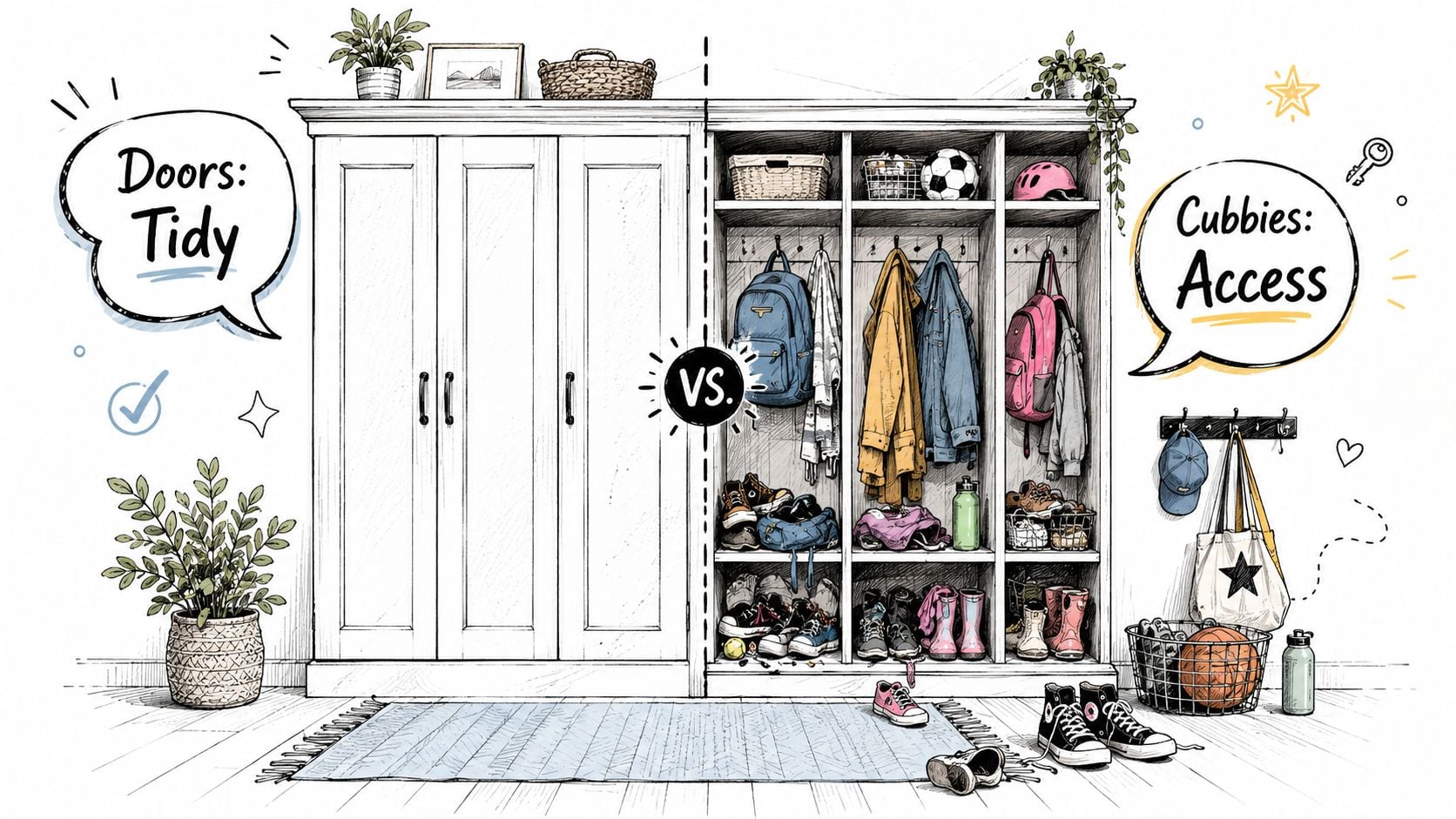
A recurring gap in coverage is how entryway lockers with doors perform in small, high-traffic homes. The practical tradeoff matters because many built-ins are discussed for appearance, while everyday concerns like ventilation, usability, and door swing clearance get less attention, as noted in this discussion of mudroom locker tradeoffs.
What doors do well
Doors create visual relief. That matters more than some shoppers expect. When backpacks, shoes, and stray gloves disappear behind a panel, the room feels cleaner even if the household is in the middle of a busy week.
Closed lockers also help in homes where the entryway opens right into the living space. Guests don't immediately see the family's daily pileup. That can make the whole first floor feel more settled.
Doors tend to work well for:
- Mixed-use households: Adults, children, and guests all using the same wall.
- Main living areas: Entry storage that's visible from a living room or kitchen.
- Seasonal overflow: Bulky winter layers, tote bags, and gear that look chaotic in open storage.
Where doors can frustrate people
Doors also ask more from the space. They need room to open. They add hardware to maintain. They add one more step when everyone's in a hurry.
That sounds minor until a family uses the space many times a day. If children leave doors ajar, the entryway can feel more obstructed than organized. If damp shoes and coats go behind solid doors without enough airflow, the inside can get stuffy.
A simple side-by-side comparison helps:
| Storage style | Usually works best for | Common drawback |
|---|---|---|
| Doors | Hiding clutter, creating a cleaner look | Needs swing clearance and upkeep |
| Open cubbies | Fast grab-and-go access | Looks messy quickly |
For shoppers considering modifications to existing furniture rather than buying a dedicated unit, ideas for adding doors to bookcase storage can help frame the same decision in a practical way.
When open cubbies still win
Open cubbies are honest. Everything is visible, which means people use them quickly and consistently. That's often a good match for younger children who need a simple place to toss a backpack or grab shoes on the way out.
Closed storage lowers visual clutter. Open storage lowers friction.
Families with sports gear often discover that some open access is helpful. Cleats, practice bags, and daily school items aren't always neat, but they are easier to manage when they aren't tucked behind a door every single time.
The best answer often isn't all one or all the other. Many successful entryways combine a few closed compartments with some open access below or beside them.
Essential Features of High-Quality Entryway Lockers
Good-looking storage can still disappoint if the basics aren't right. In a busy entryway, material choice, airflow, hardware, and interior layout do most of the work.
Materials and construction that hold up
Entryway furniture takes more abuse than people expect. Bags bang into it. Shoes scrape it. Wet coats brush against it. That's why shoppers should look beyond color and shape.
A strong unit usually starts with stable construction and surfaces that can handle repeat contact. Doors should hang straight, feel consistent when opened, and close without twisting. A bench should feel planted, not hollow or shaky.
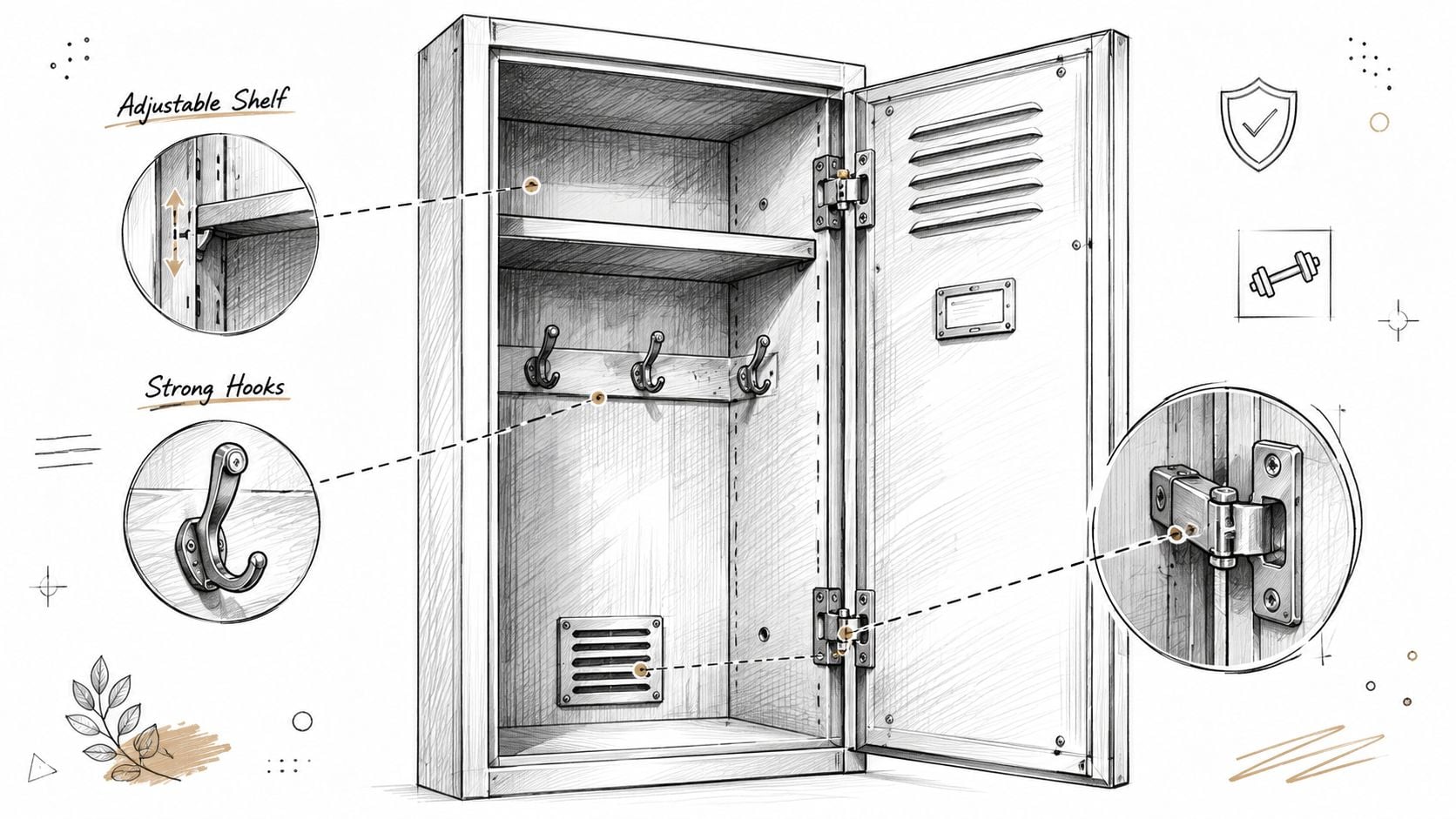
For buyers who like comparing structural details, these industrial locker details offer a useful reference point for thinking about vents, doors, frames, and durability, even when shopping for residential furniture.
Hardware matters more than showroom appearance
Handles and hinges tend to reveal quality fast. On a lightly used accent cabinet, modest hardware may be enough. In an entryway, those parts get touched all day.
Look for these signs:
- Smooth hinges: Doors shouldn't jerk, sag, or rub.
- Comfortable pulls: Family members should be able to open them easily with one hand.
- Consistent alignment: Crooked doors usually get worse, not better.
- Reliable hooks: Interior or exposed hooks should feel secure when loaded with real outerwear, not just decorative scarves.
Hardware is the part people test every day. If it feels flimsy in the store, it'll feel worse at home.
Interior layout makes or breaks usefulness
A locker can look impressive and still waste space inside. The best units divide storage with purpose. Some households need hanging space. Others need shelves for bins, lunch bags, and shoes. Most need a combination.
A practical checklist helps:
- Match the interior to the routine. Daily backpacks need easy access. Seasonal gear can sit higher or deeper.
- Use adjustable storage where possible. Family needs change, and fixed interiors often age poorly.
- Think about damp items. Shoes and coats benefit from some airflow and separation.
- Treat the bench as working furniture. It should support sitting, tying shoes, and repeated use without loosening over time.
Don't ignore ventilation
Ventilation gets overlooked because it isn't a glamorous selling point. It should still be part of the buying decision, especially with entryway lockers with doors.
Closed storage is great at hiding clutter. It's not as good at hiding moisture. If the household stores wet jackets, snow gear, or shoes inside, some breathing room in the design becomes important. Even small details, like spacing and interior organization, can help reduce that closed-in feeling.
Measure Twice Buy Once Planning for Your Space
A beautiful storage piece can still be wrong for the room. Most entryway mistakes come from measuring only the wall and ignoring how people move through the area.
Start with movement, not just footprint
Before choosing any locker, measure the width and height of the available wall. Then measure the space people need to pass through when someone is sitting, tying shoes, opening a door, or unloading a bag.
Check nearby details too:
- Light switches and outlets: Don't block everyday function.
- Doorways and trim: Make sure nearby doors can still open comfortably.
- Traffic paths: Leave enough room so the entryway doesn't become a bottleneck.
- Natural light: Taller or bulkier pieces can change how open the area feels.
Shoppers who want a clear walkthrough can use this room measuring guide from Room Sketch 3D as a practical planning aid before visiting a showroom.
Depth is the first technical decision
For entryway lockers with doors, depth usually determines whether the unit works the way people expect. Planning around 24 inches of cabinet depth lets standard hangers and long coats fit inside so doors can close without snagging sleeves or hardware, while 12 to 16 inch bays are better suited to shoes and bins rather than hanging storage, according to this locker dimension guide.
That single detail prevents a common disappointment. Some shoppers expect a shallower unit with doors to function like a closet. It usually won't. Shallower storage can still be excellent, but it's better when used for hooks, baskets, or footwear.
For homeowners planning a full room layout, this guide to measuring a room for furniture helps turn rough wall dimensions into a layout that works in daily life.
Think through setup and upkeep
A freestanding locker gives renters and homeowners more flexibility. It's easier to place, easier to move, and often simpler to swap out later. A built-in look can feel more customized, but it asks for tighter planning and less room for error.
Maintenance should stay simple. Wipeable finishes, accessible floors underneath or around the unit, and hardware that doesn't loosen easily all make the piece more livable over time.
A storage piece that barely fits on delivery day usually feels smaller every month after that.
Why Choose Lucas Furniture for Your Home
Shoppers don't just buy furniture. They also choose who they trust to guide the purchase, answer questions clearly, and follow through when the piece reaches the house.
For families in Lafayette, that local connection matters. A business serving Central Indiana understands that homes need function as much as style. Entryway storage, sectionals, bedroom furniture, and a new mattress all have to fit real routines, not just staged rooms.
Local service with practical value
Lucas Furniture & Mattress has served Central Indiana since 2002. The showroom and outlet in Kokomo give Lafayette shoppers a nearby place to compare furniture in person, and the service area reaches homes across the region.
That combination matters because many buyers want both options. They want to browse online on a weeknight, then sit on a sectional, test a mattress, or look closely at finish quality before making a decision.
Several value points stand out for budget-conscious households:
- Low Price Promise: Price matters, especially when furnishing more than one room.
- Clearance savings: The outlet and clearance selection can help stretch a home budget.
- Simple financing: Payment flexibility can make a larger purchase easier to manage.
- In-home delivery: Reliable delivery removes one of the biggest headaches in furniture shopping.
A store relationship should reduce stress
Strong customer reviews matter because they often reflect the parts of furniture shopping that aren't visible in a product photo. Communication, delivery coordination, problem-solving, and consistency all affect the experience.
A community-minded retailer should make the process easier, not more complicated. That means answering fit questions candidly, helping customers compare options, and recognizing when a custom order makes sense versus when an in-stock piece is the better call.
For many households, that kind of guidance is what turns a large purchase into a confident one.
Customize Your Comfort and Furnish Every Room
The focus doesn't stop at the entryway. Once one part of the home starts working better, the rest of the house becomes easier to evaluate. The living room might need a sectional that fits the way the family sits. The guest room may need a new mattress. The patio may need outdoor furniture that finally gets used.
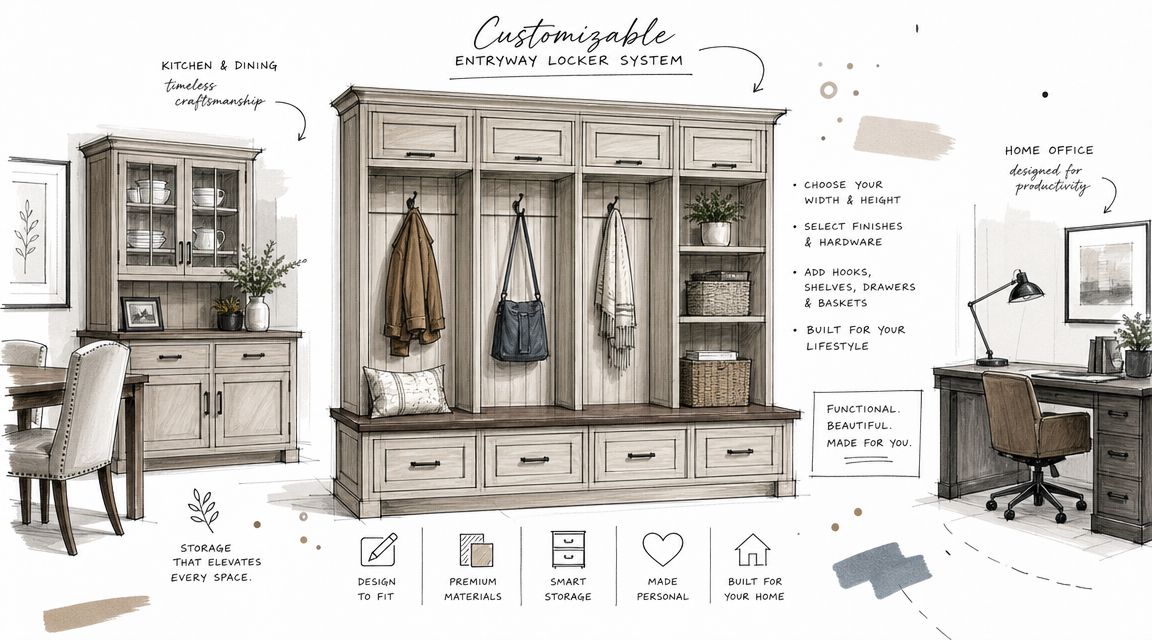
Custom order options help the right piece fit
Custom order furniture is useful when the standard version is close, but not quite right. Maybe the fabric needs to be more forgiving for pets. Maybe the sectional configuration has to fit a difficult corner. Maybe a bedroom set needs a different finish to work with the flooring already in place.
Buyers who want to explore those choices can review custom order furniture options and what to expect. That process can be especially helpful when furnishing a primary living area where comfort and layout matter every day.
One practical option in this category is Lucas Furniture & Mattress, which offers furniture for living rooms, bedrooms, dining rooms, home offices, mattresses, and outdoor spaces, along with custom order availability on selected collections.
Savings and financing widen the range of options
Not every room has to be furnished all at once, and not every purchase has to follow the same approach. Some households mix a custom order with a clearance find. Others use financing to handle a full-room refresh in a more manageable way.
A flexible plan might include:
- A sectional for the family room: Chosen for seating comfort and room shape.
- A mattress upgrade: Paired with guidance from the store's mattress center and mattress buying resources.
- A clearance piece for immediate value: Outlet shopping can uncover strong options with less waiting, including clearance and outlet furniture savings.
- Financing for larger projects: Payment flexibility helps when several rooms need attention through simple financing options.
Furnishing the whole home with fewer compromises
A good furniture plan balances wants with realities. The home office needs function. The bedroom needs comfort. The dining room needs durability. Outdoor furniture needs to be inviting enough that the patio doesn't go unused.
That's where range matters. A shopper may start by solving one pressure point, like entryway clutter, then realize the same trip can also address a mattress, a bedroom set, or a living room update without starting over somewhere else.
Shop Your Way and Get It Delivered to Lafayette
Furniture shopping works better when it fits the customer's schedule. Some people want to browse online late in the evening, save favorites, and narrow choices before making the drive. Others want to walk a showroom floor, sit on pieces, compare textures, and see scale in person.
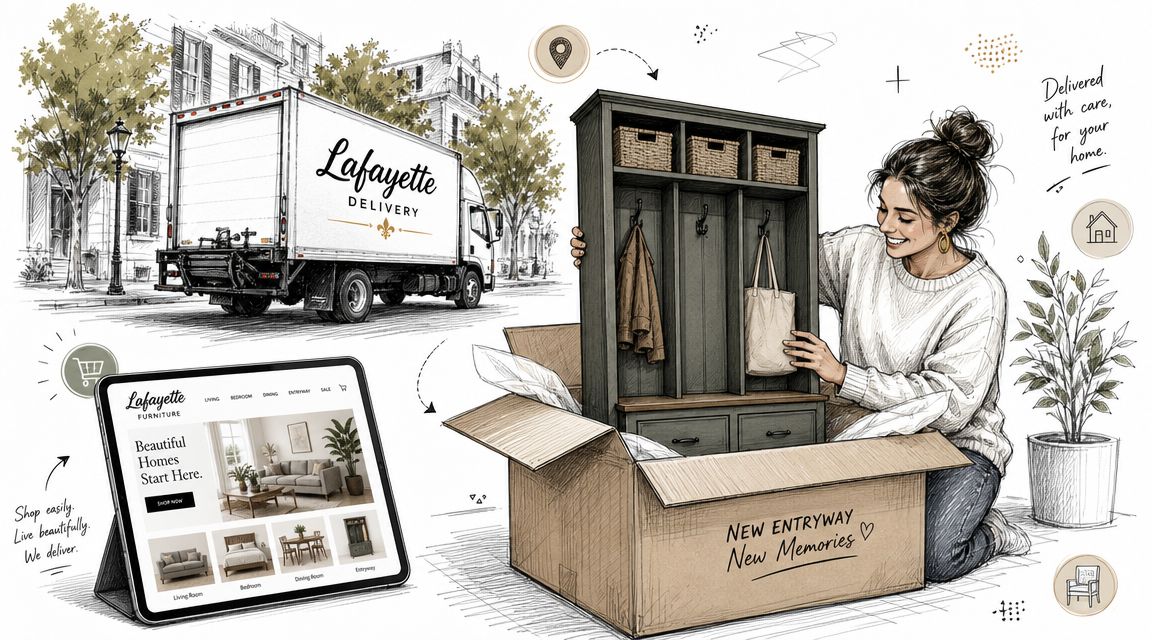
Online or in-store both can work
For Lafayette shoppers, online browsing offers convenience and speed. It's a practical way to compare looks, think through room needs, and identify whether the household is leaning toward a custom order, a clearance option, or a full-room update.
The Kokomo showroom gives those same shoppers the chance to confirm the details that photos can't fully show. Cushion feel, finish tone, scale, and construction all become easier to judge in person.
A useful shopping path often looks like this:
- Browse online first to collect ideas and narrow the style.
- Visit the showroom to compare comfort, materials, and size.
- Confirm delivery details so the purchase arrives where it needs to go with less hassle.
Delivery is often the point where shoppers feel the most relief. A professional team handling in-home furniture delivery removes the strain of borrowing a truck, protecting the piece during transport, and managing heavy lifting into the house.
The easier the delivery process feels, the easier it is to buy the piece that actually fits the home instead of the one that merely fits the vehicle.
For households in Lafayette, that convenience matters. It means the search can start online, continue in Kokomo if needed, and end with furniture brought directly into the home.
Visit Lucas Furniture & Mattress to browse online or plan a trip to the Kokomo showroom serving Lafayette and Central Indiana. Whether the goal is entryway lockers with doors, a new mattress, a sectional, custom order furniture, outdoor furniture, or clearance savings, the team can help shoppers choose pieces that fit the home and arrange in-home delivery to the Lafayette area.