Experience our new Lafayette showroom — Now Open! Come Visit Us -->

Mattress for Back Sleepers: Lafayette 2026

Waking up with a stiff lower back can turn a normal morning into a slow, frustrating start. Many people in Lafayette, IN assume that soreness comes with age, stress, or a long workweek, when the actual problem is often much closer to home. The mattress under the body every night may not be supporting the spine the way it should.
That's why so many shoppers start looking for a furniture store near Lafayette IN or a trusted Lafayette furniture store that can help them sort through the confusion. Lucas Furniture serving Lafayette gives local households a practical place to start. The main showroom and outlet are in Kokomo, and the store provides reliable in-home delivery to Lafayette, so shoppers can test options in person and still get the convenience of local service at home.
A mattress for back sleepers isn't just about “firm” or “soft.” It's about how the bed supports the hips, lower back, shoulders, and neck together. It's also about real-life concerns like budget, simple financing, clearance finds, and whether a family is shopping only for a mattress or also for a sectional, bedroom set, home office furniture, dining furniture, or outdoor furniture.
Your Guide to Better Sleep from a Furniture Store Near Lafayette IN
A common story sounds like this. Someone goes to bed tired, sleeps through the night, and still wakes up sore. They stretch, blame the pillow, and try again the next night. A few weeks later, they're searching for a Lafayette furniture store or a furniture store near Lafayette IN because they've started to suspect the mattress itself.
That suspicion is often correct. Back sleepers need a mattress that keeps the body level enough to support the natural shape of the spine. If the bed lets the hips sink too far, the lower back can feel strained by morning. If it feels too rigid, the body may never relax fully.
Why local testing matters
Online mattress descriptions can make every model sound the same. “Supportive.” “Comfortable.” “Pressure relieving.” Those words don't tell a shopper how a mattress will feel under their own shoulders and lower back.
A local showroom solves that problem. Lucas Furniture serves Lafayette from its Kokomo showroom and outlet, giving Central Indiana shoppers a place to compare mattress types side by side, ask questions, and connect product details to everyday comfort.
A mattress that feels fine for five minutes can feel completely different after ten or fifteen minutes in a true back-sleeping position.
What shoppers usually get confused about
Most back sleepers don't need a crash course in mattress engineering. They need clear answers to a few practical questions:
- Is firmer always better? No. A mattress can be too hard as easily as it can be too soft.
- Does body weight matter? Yes. Two people can sleep on the same mattress and need different support levels.
- Do materials change the feel? Absolutely. Foam, latex, innerspring, and hybrid builds all support the body differently.
- Is the mattress the whole solution? Not usually. Pillow height and the foundation underneath matter too.
For readers who want a broader sleep-improvement starting point, Lucas also shares practical advice in its guide on how to sleep better at night.
What Back Sleepers Need for Optimal Spinal Alignment
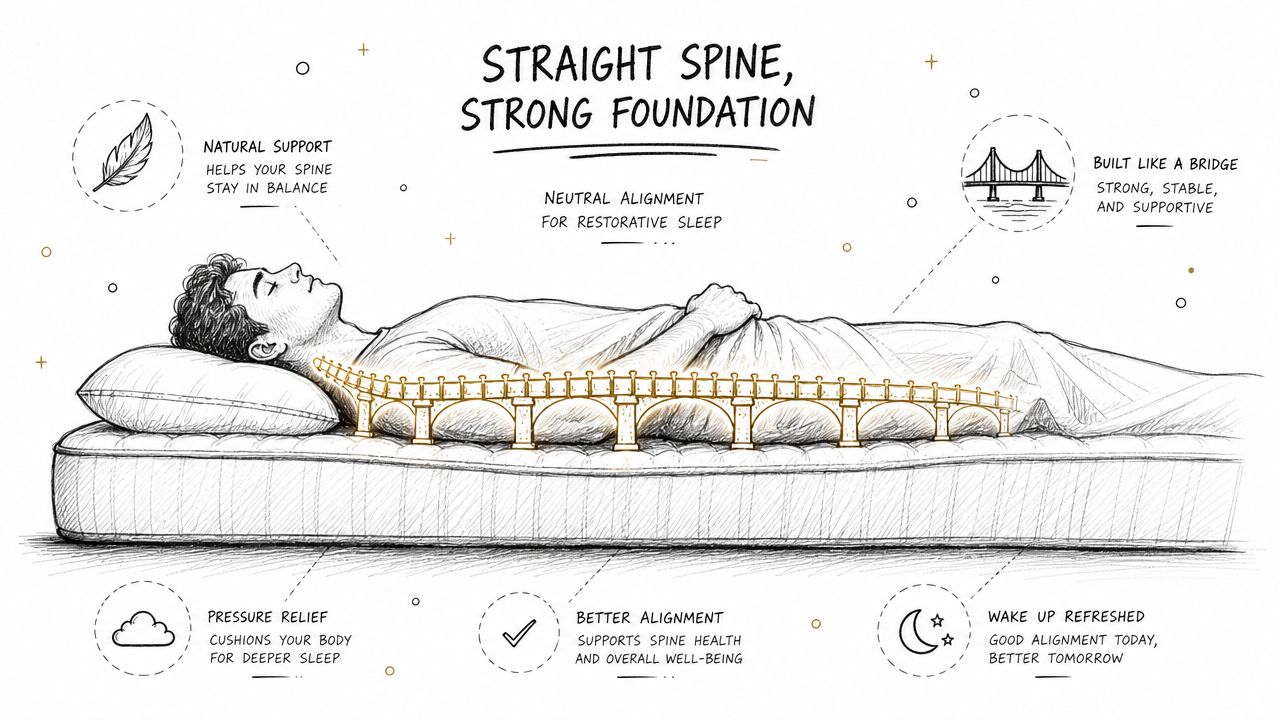
The biggest job of a mattress for back sleepers is simple. It needs to keep the spine in a neutral position.
A helpful way to think about it is a bridge. A bridge works best when support is placed where weight lands. If one section drops too low, strain spreads through the whole structure. The same thing happens when a mattress fails to support the body evenly.
Why medium-firm is the starting point
Back sleepers usually do well on a medium-firm mattress because it balances two needs at once. The surface has enough give for the shoulders and hips, but enough pushback to stop the midsection from dropping too low.
Research backs that up. A systematic review summarized by NCOA found that people using medium-firm mattresses reported a 48% reduction in back pain and a 55% improvement in sleep quality after 28 days in findings discussed in this medium-firm mattress review for back pain and sleep quality.
What happens when the mattress misses the mark
A mattress that's too soft can create a hammock effect. The hips drift lower than the chest and legs, and the lower back carries the stress.
A mattress that's too hard creates a different problem. It may hold the hips too high and leave small unsupported gaps around the lumbar area. That can feel like tension instead of relief.
Practical rule: Back sleepers should look for support that keeps the torso steady while still letting the body settle in slightly at pressure points.
Shoppers dealing with soreness can also review Lucas's guidance on how to reduce back pain while sleeping, which connects sleep position and mattress choice in more practical terms.
Choosing Your Mattress Type at Lucas Furniture
Firmness gets most of the attention, but construction matters just as much. Two mattresses can both be called medium-firm and still feel very different because the materials under the cover respond in different ways.
One useful guideline for back sleepers is the build itself. Back sleepers generally benefit from mattresses with a 2-3 inch top layer of memory foam or latex over a 6-7 inch high-density support core, because that pairing adds contouring without giving up the deep support needed to keep the spine neutral, as noted in this overview of mattress construction for support and alignment.
Mattress Types for Back Sleepers
| Mattress Type | Support Core | Feel & Performance | Best For Back Sleepers Who… |
|---|---|---|---|
| Memory Foam | Dense foam core | Close contouring, quieter feel, strong pressure relief | want body-hugging comfort and less surface bounce |
| Latex | Latex support design or layered foam base | Responsive, springier than memory foam, easier movement | want contouring without feeling stuck |
| Innerspring | Coil unit | Traditional lift, breathable feel, stronger edge support | prefer a classic mattress feel and simpler support |
| Hybrid | Coil core with foam or latex comfort layers | Mix of contouring and pushback, balanced support | want support and cushioning in the same bed |
How each type feels in real life
Memory foam tends to spread weight evenly and can feel calming for back sleepers who notice pressure around the hips or shoulders.
Latex has a quicker rebound. That makes it easier for sleepers who change position during the night and don't like a slow-moving surface.
Innerspring mattresses often feel more straightforward and lifted. Some back sleepers like that familiar support, especially if they don't want deep contouring.
Hybrid mattresses combine a coil base with a comfort layer on top. For many back sleepers, that creates a useful middle ground. The top cushions the body while the lower support system keeps the spine from drifting out of alignment.
A simpler way to narrow the choices
A shopper comparing mattress types can ask three questions:
- Does the surface contour gently or closely?
- Is it easy to move and turn?
- Does the lower back feel held up, not pressed down?
For a deeper breakdown of materials and feel, Lucas provides a guide to mattress types explained.
Beyond Firmness Lumbar Support and Pressure Relief
Some back sleepers choose a mattress by firmness label alone and still end up disappointed. That usually happens because support isn't uniform across the body. The shoulders, waist, hips, and legs don't all need the same thing.
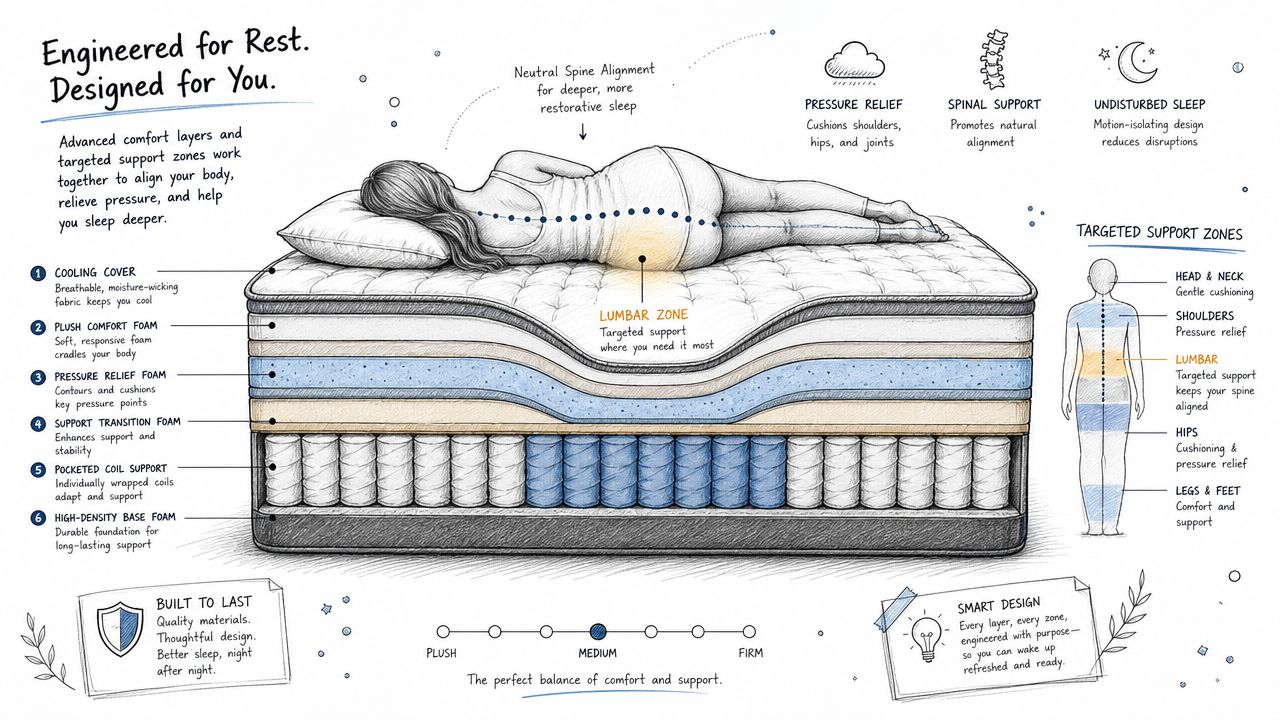
Modern mattress design often addresses that with zoned support. Instead of one identical feel from top to bottom, a zoned mattress places firmer support where the body is heaviest and gentler compression where pressure tends to build.
Why lumbar support changes the experience
The lumbar region has a natural inward curve. On the wrong mattress, that curve may float above the surface or collapse inward too much. Both can leave the lower back feeling overworked by morning.
A better design supports the center third of the mattress more deliberately. That gives the lower back a gentle lift while still allowing the shoulders and hips to settle.
Why body weight matters more than many guides admit
Generic advice often stops at “medium-firm.” That's useful, but it doesn't cover every body type. The PMC review highlighted an important limitation in blanket advice. While medium-firm is a good baseline, it doesn't account for individual spinal curvature. For heavier individuals (>230 lbs), data suggests a need for slightly firmer support with advanced zoned systems to prevent sinkage and maintain proper spinal alignment, as discussed in this PMC review on mattress support, spinal curvature, and body weight.
The right mattress shouldn't leave a gap under the lower back, and it shouldn't let the hips fall below the rest of the body.
That's one reason in-store testing matters so much for Lafayette and Central Indiana shoppers. A person with a flatter back profile may prefer a different feel than someone with a stronger lower-back curve, even if both are back sleepers. Shoppers looking for more guidance on cushioning versus support can review Lucas's article on the best mattress for pressure relief.
Complete Your Sleep System with Pillows and Foundations
A mattress can only do part of the work if the pillow is pushing the head too far forward or the foundation underneath is sagging. Back sleepers usually get better results when the entire sleep setup works together.
Getting the pillow height right
For back sleeping, the pillow should support the neck's natural curve without forcing the chin toward the chest. In practical terms, that often means a low-to-medium loft pillow rather than a tall, bulky one.
Memory foam and latex pillows are common choices because they hold shape more consistently than pillows that flatten quickly. The goal isn't a dramatic lift. The goal is a neutral head and neck position.
Anyone dealing with ongoing neck discomfort may also find it helpful to review guidance on how to get lasting neck pain relief, especially when deciding whether pillow height or sleep posture is part of the problem.
Why the base under the mattress matters
A supportive mattress placed on a worn-out base can still feel wrong. If the foundation bows, flexes too much, or dips at the center, the mattress can't perform the way it was designed to.
Back sleepers should pay attention to:
- Flat support: The surface under the mattress should stay even across the full sleeping area.
- Manufacturer compatibility: The right foundation helps preserve support features and can matter for warranty coverage.
- Long-term feel: A poor base can make a good mattress seem softer or less stable than it really is.
Worth checking: If a new mattress still feels unsupportive, the problem may be underneath it.
Lucas also offers practical advice on how to choose a pillow for neck pain, which helps connect mattress comfort to the rest of the sleep system.
Why Lafayette Chooses Lucas Furniture for Better Sleep
Local shoppers usually want more than a product tag and a checkout page. They want selection, honest value, delivery they can count on, and the flexibility to make a smart purchase without rushing.
That's where Lucas Furniture stands out for Lafayette, Kokomo, and Central Indiana households. The store has served the area since 2002, remains locally owned, and offers a broad mix of mattresses, living room furniture, bedroom pieces, dining sets, home office furniture, sectionals, and seasonal outdoor furniture. For shoppers furnishing more than one room, that matters.

Value goes beyond the sticker price
The store's Low Price Promise and clearance savings up to 70% off give budget-conscious shoppers more room to find a mattress and still think about the rest of the home. That can mean pairing a new bed purchase with a bedroom set, updating a family room sectional, or checking the outlet for additional value.
Strong customer reviews also matter in this category. Mattress shopping can feel personal, and many people prefer working with a store that has built trust over time in the local community.
Practical features that help back sleepers shop smarter
Shoppers who like to compare details can look at construction quality, not just feel. One cited benchmark notes that mattresses with a 15-20 pound per cubic foot support core and a 3-4 PCF comfort layer are associated with a 30% reduction in reported back pain among back-sleeping populations over a 12-month period, according to this support core and comfort layer density reference.
That kind of detail helps explain why one mattress can feel supportive for years while another starts to feel uneven much sooner.
Why many households buy more than a mattress
A mattress purchase often happens during a larger home update. Someone moves into a new place in Lafayette, replaces an aging guest room bed, adds a home office, or decides it's finally time to upgrade the patio.
That broader selection matters because one shopping trip can cover multiple needs:
- Living room updates: sofas, recliners, entertainment furniture, and sectionals
- Bedroom refreshes: beds, dressers, nightstands, and mattress foundations
- Dining and workspaces: dining sets and home office furniture
- Seasonal comfort outdoors: outdoor furniture for patios and decks
Shoppers who need flexibility can also ask about simple financing and custom order options for selected collections, fabrics, finishes, and configurations.
Your Path to the Perfect Mattress with Lucas Furniture
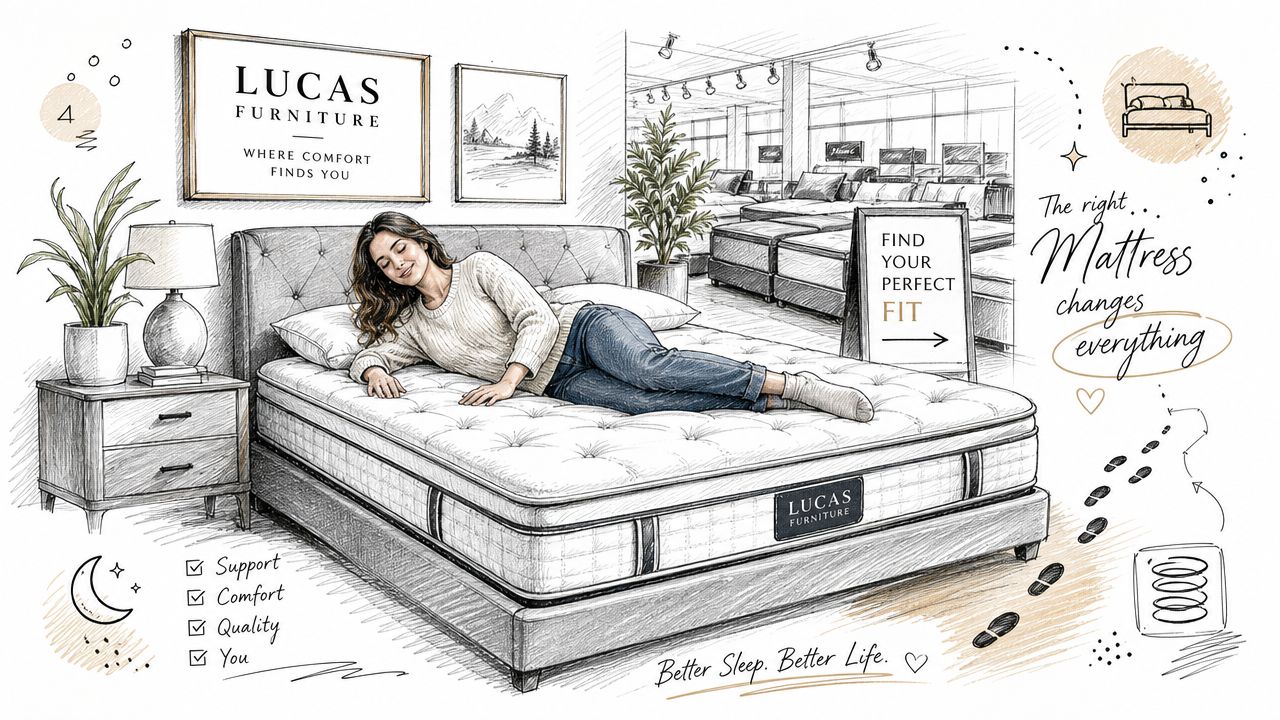
The fastest way to narrow down the right mattress for back sleepers is to test mattresses with a clear method. A quick sit on the edge won't tell much. A real test means lying flat in a normal sleep position long enough for pressure points and support gaps to show up.
A better way to test a mattress in Kokomo
For Lafayette shoppers making the short trip to the Kokomo showroom, this approach works well:
- Lie down fully on the mattress. Stay in the actual sleeping position, not a half-sitting posture.
- Give it time. A mattress can feel supportive at first and still develop pressure or sag sensations after several minutes.
- Check the lower back. The body should feel supported through the center, not arched away from the bed.
- Notice how movement feels. A responsive surface can make nighttime repositioning easier.
One construction detail tied to comfort during movement is response time. Mattresses with a response time under 0.5 seconds can redistribute pressure more efficiently during micro-movements and may reduce lower back strain compared with slower-response materials, based on this response time reference for pressure redistribution.
What to ask before buying
A mattress purchase gets easier when shoppers ask direct questions:
- What foundation works with this mattress?
- How does this model feel for a back sleeper with more weight through the hips?
- Is there a custom order option for related bedroom furniture?
- What financing choices are available?
- How does in-home delivery to Lafayette work?
- What should be checked about mattress age and replacement timing?
For that last point, some shoppers also like to compare general care habits, including optimal bed changing frequency, when deciding whether the current setup has reached the end of its useful life.
Shopping in the way that fits the household
Some people want to browse online first and visit the showroom later. Others want to test everything in person from the start. Both approaches work.
Lucas Furniture & Mattress offers online browsing, in-store shopping, simple financing, custom order options on many collections, and in-home delivery to Lafayette. That makes it easier to move from “this mattress might help” to an actual setup that supports better sleep at home.
Visit Lucas Furniture & Mattress to explore mattresses, clearance savings, sectionals, bedroom furniture, home office pieces, dining sets, and outdoor furniture. Lafayette-area shoppers can browse online, make the short trip to the Kokomo showroom and outlet, and count on guaranteed in-home delivery to the Lafayette area.