Experience our new Lafayette showroom — Now Open! Come Visit Us -->

Lucas Furniture: Office Furniture for Small Spaces

A spare bedroom becomes a guest room twice a month. A dining nook doubles as a weekday workstation. A living room corner has to hold a desk without making the whole home feel like an office. That's the reality for many households shopping for office furniture for small spaces, and it's exactly why a Lafayette furniture store has to think beyond standard desks and oversized chairs.
For shoppers looking for a furniture store near Lafayette IN, Lucas Furniture & Mattress serves Lafayette from its Kokomo showroom and outlet, with in-home delivery available throughout the Lafayette area. That matters when the goal isn't just buying a desk. It's finding pieces that fit the room, support the workday, and arrive without adding more hassle. For anyone starting with a cramped corner and a long task list, thoughtful planning makes a small home office feel much bigger than it looks.
Table of Contents
- Your Smart Guide to Furnishing a Small Lafayette Office
- Measure Twice Buy Once A Practical Planning Process
- Choosing Furniture That Works Smarter Not Harder
- Arranging Your Room for Productivity and Flow
- Why Choose Lucas Furniture Your Local Partner
- Simple Financing and Delivery to Your Lafayette Home
Your Smart Guide to Furnishing a Small Lafayette Office
In Lafayette, a home office often starts as a compromise. It might be a laptop at the kitchen table, a chair tucked into the bedroom, or a desk pushed against a hallway wall. The problem isn't only limited square footage. The main challenge is making that space usable every day without letting clutter, poor fit, and awkward furniture take over the room.
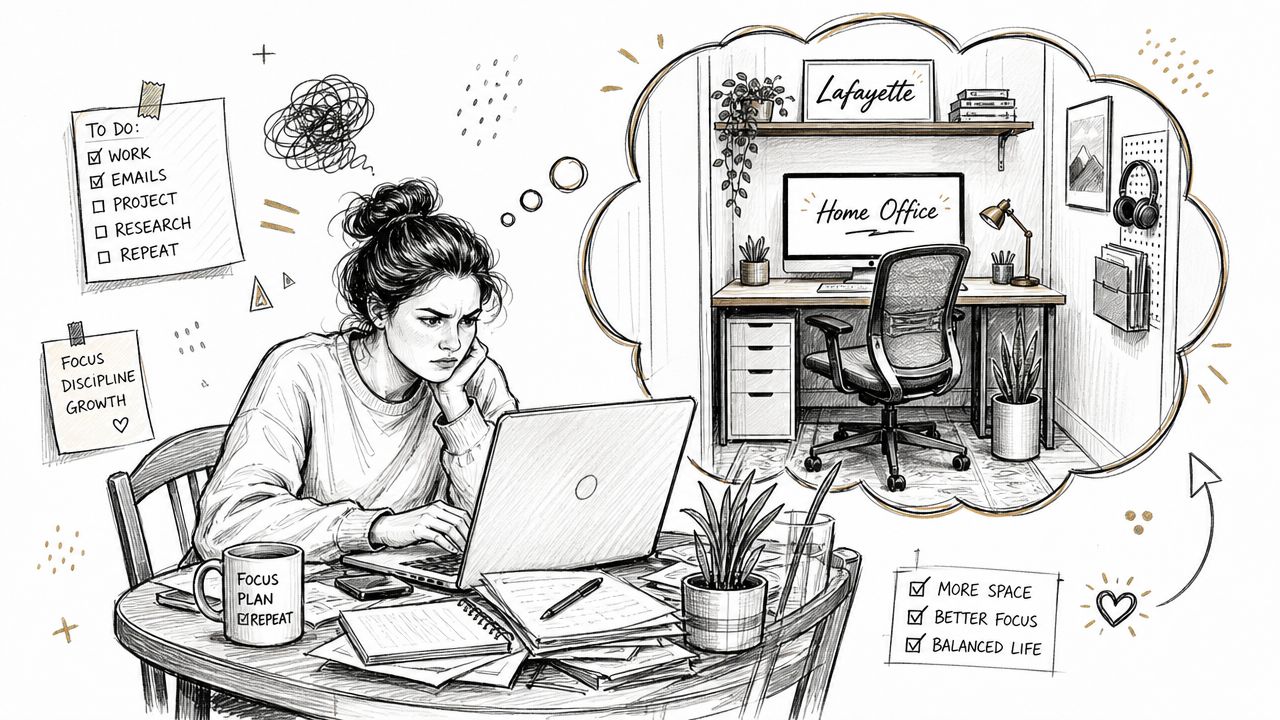
The shift toward smarter home office setups is tied to a real change in how people work. In the United States, the share of people usually working from home rose from 5.7% in 2019 to 17.9% in 2021, according to Census-linked reporting on home office demand and small-space furniture. For homes in Lafayette and across Central Indiana, that change made compact desks, dual-purpose storage, and flexible seating far more relevant than they used to be.
Start with the room that exists
Small-space furnishing works better when the room is treated realistically. A narrow wall shouldn't be forced to hold a full executive desk. A shared guest room shouldn't be packed with furniture that only serves one purpose. The strongest setups usually come from working with the room's limits instead of fighting them.
A good first step is gathering ideas from sources that focus on compact living. Some homeowners also like visual planning help before they shop, especially when deciding how a corner office, wall desk, or storage tower might look in a tight footprint. Resources on AI solutions for compact properties can help people test ideas before committing to a layout.
Practical rule: In a small office, every piece should earn its floor space. If a desk, chair, or cabinet only looks good but blocks movement, it's the wrong piece.
Think function before style
Style still matters. The room should feel like part of the home, not an afterthought. But in compact offices, function has to come first. That usually means asking a few direct questions before shopping:
- How long is the workday? A short laptop session and a full workday need different seating and storage.
- What has to stay in the room? Printers, files, monitors, and chargers change the size and shape of the setup.
- Does the office need to disappear after hours? Folding desks, slim profiles, and closed storage matter more in shared spaces.
For Lafayette households browsing ideas before visiting a furniture store near Lafayette IN, Lucas publishes home office furniture ideas for practical setups that help narrow down what kind of furniture fits the room and the routine.
Measure Twice Buy Once A Practical Planning Process
Most small-office mistakes happen before the furniture ever arrives. People measure wall width, stop there, and assume the room is ready. Then the desk fits, but the chair can't move, a drawer won't open, or the walkway disappears.
A better process starts with a simple floor plan. It doesn't need to be fancy. Paper, pencil, and accurate measurements are enough.
Build a scaled plan before browsing
Measure the room's usable footprint, not just the overall room dimensions. That means noting window trim, baseboards, vents, doors that swing inward, and any low ceilings or sloped walls. In a small office, those details decide whether a piece works or doesn't.
Then place furniture in this order:
- Desk first. The workstation drives the whole room.
- Storage second. Add shelves, drawers, or cabinets around the desk.
- Movement last. Make sure the room still functions when someone is using it.
One benchmark matters more than many shoppers expect. Small-space planning guidance recommends leaving at least 3 feet of space behind the chair for the push-back zone, as noted in small-space modular office planning guidance. That space keeps the chair usable and prevents the common mistake of buying furniture that technically fits the room but fails in daily use.
What to measure before shopping
A strong measurement list usually includes more than the room itself.
- Wall length and depth: Confirm where a desk can sit.
- Chair movement area: Don't forget the chair needs room to slide back.
- Storage reach: Measure where drawers, doors, and file access will happen.
- Outlet locations: A desk that blocks power access creates immediate frustration.
A room can hold a desk and still be a bad office. Daily movement is the test that matters.
For homeowners who want a cleaner checklist, Lucas offers a practical guide on how to measure a room for furniture. That kind of prep is useful when comparing several compact desks or discussing a custom order for an awkward room shape.
Avoid the three buying errors seen most often
Small offices usually go off track in familiar ways.
| Common mistake | What happens | Better choice |
|---|---|---|
| Buying by wall width alone | Chair space and drawer clearance get ignored | Measure the full working footprint |
| Choosing bulky storage first | The desk ends up squeezed into leftover space | Anchor the room with the workstation |
| Forgetting outlet access | Cords stretch across the room or pile up visibly | Map power before final placement |
Good planning doesn't make the room larger. It makes the room work.
Choosing Furniture That Works Smarter Not Harder
Small offices perform better when furniture does more than one job. That's the central rule. A compact workstation shouldn't just shrink the desk. It should improve storage, reduce visual bulk, and keep the user comfortable enough to work without constantly adjusting the setup.
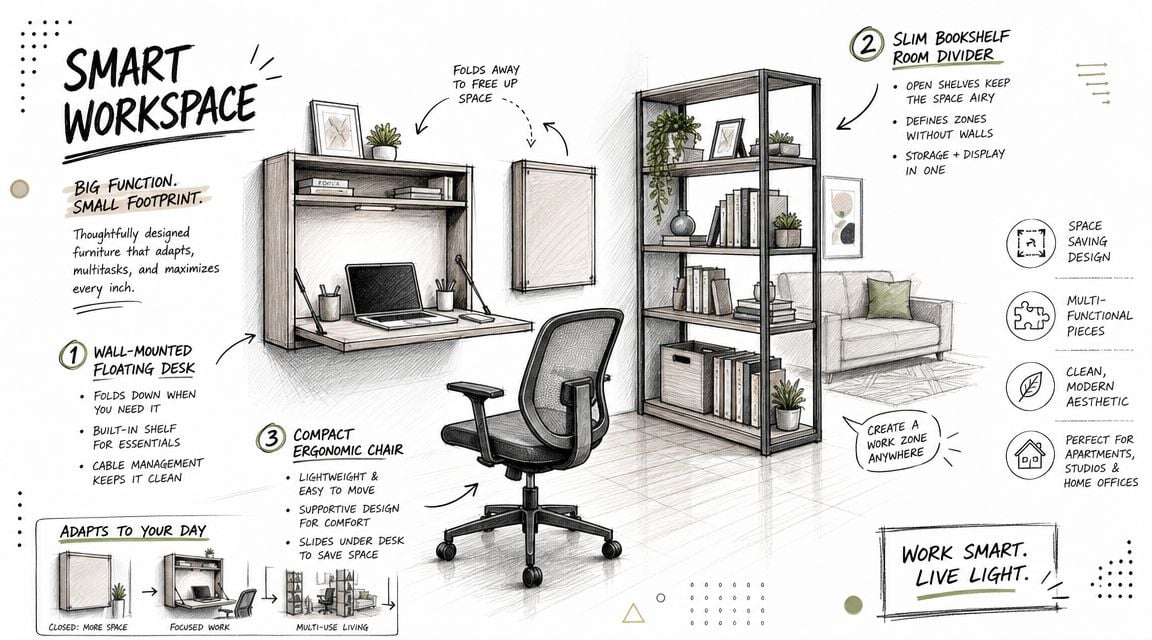
Design guidance for compact offices repeatedly points to wall-mounted folding desks, corner desks, floating desks, ladder desks, and under-desk storage as effective options in tighter rooms, especially where every inch has to carry its weight. The deeper issue, though, is comfort. As noted in coverage of home office solutions for small spaces, many small-space guides recommend compact desks and chairs but overlook true ergonomics when a standard task chair won't fit.
The furniture types that usually work
Not every compact piece solves the same problem. The right choice depends on how the office is used.
- Floating desks work well when floor area needs to stay visually open.
- Corner desks make use of space that often sits empty.
- Ladder desks combine workspace and vertical storage in one footprint.
- Under-desk storage keeps essentials close without adding another cabinet.
- Slim bookcases help move storage upward instead of outward.
These pieces tend to work because they preserve circulation. Traditional deep desks and heavy hutches often do the opposite.
The ergonomics gap people feel after purchase
A desk can save space and still create discomfort. That's where many compact office setups break down. Narrow chairs, decorative stools, and dining chairs may tuck away nicely, but they often fail during longer work sessions because they don't support posture well or pair properly with desk height.
Good small-space furniture isn't just smaller. It needs to support the body and the workflow at the same time.
That's why chair selection needs more care than many buyers expect. The footprint matters, but so do seat height, back support, how closely the chair can pull up to the desk, and whether the user can sit in a neutral position for the actual length of the workday.
What usually works and what usually doesn't
| Often works | Often disappoints |
|---|---|
| Compact desks with storage built in | Decorative desks with no cable or supply management |
| Chairs with a smaller profile and real support | Dining chairs used as full-time office seating |
| Vertical shelving | Wide lateral pieces that eat floor area |
| Customizable finishes for shared rooms | One-size-fits-all furniture bought only for appearance |
For shoppers exploring configurations, Lucas provides an overview of multifunctional home office furniture that shows how desks, storage, and office seating can work together in smaller rooms. Lucas Furniture & Mattress also offers home office furniture as one option for buyers who need compact desks, storage, and chairs sized for residential spaces.
There's also a broader comfort issue beyond the office itself. Better workdays usually start with better rest, so anyone updating a workspace should also pay attention to mattress support, bedroom comfort, and sleep habits. A productive home office is easier to maintain when the rest of the home supports recovery too.
Arranging Your Room for Productivity and Flow
A smart layout can rescue an average room. A poor layout can ruin even well-chosen furniture. In small offices, arrangement matters because each piece affects sightlines, walking space, power access, and how open the room feels once someone starts using it.
Use the desk-first layout method
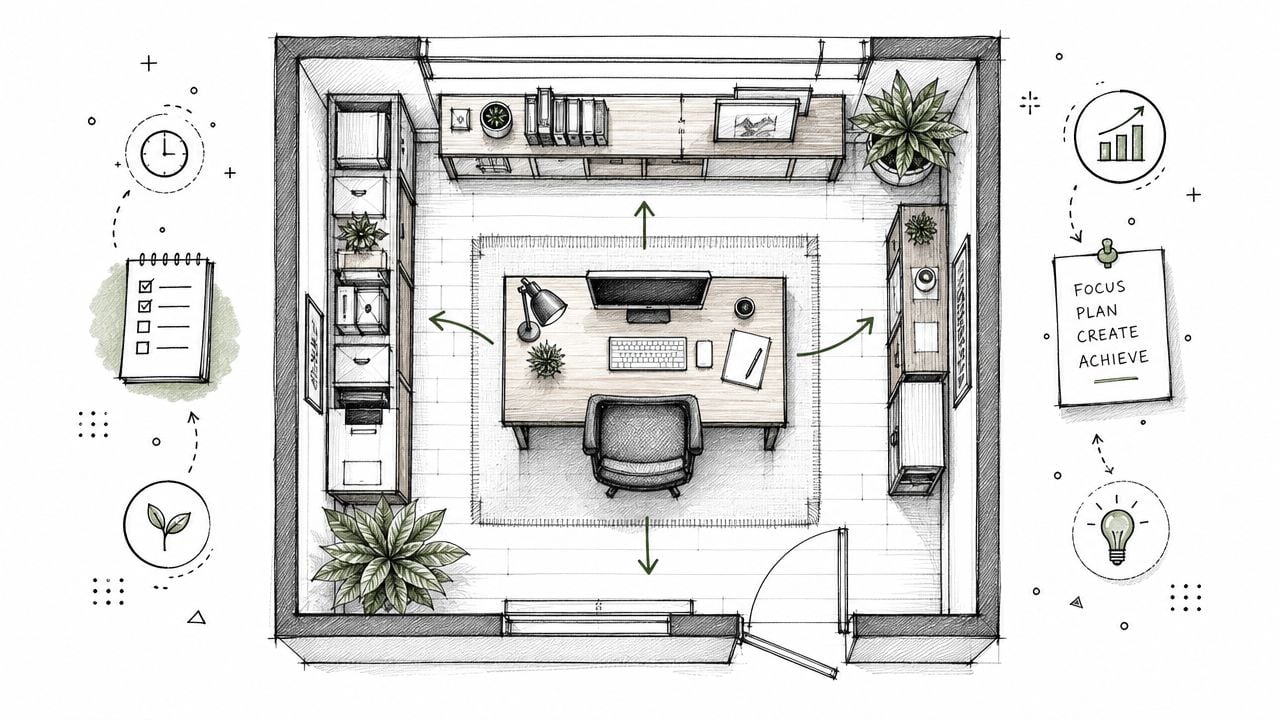
The desk should go in first because it controls the rest of the room. Place it where work can happen comfortably, then build around it with storage and accessories. In compact offices, this tends to produce stronger results than trying to spread furniture evenly around the perimeter.
A few dependable layout patterns show up again and again:
- Corner setup: Good for preserving central floor space.
- Wall-facing desk with shelves above: Keeps the footprint shallow.
- Floating desk with vertical storage nearby: Useful in mixed-purpose rooms.
- Desk near natural light, but not in direct glare: Better for daily comfort and screen visibility.
Keep movement simple and cable paths clean
Professional design guidance recommends leaving at least 36 inches of clearance for main walkways to keep a small office feeling accessible rather than cramped, according to office space planning guidance for productivity and flow. That rule matters because circulation is what makes a room feel functional, not just furnished.
Power planning belongs in the layout phase, not after delivery. If the desk blocks an outlet, cords usually snake across the floor or pile up behind furniture. That visual clutter makes a small room feel even smaller.
For homeowners who like to study examples before rearranging, resources on optimizing office space can be helpful for thinking through traffic flow, focal points, and furniture placement.
Clean pathways make a room feel larger. Tangled cords, blocked drawers, and tight corners make it feel crowded even when the square footage hasn't changed.
A practical starting point for local shoppers is Lucas's guide to home office furniture layout ideas, especially when a room has to balance work, storage, and everyday household use.
Why Choose Lucas Furniture Your Local Partner
A lot of Lafayette home offices are carved out of space that already has another job. One wall belongs to work. The rest of the room still has to function for sleep, guests, or daily family use. In that setup, the store matters almost as much as the desk.
Lucas Furniture & Mattress is useful for small-space shoppers because the office is not treated like a stand-alone purchase. A compact desk may need to coordinate with a bed, a dresser, a sectional, or a bookcase in the same room. Seeing those categories together helps people make better decisions about scale, finish, and storage before anything is delivered.
That matters more than many shoppers expect.
Online, a desk can look slim and practical right up until it arrives and overpowers a spare bedroom. In a showroom, it is easier to judge drawer depth, chair clearance, finish color, and whether the piece fits the way the room is used. I see that make a difference all the time with smaller homes and apartments around Lafayette, where a few inches can decide whether a layout works.
Local help is practical help
Lucas serves Lafayette from the Kokomo showroom and outlet, giving shoppers a nearby place to compare home office pieces alongside living room, bedroom, dining room, and outdoor furniture. That broader selection helps when the office shares space with the rest of the home, which is common in Central Indiana houses that were never built with a dedicated office in mind.
Local service also solves problems that product filters cannot. If a customer needs a narrower desk, a different finish, or a storage piece that better matches the room, custom order options can often get closer to the right fit than buying whatever is in stock at a big online warehouse. For awkward walls, short corners, or multi-use rooms, that flexibility is worth asking about.
Better coordination helps the budget too
Small office shoppers are often furnishing more than one space at the same time. A family might be setting up a work area while also replacing a mattress or updating a living room. Outlet and clearance inventory can help stretch the budget without forcing every piece to be a temporary solution.
Lucas also offers guidance for shoppers who want to spread out the cost. You can review furniture financing options for your home office project before finalizing a larger room update.
A good local store earns its place by making the whole project easier to finish. For Lafayette homeowners, that often means practical advice, the chance to see proportions in person, custom order flexibility, and delivery support from a business close enough to understand how local homes are laid out.
Simple Financing and Delivery to Your Lafayette Home
Even after the right furniture is chosen, two practical questions remain. Can the purchase fit the budget right now, and how does it get into the home without creating another project to manage? Those details often decide whether a small office gets finished or stays half-done for months.
Financing helps turn a plan into a finished room
A compact office doesn't always mean a small purchase. A better chair, smarter storage, a desk that fits, and a few supporting pieces can add up quickly, especially when the workspace is part of a larger room update.
Simple financing can help households avoid settling for temporary pieces that need replacing later. Instead of buying the wrong desk because it's available that day, shoppers can choose furniture that fits the room and use budget flexibility more strategically. Anyone considering that route can review furniture financing options and next steps before making a final decision.
Custom orders solve awkward room problems
Small offices often live in rooms with odd dimensions, shared functions, or style constraints. That's where custom order options become especially useful. A different finish may help a desk blend into a bedroom. A different configuration may allow a storage piece to fit under a window or along a short wall. In compact homes, those details matter more than they do in larger dedicated offices.
Custom orders are also useful when the office has to coordinate with nearby furniture. If a desk sits in a guest room, loft, or open-concept living area, matching the surrounding look can make the whole space feel calmer and more intentional.
The right piece for a small office often isn't the biggest or the flashiest one. It's the one that fits the room cleanly and supports the routine without friction.
Delivery matters more than people expect
In-home delivery to Lafayette removes one of the biggest barriers in the process. Compact spaces are usually harder to furnish, not easier. Tight doorways, stair turns, multipurpose rooms, and careful placement all make delivery service more valuable.
Reliable delivery also helps protect the original plan. A desk that was carefully chosen for one wall needs to land in the correct room and placement area. A heavy chair or storage piece shouldn't become a curbside problem. For many families, convenience is part of the value.
A practical purchase path usually looks like this:
- Measure the room carefully.
- Choose furniture based on use, not just appearance.
- Decide whether stock pieces or a custom order make more sense.
- Use financing if it helps secure a better long-term setup.
- Schedule in-home delivery so the office is finished properly.
That same process also helps when the shopping list extends beyond the office. Many Lafayette-area households bundle purchases across categories, including a mattress, sectional, bedroom furniture, dining furniture, or seasonal outdoor furniture, so the whole home feels more complete instead of updated in fragments.
Visit Lucas Furniture & Mattress to explore home office options, clearance finds, custom order possibilities, mattresses, sectionals, and more. Shoppers in Lafayette can browse online or make the short trip to the Kokomo showroom and outlet, then schedule in-home delivery straight to the Lafayette area.